100 Marathons and a VO₂max That Refuses to Drop: What a Global Cohort of Multi-Marathoners Revealed
Scientists gathered 340 runners from 24 countries, each with a hundred marathons behind them. Their aerobic power declines with age noticeably slower than the norm. We break down what it means and where the catch is.
There's a number that predicts life expectancy better than cholesterol, blood pressure, or smoking — VO₂max, maximal oxygen uptake. It declines inexorably in everyone with age: by roughly 10% per decade after thirty. The question is whether this curve can be bent even a little — and if so, at what cost.
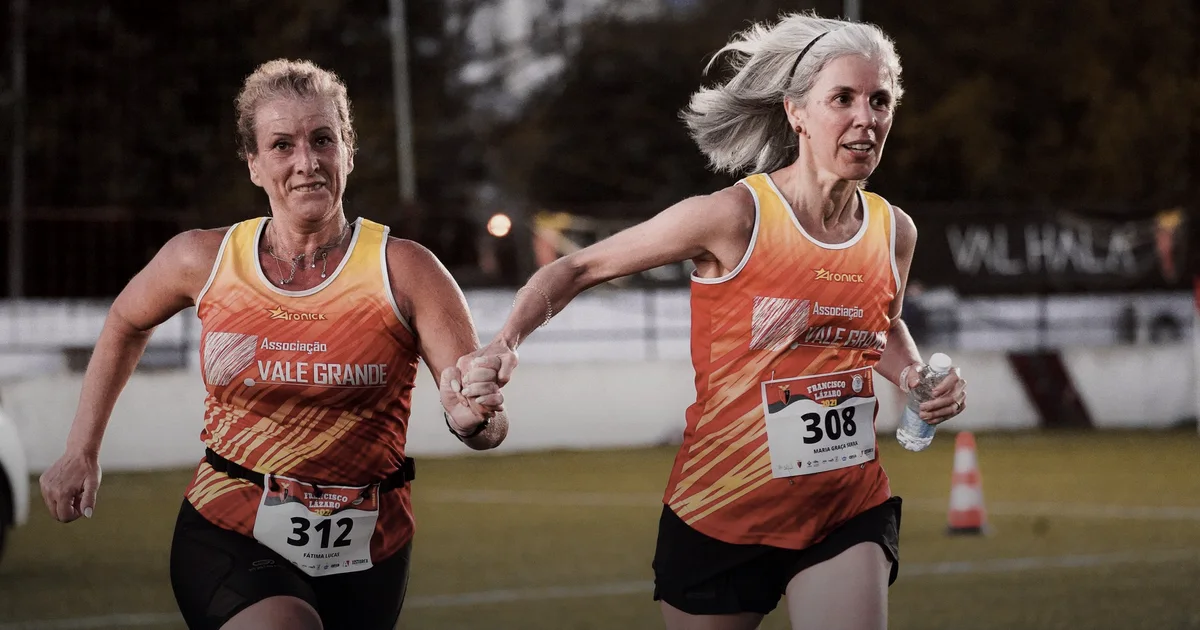
A new study in Scientific Reports approached it from an unusual angle. Scientists found people for whom a marathon is not a one-off feat but a way of life: each participant had run at least 100 marathons. And they looked at how their aerobic system ages.
What was studied
The design was a global online survey (cross-sectional, i.e. a "snapshot" at a single point in time, without following the same people for years).
- 340 participants from 24 countries: 184 men (54,1%) and 156 women (45,9%).
- Selection criterion — being of legal age and having ≥100 completed marathons. On average, a lifetime total of 121 marathons per person.
- The cohort's average age was 52,2 years.
- Data were collected from January 1, 2023 to March 31, 2024.
Important detail: VO₂max was not measured in a lab. Estimates were taken from wearable devices (Garmin, Polar, COROS). The margin of error of such estimates is on the order of ±5–10% versus a lab test, and the authors honestly built in a ±10% correction band. They compared the figures against the FRIEND normative database — a large clinical registry of exercise-testing results.
Results
Aerobic power markedly above the norm at all ages. The multi-marathoners showed VO₂max substantially above population norms across all age groups. Moreover, men aged 60–69 and women aged 40–69 significantly exceeded even the 95th percentile of the norms — that is, they landed in the top 5% for their age and sex.
A flatter ageing curve. The key finding: in this cohort the age-related decline in VO₂max is gentler, especially in the older participants. The slope of the cross-sectional curve turned out to be statistically significantly less steep than the FRIEND normative trajectories (p < 0,001), and this result held up across all robustness checks.
Men and women age differently. In men the absolute VO₂max values are higher. But in older women the relative advantage over the norm was greater — their "gap" from their peers is more noticeable.
What about life expectancy. Direct mortality was not tracked in the cohort. The authors applied a model known from the literature: each additional 1 ml/kg/min of VO₂max means roughly a 3,7% lower risk of all-cause death. The predicted advantage was greatest in the older age groups. Effect sizes by Glass's Δ ranged from 1,07–4,16 — these are very large values.
What this means for you
- Regular endurance exercise is an investment in later life. The difference between "top 5%" and the age average is not cosmetic — it's decades of preserved functionality.
- It's not about a one-time record, but about accumulation. We're talking about people with a hundred starts under their belt. What matters is the volume and consistency of training over years.
- VO₂max is a number worth tracking. Even a watch estimate sets a benchmark and a trend. You can estimate your level and compare it with the norm for your age using the calculator below.
- The older you are, the more important it is not to quit. The authors see the largest gap from the norm precisely in the veterans. This is the case where "keeping going" is more valuable than "starting fast."
Limitations
Here honesty is needed, and the authors don't hide it.
- This is a snapshot, not observation over time. Causation cannot be inferred from such a design: we see a correlation, not proof that running specifically "slowed down" ageing.
- VO₂max is from wearables, not from a lab. An approximate estimate.
- Survivorship bias. The sample captured those who ran to a hundred marathons and didn't quit. Those who dropped out due to injuries or health problems are not in the data.
- Self-selection and geography. Voluntary online recruitment is skewed toward countries with a developed multi-marathon culture.
- No baseline data. It's impossible to separate the effect of training from an innately "strong" phenotype — perhaps such people were more gifted to begin with.
- Confounding factors were not accounted for: income, access to resources, comorbidities.
Simply put, the study convincingly shows a link, but does not prove that a hundred marathons guarantees a long life specifically for you.
The bottom line
- Multi-marathoners (≥100 marathons, average age 52) keep their VO₂max substantially above the age norm — up to the top 5%.
- Their age-related decline in aerobic power is statistically significantly flatter than in the norms (p < 0,001).
- Each +1 ml/kg/min of VO₂max is linked to roughly −3,7% risk of death; the gain is greatest in the older group.
- These are cross-sectional data with watch-based VO₂max estimates and survivorship bias — there is a link, but no proven causation.
- The practical takeaway is simple and as old as the world: train regularly, train for the long haul, don't quit as you age.
Source: Lundy L., Reilly R. B., Fleming N. VO₂max ageing and all-cause mortality in a global cohort of multi-marathoners. Scientific Reports, 2026, 16:21761. https://www.nature.com/articles/s41598-026-52475-x