Cramps on Race Day: Why "It Seized Up = You Ran Low on Salt" Is a Myth
The electrolyte theory of cramps sounds convincing, but the evidence tells a different story. Let's unpack what actually cramps your muscles and what to do right there on the course.
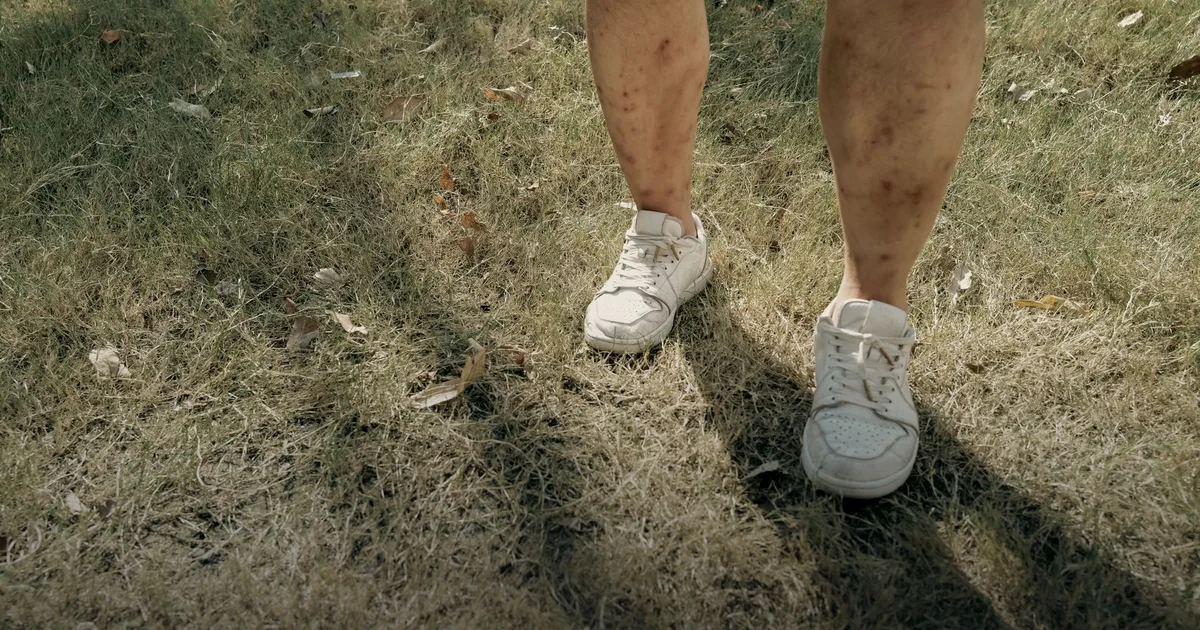
A familiar scene: the 30th kilometer of a marathon, your calf suddenly knots up like an iron fist, and someone nearby nods sympathetically — "not enough salt, you should have been drinking an isotonic." This version has burrowed so deep into sports culture that it seems obvious. The trouble is, science barely backs it up. Exercise-associated muscle cramps (EAMC) are one of the most common conditions among athletes, but their cause most likely has nothing to do with lost salt.
Two Theories — and Why the "Salt" One Loses
There are two competing explanations. The old one — dehydration and electrolyte loss: sweat supposedly "squeezes" the interstitial space, raises the concentration of excitatory substances, and presses on nerve endings. The new one — impaired neuromuscular control: as fatigue sets in, the balance between excitatory and inhibitory signals to the muscle breaks down, and it slides into an uncontrolled contraction.
The evidence points firmly to the second version. When the blood of athletes with and without cramps was compared, electrolyte levels after exercise were within the normal range and virtually identical in both groups. What's more, the "salt" theory contradicts itself: large fluid losses should raise plasma osmolality and pull water out of the muscle, while large sodium losses should do the opposite — lower it and hold water in the tissues. Both effects cannot operate at once. And experiments confirmed the role of spinal reflexes: in those who don't cramp, more inhibitory signals are produced than in those prone to cramps.
Who Is at Risk
The risk factors also point to fatigue, not blood chemistry:
- Pace faster than planned and high intensity
- Long duration of exercise, with cramps more common closer to the finish
- Poor preparation and lack of experience
- Muscle fatigue, a recent injury or muscle damage
- Sleep deprivation (reduces glycogen stores)
- A history of cramps — including in the family, there is a genetic contribution
- Age — older athletes are in the higher-risk group
In one study of an ultramarathon (56 km), the greatest danger was faced by less experienced, older runners and those who ran faster. Note: dehydration is not on this list.
What Actually Helps, and What Doesn't
The fastest, safest, and most effective remedy for an active cramp is gentle stretching of the seized muscle, on your own or with the help of someone nearby. Simply slowing down or stopping works too. Tellingly, stretching relieves the spasm without changing fluid and electrolyte levels in the blood at all — a direct refutation of the salt logic.
And here's what the evidence does not support:
- Magnesium supplements — gave no clinically significant difference in the frequency, intensity, or duration of cramps compared with placebo.
- Water/electrolytes on their own — those who cramped drank just as much as everyone else.
- Static stretching "for prevention" beforehand — as a protective measure it is ineffective.
- Quinine — reduces cramps symbolically (fewer than 2 episodes over two weeks) and comes with side effects.
Pickle juice is a story of its own. In a study it relieved a cramp 45% faster (about 68 seconds), but the effect did not kick in instantly (~90 seconds) and was not related to electrolytes: the volume was too small to affect plasma. It seems to trigger a reflex through receptors in the mouth, not a "top-up of salt."
How to Apply This in Practice
- Cramped mid-race — don't panic and don't swallow salt capsules by the handful. Drop your pace or stop and gently stretch the muscle, holding the stretch until the spasm lets go.
- Prevention is fitness. Prepare your body for exactly the demand ahead: volume, pace, terrain. Poor preparation is risk factor number one.
- Distribute your effort honestly. Starting faster than plan is a straight path to cramps at the finish.
- Work on your weak links. In one case, hamstring cramps in a triathlete disappeared after strengthening the glutes and correcting running technique.
- Get enough sleep before the start, and don't take on a long race off the back of a recent injury.
- Salt isn't forbidden, but don't treat it as insurance against cramps — it isn't.
The Bottom Line
- Cramps are primarily about fatigue and neuromuscular control, not "washed-out salt."
- In the blood of athletes with and without cramps, electrolytes after exercise are comparable.
- Risk factors: high pace, poor preparation, fatigue, sleep deprivation, age, a history of cramps.
- Stretching and slowing down work; magnesium supplements, water, and preventive stretching do not.
- The pickle-juice effect is real, but not electrolytic — it's reflexive.
- The best prevention is smart preparation and sensible pacing, not pockets stuffed with salt.
Source: Exercise-Associated Muscle Cramps — review. https://pmc.ncbi.nlm.nih.gov/articles/PMC8775277/