Taping your mouth at night and on the run: what we know about the nasal breathing trend
Bloggers recommend taping your mouth shut at night, and at the Gatchina Half Marathon near St. Petersburg on 8 November a runner with a taped mouth was spotted on the course. A 2025 systematic review found improved sleep apnoea measures in only 2 of 10 studies and warned of risks when the nose is blocked. In training, nose-only breathing does not hold back easy running, but it lowers peak oxygen uptake in people who are not used to it. We look at where the nose helps and where it holds you back.
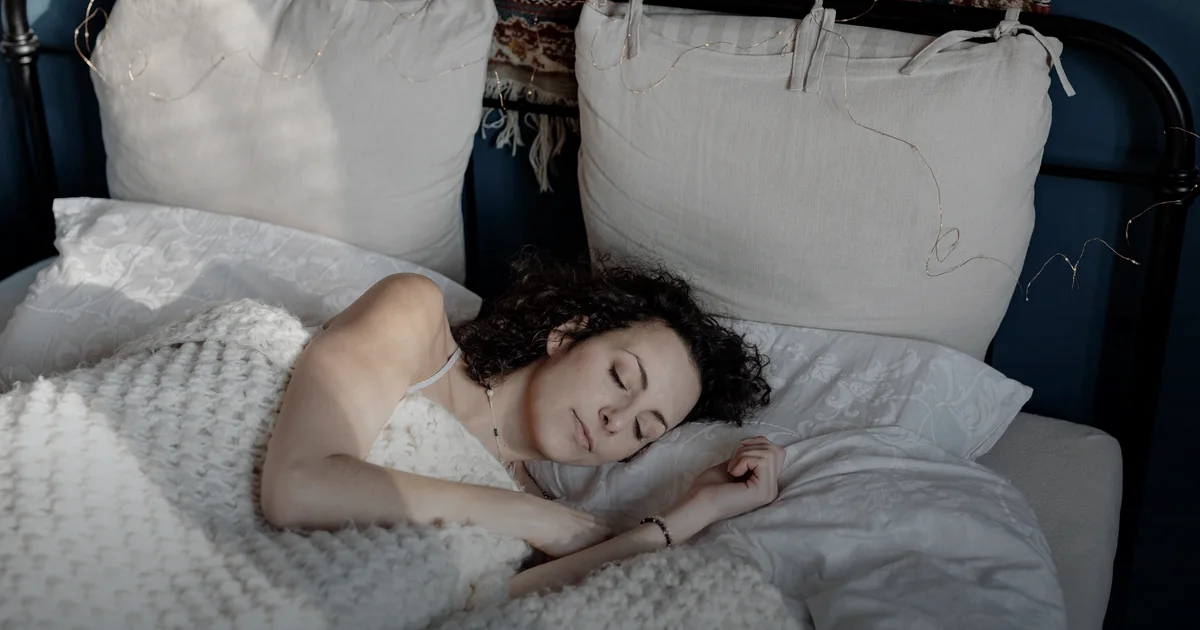
A strip of tape across the lips has become one of the most fashionable “life hacks” of recent years: tape your mouth shut at night, and your sleep will get deeper, your snoring will disappear, and you will wake up refreshed. Interest in the trend keeps growing. It has reached running too: at the Gatchina Half Marathon near St. Petersburg on 8 November, among runners on pace for roughly 2:10, someone was spotted with their mouth taped. We look at what is known about this — separately for sleep and for training.
At night: what a systematic review showed
Canadian researchers from London, Ontario (Rhee and colleagues, PLOS ONE, 2025) explicitly framed their work as a look at a “social media fad”. They searched the literature from 1999 to 2024 and found 10 studies involving 213 people — patients with mouth breathing, snoring or sleep apnoea.
- Only 2 of the 10 studies found that mouth taping noticeably improved apnoea measures — the number of breathing pauses per hour of sleep or episodes of falling blood oxygen.
- The rest found no difference.
- The authors describe risks up to and including asphyxiation if the nose is blocked. At the same time, many studies excluded people with nasal problems — meaning safety was tested precisely on those it threatens least.
The authors' conclusion: blindly following this trend carries a potentially serious risk, while the evidence of benefit is scant.
A meta-analysis from Saudi Arabia (Alshehri and colleagues, OTO Open, 2026) came at it from the other side: what happens if the nose is blocked instead. A blocked nose worsened apnoea measures: on average +13.8 breathing pauses per hour and +7.5 episodes of oxygen desaturation. On mouth taping itself there were only 2 studies, too few for a meta-analysis. In them, the measures improved in people with mild apnoea.
So here is the picture: a blocked nose makes breathing during sleep worse, and free nasal breathing matters. But tape on your lips helps only in some cases, and it is dangerous when your nose can't breathe.
In training: nose versus mouth
There are more data here, although the findings do not fully agree.
Peak effort in people who aren't used to it. In the Italian BreathWISE study (Mapelli and colleagues, PLOS ONE, 2025), 12 healthy young people completed four maximal cycle ergometer tests with different breathing modes. When breathing through the nose only, their peak oxygen uptake, ventilation and maximal power all fell, and the effort felt harder at every stage. At rest and at the anaerobic threshold, the differences were minimal.
Trained athletes. A Swedish-Norwegian group (Bergqvist and colleagues, Frontiers in Physiology, 2025) tested 12 well-trained cyclists and triathletes with a VO₂max of about 67 mL/kg/min. There was no “nose only” condition in this study: the researchers compared breathing through the mouth only, through the mouth and nose together, and through the mouth and a nose opened up with decongestant drops. No significant differences were found in either VO₂max or power. Time to exhaustion with the nose involved was 2.8–4.2% longer, but this difference was not significant either.
Those who are used to it. An American study (Dallam and colleagues, International Journal of Kinesiology and Sports Science, 2018) involved 10 recreational runners who had long trained and raced breathing through the nose only. Their VO₂max and time to exhaustion did not differ between nasal and oral breathing. When running at 85% of maximal speed, nasal breathing even turned out to be slightly more economical, and ventilation was lower.
Short sprint. In a Belgian study (Lévénez and colleagues, Sports, 2025), 49 people performed a 30-second Wingate test. Power did not depend on how they breathed. Mouth breathing made the effort feel harder, and after the test the muscles restored their oxygen saturation faster with nasal breathing.
Limitations
- The samples are tiny: 10–49 people in the exercise studies.
- Most of the tests were done in the lab, on a cycle ergometer, not on a treadmill or a race course.
- No study has tested tape on the lips during a race.
- For sleep, the evidence comes mainly from patients with apnoea, not healthy athletes.
How to apply this
- Easy running — breathing through your nose is fine. At low intensity the physiological differences are minimal, although breathing through the nose only feels harder. On the plus side, nose-only breathing works as a natural limiter: if you start gasping for air, you have most likely left zone 2. You can easily calculate your zone boundaries in the zones generator.
- Intervals and races — breathe through your mouth. In people who are not used to it, nose-only breathing lowers peak performance. If you have not trained this way for months, taping your mouth at a race will most likely cap your peak oxygen uptake.
- Want to switch to nasal breathing? Do it gradually. Runners who had trained for a long time breathing through the nose only did not see their ceiling drop. But that is the result of long adaptation, not of a single week.
- In a cold winter, the nose is a useful filter. It warms and humidifies the air, which matters especially for people prone to exercise-induced bronchospasm.
- Don't tape your mouth if your nose is blocked. November is cold season, and swimmers often have a stuffy nose after chlorinated water. With tape on your lips, that is a direct risk.
- Snoring and daytime sleepiness are a reason to see a doctor, not to reach for the tape. Sleep apnoea is diagnosed with a sleep study and treated differently. And how well you sleep is better judged by how you feel than by a wristband: see our look at sleep tracker accuracy.
The bottom line
- A 2025 systematic review: mouth taping at night improved apnoea measures in only 2 of 10 studies; with a blocked nose it is dangerous.
- A 2026 meta-analysis: a blocked nose worsens apnoea by +13.8 episodes per hour — free nasal breathing during sleep matters, but tape on the lips does not ensure it.
- In training, nose-only breathing changes little on easy runs, but in people who are not used to it, it lowers peak oxygen uptake.
- In runners long adapted to nasal breathing, VO₂max did not drop, but there is no evidence that tape on the lips helps in a race.
Sources: Rhee J., Iansavitchene A., Mannala S., Graham M.E., Rotenberg B. “Breaking social media fads and uncovering the safety and efficacy of mouth taping in patients with mouth breathing, sleep disordered breathing, or obstructive sleep apnea: A systematic review”. PLOS ONE, 2025;20(5):e0323643. DOI: 10.1371/journal.pone.0323643 · Alshehri N.A., Alsaif N.F., Abdulrazaq A.N., Jabor R.M., Al-Sayed A.A. “Impact of Nasal Obstruction and Mouth Taping on Sleep Apnea Indicators: Systematic Review and Meta-Analysis”. OTO Open, 2026;10(3):e70294. DOI: 10.1002/oto2.70294 · Mapelli M., Salvioni E., Mattavelli I. et al. “Nasal vs. oral BREATHing WIn Strategies in healthy individuals during cardiorespiratory Exercise testing (BreathWISE)”. PLOS ONE, 2025;20(7):e0326661. DOI: 10.1371/journal.pone.0326661 · Bergqvist J., Reite F., Edin F. et al. “Effects of oral, oronasal, and oronasal breathing with a decongested nose during incremental maximal exercise testing of well-trained endurance athletes: a randomized cross-over study”. Frontiers in Physiology, 2025;16:1654725. DOI: 10.3389/fphys.2025.1654725 · Dallam G., McClaran S., Cox D., Foust C. “Effect of Nasal Versus Oral Breathing on Vo2max and Physiological Economy in Recreational Runners Following an Extended Period Spent Using Nasally Restricted Breathing”. International Journal of Kinesiology and Sports Science, 2018;6(2):22. DOI: 10.7575/aiac.ijkss.v.6n.2p.22 · Lévénez M., Lévêque C., Lafère C. et al. “Effect of Oral Versus Nasal Breathing on Muscular Performance, Muscle Oxygenation, and Post-Exercise Recovery”. Sports, 2025;13(10):368. DOI: 10.3390/sports13100368