Can you swap part of your running for cycling without losing fitness? What a meta-analysis showed
A systematic review of 7 randomized trials compared running and cycling training. It found no difference in VO₂max gains or running performance — we break down what this means for triathletes and recovering runners.
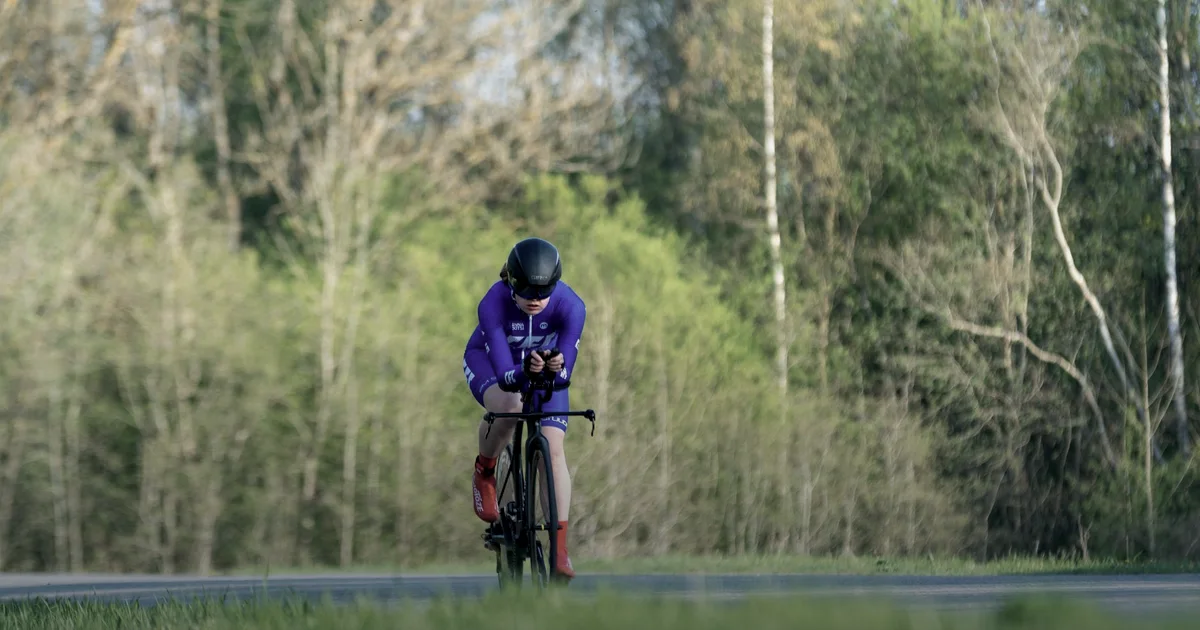
Every runner sooner or later runs into the same conflict: to build aerobic fitness you need volume, but the more running volume you add, the higher the impact load and injury risk. Hence the eternal question — can you shift part of your running mileage onto the bike, keeping the engine while sparing the joints? For triathletes this is a daily reality anyway, and for runners coming back from injury it's sometimes the only way not to lose fitness. A recent systematic review with meta-analysis tried to answer this based on data rather than coaching legends.
What was studied
The authors gathered 7 randomized controlled trials that directly compared groups training by running only with groups training on the bike only (or run + bike).
Key sample parameters:
- Group sizes ranged from 11 to 60 participants per study; most of the work had fewer than 15 people per group.
- Intervention duration — 4–10 weeks, frequency 2–7 sessions per week.
- Intensity — 70–90% of maximum HR or HR reserve.
- Participants ranged from untrained beginners to competitive athletes.
They assessed three outcomes: VO₂max on a treadmill, VO₂max on a cycle ergometer, and running performance on a track/field. Risk of bias was assessed with the Cochrane RoB 2 tool.
Results
The main conclusion is short: no significant difference between "running only" and "cycling only" was found on any of the measures.
- VO₂max on the treadmill (cycling vs running): Hedges' g = −0,32, 95% CI (−0,76; 0,13), p = 0,16 — statistically non-significant.
- VO₂max on the cycle ergometer: Hedges' g = −0,34, 95% CI (−0,79; 0,11), p = 0,14 — also non-significant.
- Running performance: Hedges' g = 0,02, 95% CI (−0,62; 0,66), p = 0,88 — effectively zero effect.
An important detail: between-study heterogeneity I² = 0% across all three outcomes — meaning the studies "point in the same direction," and the spread of results is explained by chance rather than by different effects.
At the level of individual studies the picture is livelier. For example, in Hoffmann et al. (1993) the treadmill VO₂max gain was 17,9% in the running group versus 14,5% in the cycling group. In Ruby et al. (1996) on the cycle ergometer the cycling group improved by 13,0% versus 6,5% for the runners — that is, test on the bike and whoever trained on it wins. This is the classic principle of specificity: adaptation is partly tied to the movement you're tested in.
How to apply
A cautious but practical takeaway: cycling can cover part of your aerobic volume without an obvious loss of running fitness — at least over a horizon of a few weeks.
For triathletes this is good news: the bike block already takes up a large share of the week, and the data don't support the fear that "cycling steals from running." The aerobic base, judging by the meta-analysis, develops comparably. But remember specificity: before a race, running mechanics and running economy still require actual running — the bike won't replace them.
For runners in recovery or with a minor injury, cycling looks like a sensible substitute for part of the easy and tempo volume: impact load is lower while the aerobic stimulus is preserved. A practical scheme:
- Replace easy aerobic kilometers with cycling first, not the key running sessions (intervals, long run).
- Keep the intensity in the same zones you'd plan for running — go by heart rate/power, not "by feel."
- As you recover, bring running back gradually to restore running-specific economy.
It's easier to track progress with objective metrics — our calculators below will help you estimate your current VO₂max and distribute the work across zones.
Limitations
Here it's important to be honest — the evidence base is weak:
- Small samples: several studies had fewer than 15 people per group.
- Old protocols: a significant portion of the work uses training schemes from the 1970s–1990s.
- Heterogeneous participants — from untrained to athletes.
- Different running tests (1 mile, 3000 m, 5000 m; grass and track) make comparison harder.
- Risk of bias — from "some concerns" to "high" (in some of the work, dropout exceeded 50%).
- Publication bias was not formally assessed due to the small number of studies.
Wide confidence intervals crossing zero mean: "no difference was found" — which is not the same as "it's proven there is no difference."
The bottom line
- 7 RCTs comparing running and cycling found no significant difference in VO₂max gains or running performance.
- All effects are non-significant: p = 0,16; 0,14 and 0,88 respectively, I² = 0%.
- The principle of specificity applies: where you train/test is where you win.
- In practice: cycling is a workable substitute for part of aerobic volume for triathletes and recovering runners, but not a replacement for key running sessions.
- The conclusions are preliminary: few studies, old protocols, medium-to-high risk of bias.
Source: Menges T., Dindorf C., Dully J., Fröhlich M. Frontiers in Sports and Active Living, 2026. https://doi.org/10.3389/fspor.2026.1843803