Will one sleepless night wreck your race? What an experiment with cyclists revealed
26 amateur cyclists stayed awake for 25 hours, then rode a 40-minute effort and a 20-minute time trial. We break down what suffered, what held up, and why a single normal night set everything right again.
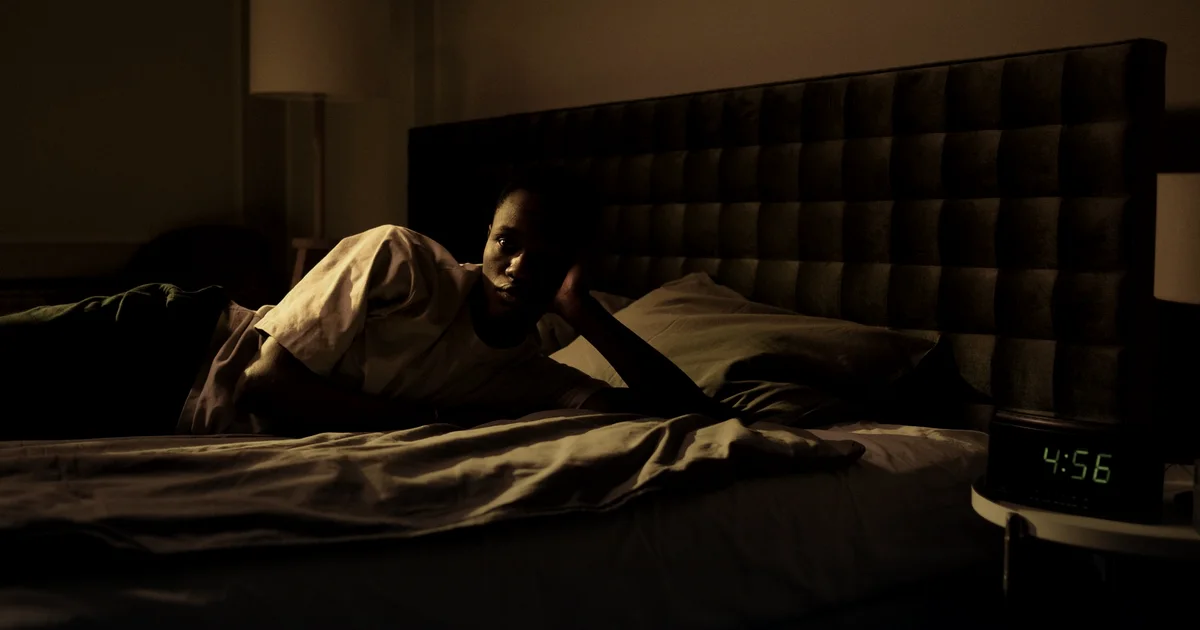
The night before a big start. You go to bed early, but the start protocol keeps spinning in your head, the hotel is noisy outside, and sleep just won't come. By morning you feel like you didn't sleep at all. Sound familiar? And then the panic hits: "That's it, the race is ruined, my form is shot." But is that really true? Can a single sleepless night really wipe out a workout or a result on the course? A recent study in European Journal of Applied Physiology tested exactly that — and the answer is nicer than you'd think.
What they studied
The researchers recruited 26 amateur cyclists and triathletes (men, average age ~30, VO₂peak around 55 ml/kg/min — a solid amateur level). Participants were split into two groups: sleep deprivation (SD) and control.
The experiment ran for three days in a row, and each day the athletes performed the same protocol on a bike trainer:
- 40 minutes of riding at a steady moderate load;
- immediately after — a 20-minute time trial, where they had to put out maximum work.
The day-by-day layout was as follows:
- Day 1 — baseline testing, everyone sleeps normally.
- Day 2 — the SD group stays awake for 25 hours straight, the control group sleeps as usual. The test happens on the back of a sleepless night.
- Day 3 — both groups sleep normally. This is the "recovery" measurement: we look at what a single night of sleep after deprivation gives you.
In parallel, they measured EEG, reaction time (a psychomotor vigilance test), sleepiness level, heart rate, lactate, and subjective sensations.
Results
Here's the most interesting part — the effect turned out to be selective.
The head suffered, the legs didn't. After the sleepless night, sleepiness rose noticeably and vigilance dropped (p < 0,05). In other words, the brain honestly reacted to the lack of sleep.
Moderate work started to feel harder. During the 40-minute ride after deprivation, perceived effort rose (RPE, p = 0,023) and subjective well-being on the Feeling Scale worsened (p = 0,013). Simply put, the same "easy" load felt noticeably more draining after a sleepless night.
But the time trial didn't drop off. The key finding: sleep deprivation had no significant effect on the 20-minute time-trial result — the total amount of work done in the maximal test didn't change. The body was able to deliver its usual power in short, intense work despite 25 hours without sleep.
Physiology stayed stable. Heart rate and blood lactate didn't change after the sleepless night — the body was running on the same "hardware."
One night of sleep fixed everything. After the recovery night, sleepiness, vigilance, RPE, and well-being returned to baseline. A single normal sleep undid the effect of the sleepless night.
What to do in practice
- Don't panic over poor sleep before a start. Short, intense work (and that's exactly most of a race's critical moments — surges, the finish, a time trial) didn't suffer in the experiment. One restless night in a hotel is not a death sentence for your result.
- Prepare the effort "in your head." After a sleep shortfall, it's the perception of difficulty that suffers first: your usual pace feels harder. Build this into your strategy at the start — trust the power numbers and the plan, not just the sensations, which on that day lie toward "hard."
- "Bank sleep in advance." The study's logic suggests a sensible tactic: stockpile sleep in the days before a start rather than trying to "catch up" on one night. Since a single recovery night brings everything back to normal, good sleep in the preceding days is your safety cushion.
- Separate a one-off sleep shortfall from a chronic one. This tested exactly one sleepless night followed by recovery. That's nothing like sleeping 5 hours a night for weeks. A one-time glitch is survivable; systematic sleep loss is a separate and far more serious story.
Limitations
The study is small and narrow: 26 amateur men, cycling only, short tests up to 20 minutes. We don't know how the body will behave in a multi-hour race or amid heat and dehydration. They tested total deprivation (no sleep at all), not the typical "a couple hours short." Chronic sleep loss, a female sample, and elite athletes remain off-screen. And transferring bike-trainer results to the real road always calls for caution.
The bottom line
- One night without sleep (25 hours) did not lower the 20-minute time-trial result in trained amateurs.
- Heart rate and lactate stayed the same — physiology didn't "break."
- Perception took the hit: sleepiness, vigilance, and the sense of how hard moderate work feels.
- One normal night of sleep brought everything fully back to baseline.
- Practical takeaway: a one-off bad night isn't a catastrophe; bank sleep in advance and don't confuse one sleepless night with chronic sleep loss.
Source: Gattoni C, Girardi M, Javadi AH, O'Neill BV, Marcora SM. European Journal of Applied Physiology, 2025. DOI: 10.1007/s00421-025-05908-w