Inspiratory training: why runners and triathletes should strengthen their breathing muscles
The diaphragm tires too and “steals” blood from your legs. We unpack how a handheld resistance trainer cuts breathlessness and perceived effort — and why it isn’t about a VO2max record, but about finishing without that “not enough air” feeling.
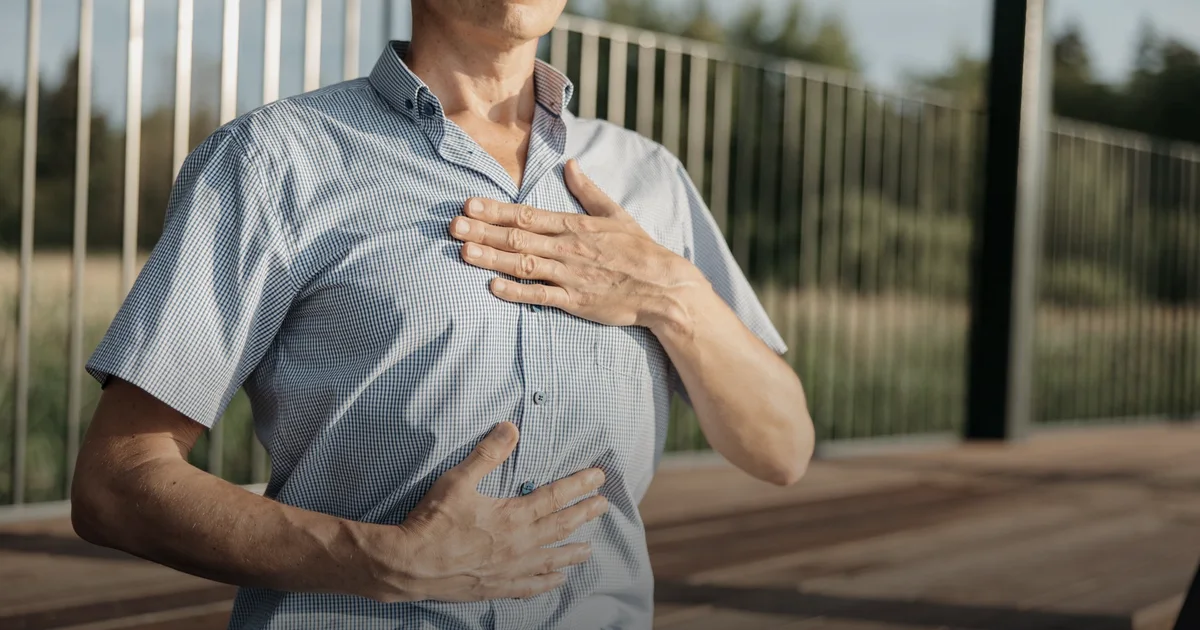
The last kilometre. Your legs are still holding the pace, but your lungs feel like they have clamped shut: your breath is short and ragged, and one thought fills your head — “not enough air.” Sound familiar? We are used to training the heart and legs, yet we almost never think about the muscles that pump air. And that is a mistake: the diaphragm and the intercostal muscles are skeletal muscles just like any other, and they get tired too. You can train them separately, with a handheld device that adds resistance on the inhale. It is called IMT (inspiratory muscle training), or more broadly RMT (respiratory muscle training). Let us sort out what really works here and what is a myth.
Why train your inhale
The key idea is the respiratory muscle metaboreflex. When the diaphragm tires under hard work, metabolites build up in it. They irritate sensory endings (type IV in the phrenic nerve), and through the sympathetic nervous system the brain orders the vessels in your working legs to constrict. The logic is ancient and unforgiving: breathing is a survival priority, so blood is redistributed away from the legs toward the breathing muscles.
The upshot for us amateurs is unpleasant: at the finish, a fatigued diaphragm literally “steals” blood flow from the legs, and the legs flood with acid faster. This is not theory pulled out of thin air. In experiments where the work of breathing was cut artificially by roughly half (using a ventilatory support device), blood flow to the legs rose and performance improved. And the reverse holds too: fatiguing the breathing muscles speeds up leg fatigue. By training the inhale, we push back the moment this reflex kicks in.
What the research shows
A recent systematic review with meta-analysis (2025) pulled together 25 studies and 522 athletes — mostly swimmers and footballers. What they found:
- Inspiratory strength rises. Across 18 studies, maximal inspiratory pressure (MIP) increased on average by 27,90 cmH2O (95% CI 16,18–39,62; p<0,00001). Put simply, the breathing muscles become noticeably stronger.
- Expiratory strength too. In footballers, maximal expiratory pressure (MEP) grew by 31,77 cmH2O.
- Lung function improves (FEV1, FVC, the Tiffeneau index) along with physical performance — most noticeably in footballers.
An important caveat from the authors: the quality of evidence is low to very low. In other words, the direction of the effect is clear, but its exact size drifts from study to study.
And what about “pure” VO2max? That is trickier. There is work in which respiratory muscle strength together with ventilatory efficiency explained a large share of the VO2max spread between athletes. But the direct link “stronger inhale → higher VO2max” is not always confirmed: some studies find it weak or nil. Back in the 2000s there were studies on rowers and other athletes where IMT did not improve VO2max or endurance. The cautious conclusion: inspiratory training changes not so much the VO2max ceiling as “respiratory fatigue” and subjective sensations — breathlessness and perceived effort.
Separately — hypoxia and altitude. This is exactly where the effect shows up most clearly. When oxygen is scarce, ventilation shoots up, the breathing muscles work themselves to the bone, and the metaboreflex kicks in earlier. Reviews note that a few weeks of IMT before a start at moderate altitude can improve performance, and in a race under hypoxia it can raise ventilation and oxygen uptake. The results are not perfectly consistent, but the logic is clear: the greater the contribution of breathing to the limitation, the greater the benefit.
How to train in practice
What the gadget is. A handheld inspiratory resistance trainer — for example, POWERbreathe. You breathe through it, a valve creates a load on the inhale, and the diaphragm works against resistance. It is strength training for the inspiratory muscles, and no electronics are needed.
A typical protocol from the studies:
- 30 breaths twice a day, with a break of several hours between sets.
- A load of about 50% of your MIP (maximal inspiratory pressure). On consumer models you simply dial this in “by feel” with the adjuster.
- Progression: when 30 breaths come easily (or you can do 35 in a row), increase the resistance.
- Duration: at least 6 weeks. The first shifts in MIP are visible by week 4, with the peak of the gain by week 12.
Who really benefits: those with exercise-induced bronchospasm or asthma; those who start at altitude; anyone who knows the “my breathing can’t keep up” feeling at the finish and on tempo segments; athletes in high-ventilation sports (swimming, running, rowing).
Limitations
- This is not about a record. Do not expect a jump in VO2max, but less breathlessness and “fresher” breathing on the hard sections.
- The “breathe deeper — run faster” myth does not work so simply. Hyperventilating while running will not speed you up; the point of IMT is to make the inspiratory muscles themselves stronger and more enduring, not to breathe more often.
- The evidence base is still weak in quality — the effect is real, but not guaranteed for everyone.
- Disclaimer: with lung diseases (COPD, severe asthma and others), start IMT only after consulting a doctor.
The bottom line
- The breathing muscles tire and, via the metaboreflex, “take away” blood flow from the legs — inspiratory training pushes back that moment.
- The 2025 meta-analysis: IMT/RMT reliably raises inspiratory strength (MIP +27,90 cmH2O) and expiratory strength, and improves lung function; the quality of evidence is low.
- The effect on “pure” VO2max is disputed; more reliable is a reduction in breathlessness, perceived effort and respiratory fatigue.
- The benefit is clearest under hypoxia, at altitude and in high-ventilation sports.
- Protocol: ~30 breaths twice a day at ~50% MIP, progressing the resistance, for at least 6 weeks.
- With lung diseases — only under a doctor’s guidance.
Sources: The effectiveness of respiratory muscular training in athletes: A systematic review and meta-analysis. https://www.sciencedirect.com/science/article/abs/pii/S1360859225000130 ; https://pubmed.ncbi.nlm.nih.gov/40325755/ ; Respiratory Muscle Strength as a Predictor of VO2max and Aerobic Endurance in Competitive Athletes. Applied Sciences, 2024. https://www.mdpi.com/2076-3417/14/19/8976