Altitude training: why “live high — train low” doesn't work for everyone
Breaking down LHTL without the myths: how long you really need to live up high, why it won't work without iron, and what an amateur — not an elite marathoner — can realistically do.
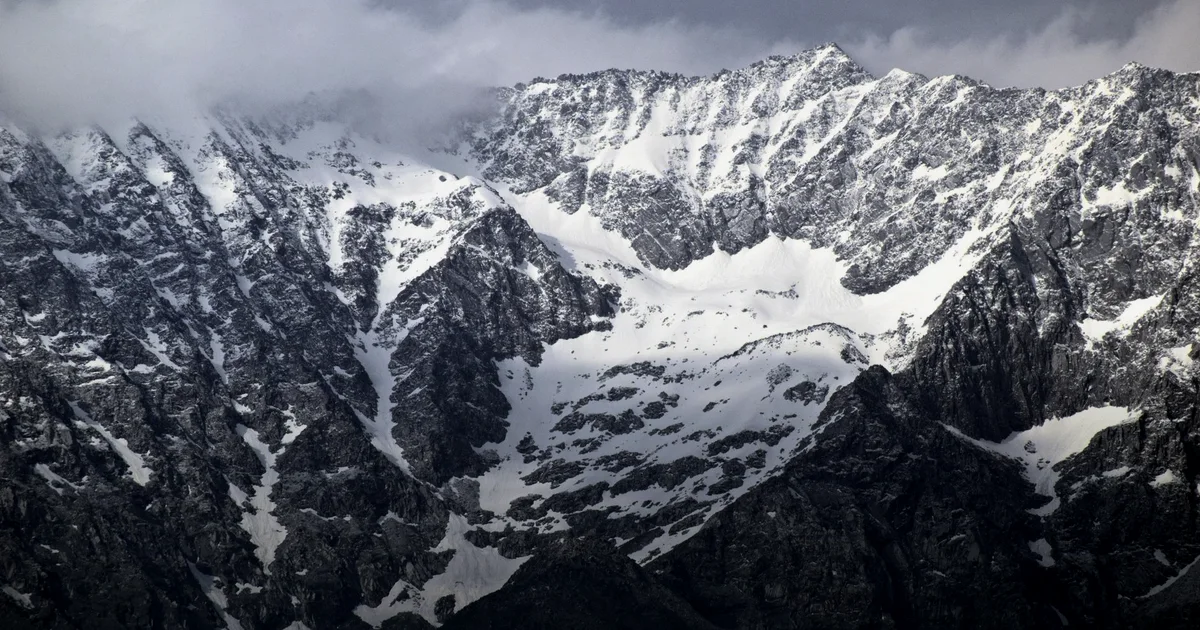
“I'll pop up to the mountains for a week and come back faster.” Sounds tempting, but physiology doesn't work like that. Altitude really can boost oxygen transport — but the rules of the game are stricter than they seem: you have to live up there for a long time, train wisely, and everyone responds differently. Let's look at what the science says and who actually needs this.
How altitude works
The idea behind altitude training is simple: in thin air there's less oxygen, so the body responds by releasing erythropoietin (EPO) and gradually building up hemoglobin mass — that is, the blood's ability to carry oxygen. More hemoglobin means potentially higher aerobic capacity at sea level.
The catch is that at altitude you can't train as intensely as down low: pace drops and the quality of the work suffers. That's where the “live high — train low” scheme (Live High – Train Low, LHTL) came from, described in the 1990s by Levine and Stray-Gundersen. The idea: live and sleep at moderate altitude (roughly 2000–2500 m) to kick-start red blood cell production, and do your quality sessions lower down — to preserve speed and power.
Key conditions for a response:
- A sufficient dose of altitude. The stimulus depends on how many hours a day you actually spend up high — the benchmark is >12–14 hours a day, and in the classic protocols even more.
- Duration. Usually you need 3–4 weeks: in any less, hemoglobin simply doesn't have time to rise.
- Training low. Intense intervals are done at reduced altitude so you don't lose your speed qualities.
There's also an advanced version — LHTL+H (live high, train both low and high): separate high-intensity sessions in hypoxia are added to the basic scheme.
What the research shows
A recent 2025 systematic review with meta-analysis (Deng et al., 13 randomized trials, 276 participants) gives a sober picture.
- Hemoglobin really does rise: the pooled effect was SMD = 0.7 (95% CI: 0.27–1.13) — statistically significant.
- Hemoglobin mass increased modestly (SMD = 0.49), but here the result did not reach significance (p = 0.16).
- No significant effect on VO2max was found (SMD = −0.13): maximal oxygen uptake did not reliably improve on average across the groups.
In the classic Levine and Stray-Gundersen work, a month living at 2500 m with training at 1250 m increased red blood cell volume by about 5%. But there, and in later reviews, one thing runs through it all: the response is extremely individual. There are “responders” and “non-responders” — in some athletes hemoglobin barely rises, and fewer than half of participants show any performance gain at sea level. There are many reasons, and one of the main ones is iron stores.
Who really needs this and how to apply it
Honestly: altitude training is a tool primarily for the elite and for those who are heading to the mountains anyway. An amateur running 40 km a week will gain far more from consistent volume, sleep and nutrition than from the exotica of hypoxia.
If you're set on a mountain camp anyway, keep a few principles in mind.
Iron first. Hemoglobin is built from iron. With low ferritin, altitude simply won't start red blood cell production — the body has nothing to build red blood cells from. It's the same principle as in our separate article on iron: check your ferritin in advance and get it into the normal range before the trip, not after. Without that, the camp turns into an expensive holiday with sleep deprivation.
A well-run camp beats gadgets. The option that actually works for an amateur is a thoughtful 3–4 weeks in the mountains with the right living altitude and easier training in the first days. Hypoxic tents and masks are a completely different story: a tent theoretically mimics “living up high,” but it demands discipline and a sufficient dose of hours, while a training “mask” does not raise hemoglobin mass — it merely makes breathing harder. Don't confuse the two.
Timing your return. After coming back down to sea level, how you feel and perform changes in waves. There's no universal ideal window — some people race well in the first days, others after 2–3 weeks. So don't plan your main race “on a guess” right after the mountains: if you can, rehearse your reaction at a secondary competition.
Limitations
The mountains are a stressor, and it can easily outweigh the benefit:
- Sleep loss. You sleep worse at altitude, and it's sleep that provides recovery.
- Dehydration. In dry, thin air you lose fluid faster — you need to drink deliberately.
- Overload. The temptation to “train like you do down low” leads to overtraining; in the first days the load is reduced.
- No guarantee. Even with perfect execution, you may turn out to be a “non-responder.”
The bottom line
- LHTL = live/sleep at 2000–2500 m, train intensely lower down; typical duration is 3–4 weeks, altitude dose >12–14 h/day.
- 2025 meta-analysis: hemoglobin rises significantly, but a VO2max gain is on average not confirmed — the effect depends heavily on the individual.
- Without normal ferritin, altitude won't work — iron first, then the mountains.
- For an amateur, a well-run mountain camp is more honest than a mask at home; a training mask doesn't raise hemoglobin mass.
- The myth “a week in the mountains = speed” doesn't hold: you need dose, time and an individual response.
- Plan your return to sea level in advance, and don't gamble your main race blind.
Sources: Deng L. et al. “Impact of Altitude Training on Athletes' Aerobic Capacity: A Systematic Review and Meta-Analysis”, 2025. https://pmc.ncbi.nlm.nih.gov/articles/PMC11857729/. Classic work: Levine B.D., Stray-Gundersen J. “Living high-training low”, J Appl Physiol, 1997.