The Menstrual Cycle and Endurance: What's Actually Proven
Averaged “train strictly by phase” schemes are overrated. We break down what recent field studies show and why a personal approach and symptom tracking matter more than a universal mapping of training loads to cycle phases.
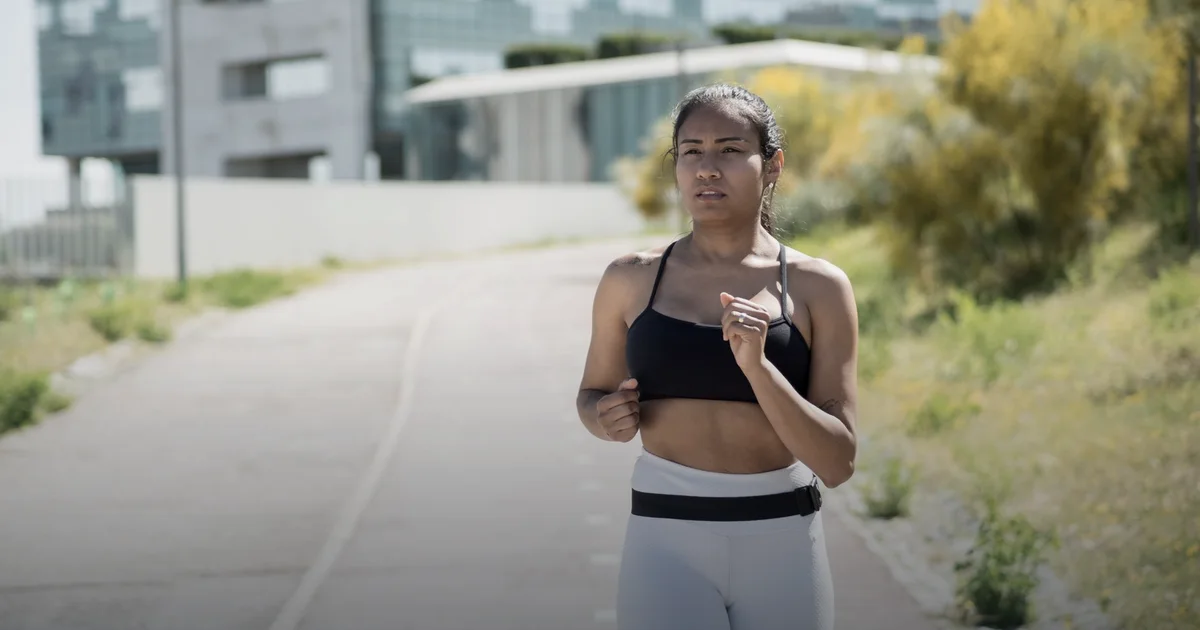
"In the luteal phase, only easy work; in the follicular phase, hard intervals." Schemes like this travel from blog to blog and sound convincing: if hormones change over the month, then the plan should adapt to them too. But when researchers test these recommendations not in theory but in the field, the tidy logic falls apart. Let's figure out what the data actually says — and what an athlete and coach should do about it.
What the research says
The FENDURA project (Scandinavian Journal of Medicine & Science in Sports, 2025) is one of the most rigorous to date. Trained female runners with a natural cycle (about 15–16 participants, without hormonal contraception) performed identical low-intensity and high-intensity sessions across three phases: early follicular, ovulatory, and mid-luteal. The result: the cycle phase did not affect the ability to maintain running economy. At the group level, no significant differences were found in VO₂peak, economy, or power. After a hard interval session, the oxygen cost of running turned out to be higher by about 1,8%, but that falls within the typical measurement variability in well-trained runners.
A 2026 field study (Nagorna et al., journal Sports) looked at it from a different angle. 25 elite female basketball players tracked their cycle phases using three accessible methods — questionnaires, basal body temperature, and the "fern" test (crystallization of estrogen in cervical mucus) — while in parallel taking daily tests of sprint, jumping, and accuracy. There were small fluctuations in results across phases: the peak fell on the post-menstrual and post-ovulatory periods, a slight dip on the pre-menstrual one. But the main conclusion is unexpected and practical: reliably determining the phase with cheap methods is almost impossible. The "fern" test caught only 63% of expected ovulations, basal temperature gave reliable confirmation in only 58% of cycles, and the combination of all three methods yielded the correct phase on at least 80% of training days in only 11 of the 25 athletes.
The key finding: individuality matters more than phase
Put the two results together, and the picture becomes clear. At the group level, averaged "phase" effects are weak and often lost in measurement noise. At the same time, the inter-individual variability is huge: some feel heavy in the luteal phase, others notice no difference at all. The universal formula "phase X means load Y" averages what cannot be averaged.
Add to this a second problem: even with the best intentions, precisely catching the phase in everyday life is hard, and planning key workouts on an incorrectly identified phase is building a house on sand. That is why the myth "train strictly by phase" fails the test — not because the cycle doesn't matter, but because a rigid, universal mapping of training loads to calendar phases isn't grounded in reliable data.
How to apply it in practice
Instead of someone else's scheme — your own observations.
- Keep a cycle and symptom diary. Note the cycle day, how you feel (cramps, sleep, mood, heaviness in the legs, GI), perceived exertion (RPE), and the subjective quality of the session. After 2–3 cycles, look for your own patterns, not the textbook ones.
- React to symptoms, not the calendar. Severe pain, heavy bleeding, migraine, exhaustion — reason enough to reduce intensity or move a key workout. The basis is the specific symptoms of today, not what's "supposed to happen according to the phase."
- Don't play the hero with severe symptoms. Persistent, pronounced dysmenorrhea or heavy periods are a signal to see a doctor: behind them may lie, for example, iron deficiency, which on its own hits endurance.
- Track cycle regularity as a health marker. Missed or irregular periods are a red flag for possible low energy availability and RED-S (relative energy deficiency in sport). This is not a sign of "good form": a chronic energy deficit disrupts the hormonal balance and worsens bone health, raising the risk of stress fractures. Here the priority is nutrition and recovery, not training volume.
Limitations
Both works are based on small and fairly homogeneous samples (trained women, specific tasks: running economy, basketball tests). Individual "phase-responsive" athletes may well exist, but reliably identifying them is still difficult, and the tools for determining the phase in field conditions are imperfect. This is a scientific argument against rigid universal schemes, not a medical recommendation: with pronounced symptoms or cycle disruptions, you need a doctor.
The bottom line
- At the group level, cycle phases do not significantly change VO₂peak, running economy, or power.
- Inter-individual variability is huge — universal "phase" schemes are overrated.
- Cheap methods of phase determination (temperature, the "fern" test) are unreliable, which makes rigid phase-based planning shaky.
- What works is a personal approach: a cycle and symptom diary, guided by how you feel, not by the calendar.
- A missed cycle is a signal of RED-S and bone risks, not a sign of good form.
Sources: Docter et al. "Running Economy After a Low- and High-Intensity Training Session in Naturally Menstruating Endurance-Trained Female Athletes: The FENDURA Project", Scandinavian Journal of Medicine & Science in Sports, 2025 (DOI: 10.1111/sms.70050). Nagorna et al. "Advancing Women's Performance in Fitness and Sports: An Exploratory Field Study on Hormonal Monitoring and Menstrual Cycle-Tailored Training Strategies", Sports (MDPI), 2026, 14(1):7 (DOI: 10.3390/sports14010007).