Carbon “super shoes” on the trail: does the road magic work
The 2026 meta-analyses confirmed it: on the road a carbon plate really does save 2–3% of energy. But all the science on “super shoes” is built on treadmills and steady pacing — and on trails and climbs there is simply no evidence of any benefit.
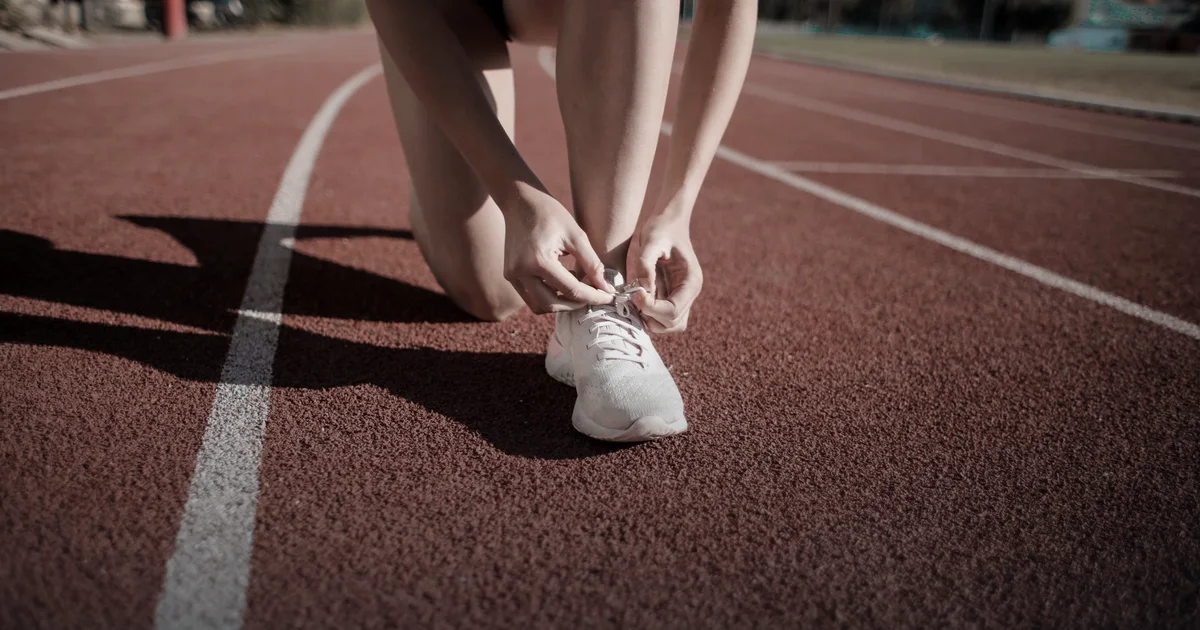
Every autumn, when world records fall at the marathons, the same argument flares up in trail-running chats: should I buy carbon “super shoes” for the mountains too? The price stings — $250–300 — but the promise is tempting: the plate works like a spring and “carries you” forward. Two fresh 2026 meta-analyses from the journal Frontiers in Sports and Active Living let us separate fact from marketing. Spoiler: the magic is real, but it has a very narrow address.
What was studied
The first paper (Kobayashi and colleagues) pooled 14 studies and 271 runners and looked at metabolics — how much energy it costs to run in carbon versus ordinary shoes. The second (Martin and colleagues) is a systematic review of biomechanics: leg stiffness, joint power, and stride frequency in more than 300 participants.
An important detail to keep in mind throughout the article: almost all of these studies were carried out on a treadmill or a stadium track, at the even, steady pace of road-running speeds. There is no trail, no long climbs, no technical descent in this data.
Results
The metabolic effect on the road is real, and it is consistent. On average, running economy improved by ≈2.88% (a confidence interval of roughly 1.2% to 4.6%), energy cost fell by about 2.6%, and oxygen consumption by 2.8%. The authors' conclusion is cautiously worded: carbon lowers the metabolic “cost” of submaximal running “by roughly 2–3%.”
What does that give you at the finish? Economy doesn't translate into result one-to-one, but roughly a 2–3% energy gain corresponds, by various estimates, to about 1% off your marathon time — for an elite that's minutes, for an amateur with a 3:30 finish it's around two minutes.
And biomechanics explains why the effect is so narrowly specialized. Martin's review found no significant changes in leg stiffness or in the power of the knee, hip, or metatarsophalangeal joints. The only notable shift was a borderline reduction in ankle power (plus a slight, statistically insignificant drop in stride frequency). In other words, the plate doesn't make you more stable or more “controllable” — it only helps you roll more efficiently through the toe on an even, predictable surface.
Who benefits, and where
The greatest benefit goes to those the studies were written for: road runners holding an even pace over distances from 10 km to the marathon. The cleaner and steadier the push-off through the forefoot and the higher the speed, the more tangible the energy return from the plate. If the goal is a personal best in an asphalt marathon or half marathon, carbon is justified.
And now for the trail — and this is the main myth. There is simply no evidence base that carbon helps on the trail: not one of these studies tested rough terrain. Mechanically that makes sense: the plate's spring effect unfolds during an identical, repeating push-off, whereas in the mountains every step is different — rocks, roots, a shifting angle, hiking up steep climbs. There the foot needs ankle adaptability and control, and it's precisely ankle power that carbon slightly suppresses. On a technical mountain trail, an expensive plate is more like money down the drain.
Two more practical considerations that aren't in the meta-analyses but that matter to your wallet and your health. Durability: the racing foams under the plate are soft and “die” faster than usual — these are shoes for race days, not for everyday mileage; racking up daily kilometers in $250–300 shoes is poor economics. Injuries: a stiff lever plus altered mechanics is a reason to ease into carbon gradually, rather than running your first long race in brand-new shoes.
Limitations
- Both papers are almost entirely treadmill and track, at even submaximal speeds; the data doesn't cover transfer to trail, climbs, or descents.
- Participants were predominantly men; data on women is scarce.
- They compared whole shoes (foam + plate + geometry), not the “pure” effect of the plate.
- Economy is not the same as race result: individual response varies widely.
The bottom line
- On the road, carbon really does save ≈2–3% of energy — that's on the order of 1% off your marathon time.
- Maximum benefit comes with an even pace, smooth asphalt, and a fast runner; that's exactly what carbon was built for.
- Biomechanics doesn't improve stability and control: the plate isn't about handling, it's about an efficient roll-through.
- For the trail there's no evidence of benefit; on technical terrain and climbs the spring effect is lost.
- Remember the rapid wear of the soft foam, and ease into carbon gradually so you don't pick up an injury.
Source: Kobayashi E.N. et al. “Metabolic effects of carbon-plated running shoes: a systematic review and meta-analysis.” Frontiers in Sports and Active Living, 2026. DOI: 10.3389/fspor.2025.1710224. Martin S.G. et al. “Carbon plates in running shoes biomechanics: a systematic review and meta-analysis.” Frontiers in Sports and Active Living, 2026. DOI: 10.3389/fspor.2026.1764338