Menopause and endurance: what a survey of 187 female athletes aged 40–60 revealed
Sleep problems, exhaustion and joint pain are the most common companions of menopause among female runners, swimmers and cyclists. A new PLOS One study shows how hard the symptoms hit training — and what to do about it.
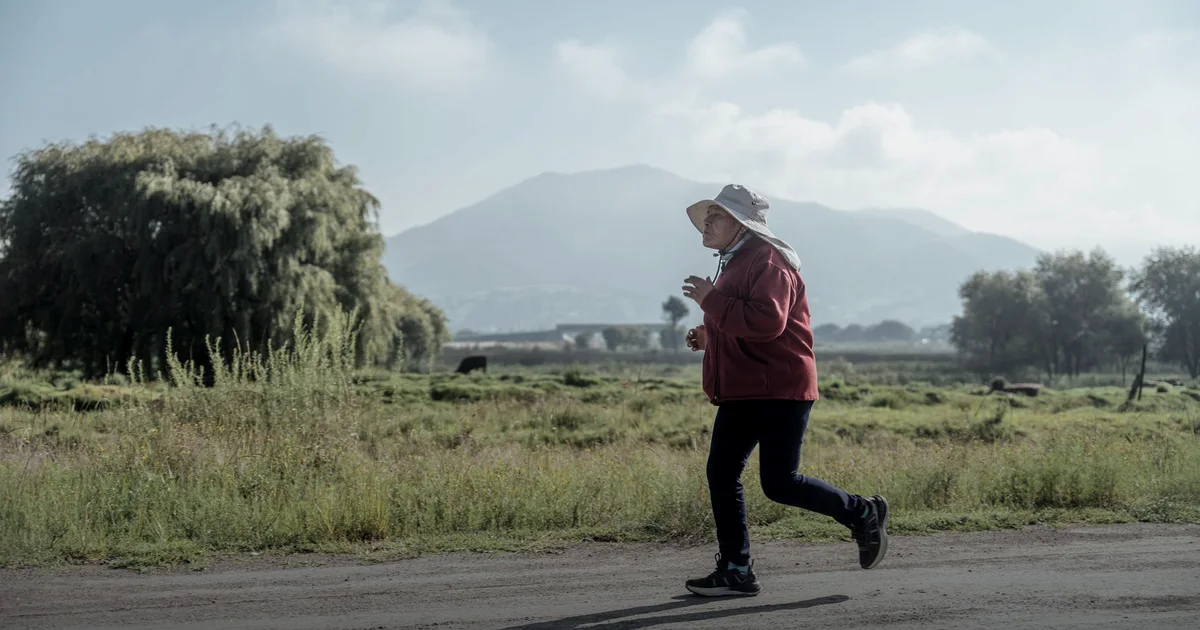
You have been training for ten, fifteen, twenty years. You know your paces, your zones, your body. And then — somewhere after forty — something stops adding up. Sleep becomes fragmented. Recovery from a long session takes four days instead of two. Joints ache for no obvious reason. And the worst part: there is almost no one to talk to about it, because in the sporting world menopause is still filed under “personal, not up for discussion.”
A December 2025 paper in the journal PLOS One is one of the first attempts to measure the scale of this problem specifically in endurance athletes.
What the study found
Researchers in the United States surveyed 187 women aged 40–60 who take part in endurance sports: running (55%), swimming (22%), cycling (14%) and triathlon (9%). The inclusion criteria were strict — at least 5 years of regular training and at least 3 hours of activity per week. These are not beginners, but experienced, well-trained women. The survey ran from February to August 2024.
Symptoms were assessed using the MRS (Menopause Rating Scale). The picture looked like this:
- sleep problems — 88%
- physical and mental exhaustion — 83%
- anxiety — 72%
- irritability — 68%
- depressed mood — 67%
- weight gain — 67%
- hot flushes — 65%
- joint and muscle pain — 63%
But frequency is only half the story. What matters more is how the symptoms affected sport. Here, hot flushes were not at the top — the leaders were rather more “mechanical” things. Joint and muscle pain negatively affected training in 97% of those who experienced it, and performance in 91%. Sleep problems — 92% and 89% respectively. Exhaustion — 87% and 88%. Weight gain — 79% and 88%.
And the key association the authors found: the more severe the symptoms on the MRS, the stronger the perceived hit to training. Among women who reported a “strong negative influence” on training, the mean MRS score was 19,5 ± 7,8 versus 8,5 ± 4,7 in those who noticed no influence (p < 0,001).
A curious detail: despite this entire list, 84% of participants rated their health as “excellent” or “very good”. Women do not consider themselves ill. They simply live and train with what they have.
Why perimenopause hits harder
A common expectation is: “I will get through to menopause and then everything will settle down.” The data say otherwise. The highest MRS scores were found in women in perimenopause — the transitional period when cycles are still present but become irregular: 14,2 ± 6,0. For comparison: in premenopause — 8,0 ± 4,7, in postmenopause — 11,7 ± 6,1 (p < 0,001).
In other words, the hardest time is precisely when a woman is formally “not in menopause” yet and is least likely to connect how she feels with hormonal change. A failed session gets blamed on age, laziness or a lack of discipline. Although the reason may be something else entirely.
What to do in training
The study describes symptoms but does not test ways of managing them — this section draws on general training principles, not on the survey data.
Sleep is not “recovery,” it is a basic training variable. Since it is impaired in 88% of women and has the strongest effect on performance, it needs to be planned like interval work: a fixed bedtime, a cool bedroom, and dropping hard evening sessions if you cannot fall asleep afterwards.
Strength and impact loading are essential. Falling oestrogen hits bone mass and muscle. Running itself provides an impact stimulus, but swimming and cycling do not. Two strength sessions a week with squats, deadlifts and jump work are preventive care, not an “optional extra.”
Protein and energy availability. A chronic calorie deficit against a background of falling oestrogen is a double blow to bones and recovery. Trying to “shed the weight you have gained” by restricting food is the fastest route to a stress fracture. Eat enough, especially protein and especially after training.
Temperature during hot flushes. Early starts, shade, light-coloured layered clothing, ice on the neck and wrists, more fluids, and a willingness to cut intensity in the heat.
Flexible planning. A training plan is best built with “floating” days: move quality work to days when you have energy rather than forcing it through on schedule. This is not weakness of character, it is an appropriate response to physiology.
A conversation with a doctor. Symptoms are worth discussing with a specialist — including the question of HRT (menopausal hormone therapy). In the study, 28% of participants were taking it. There can be no do-it-yourself decisions here: this is a conversation with a doctor, not with the internet.
Limitations
This is a cross-sectional survey: it shows an association but does not prove causation. All data are self-reported, including the determination of menopausal stage. The authors did not collect data on race, education or income, did not account for medical history, medications and supplements, or for work stress and caregiving — all of which could have influenced the results. The sample is from the United States, 187 people. Caution in generalising the conclusions to others is essential.
Key points
- In female athletes aged 40–60, menopausal symptoms are common: sleep — 88%, exhaustion — 83%, joint and muscle pain — 63%.
- Training is hit hardest by joint pain, sleep problems, exhaustion and weight gain.
- The greater the symptom severity on the MRS, the stronger the perceived drop in performance.
- Perimenopause is the hardest phase, not postmenopause.
- Regular sport does not cancel out symptoms: their severity is comparable to the general population.
- Priorities: sleep, strength and impact loading, adequate nutrition, temperature control, a flexible plan.
- The topic is under-researched and rarely spoken about. Discussing it with your doctor and your coach is normal, not a complaint.
This material is educational and does not replace medical advice. If you have symptoms affecting your quality of life or your training, consult a specialist.
Source: Hamilton HM, Yarish NM, Heron KE. Frequency and perceived influence of menopausal symptoms on training and performance in female endurance athletes. PLoS One, 2025;20(12):e0335738. https://doi.org/10.1371/journal.pone.0335738