Hydrogel carbohydrates: 2.1% faster over 5 km in runners, zero gain in cyclists — what alginate really does
On 6 September the Russian runner Rinas Akhmadeev dropped out of his marathon debut after reaching halfway in 1:04:08 — because of gut problems; by his own account, his fuelling did not sit well. Hydrogel is sold as the answer to exactly this problem. A 2026 systematic review pulled together nine RCTs: carbohydrate oxidation rises at high doses and the stomach sometimes copes better, but only one running study showed a clear performance gain.
The main storyline of the Pushkin–St Petersburg Marathon on 6 September was the marathon debut of the Russian runner Rinas Akhmadeev. He ran the first half in 1:04:08 and dropped out soon afterwards: by his own account, gut problems meant his fuelling did not go down well. The story is familiar to anyone who has tried to take in 60–90 grams of carbohydrate an hour at running pace.
This is exactly the pain point that hydrogel drinks and gels are marketed at: many professionals rely on them, and interest in running gels keeps growing. Let us look at what is known about hydrogel from controlled studies rather than from advertising.
What hydrogel is
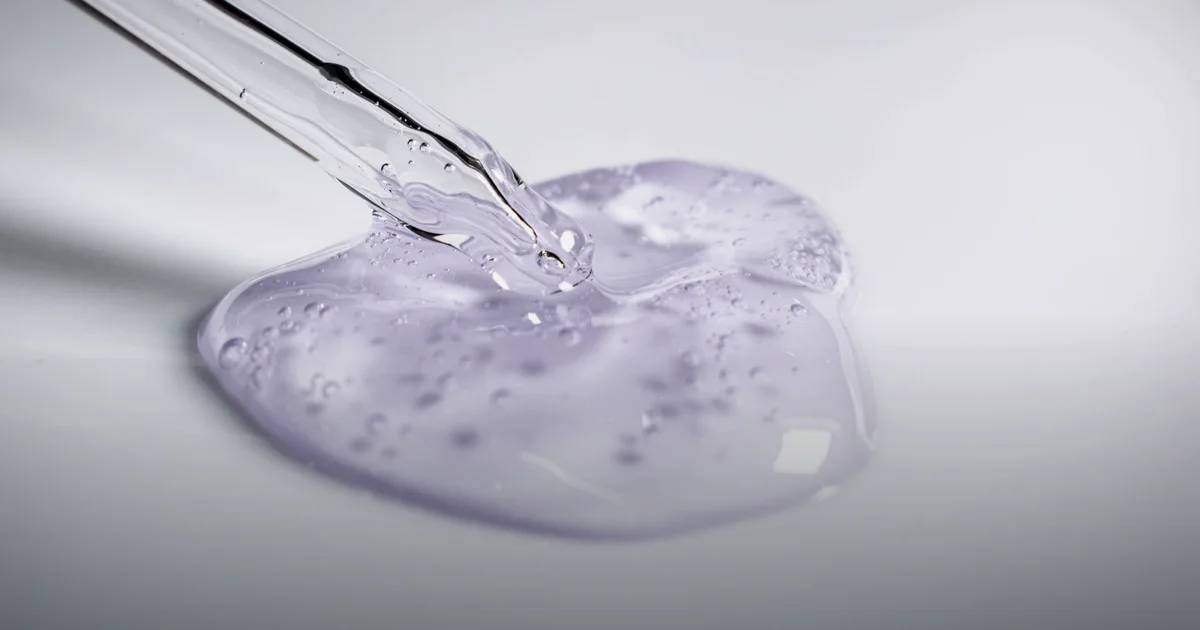
An ordinary carbohydrate solution — maltodextrin with fructose, or glucose with fructose — is mixed with sodium alginate and pectin. In the acidic environment of the stomach the mixture turns into a gel that effectively “encapsulates” the carbohydrate. The manufacturers' promise: the stomach empties faster, the carbohydrate reaches the intestine, where it is absorbed, and there is less gurgling, nausea and heaviness.
It sounds logical. It has been tested in randomised trials since 2019.
What the 2026 review says
Pengyuan Li and colleagues (Frontiers in Nutrition, 2026) gathered randomised trials from 2000–2025 that compared alginate hydrogel with ordinary carbohydrate or placebo during exercise lasting 60 minutes or longer. Nine studies made the cut. The samples were small — fewer than 15 people in most — and almost exclusively men.
The conclusions fall into four areas:
- Metabolism — the most consistent effect. At moderate doses (up to 70 g/h), hydrogel does not increase exogenous carbohydrate oxidation compared with an ordinary glucose–fructose mix. At very high doses (90–180 g/h), oxidation reaches 1.1–1.3 g/min.
- Gut — mixed results: symptoms are fewer or the same, and hydrogel does not improve objective markers of intestinal damage.
- Performance — the most contradictory area. Most studies found no difference; a small benefit appeared mainly in running.
- Recovery — there are almost no data.
The authors' final wording: hydrogel is a tool for specific situations, not a universally better way to deliver carbohydrate. The review also notes that some of the studies used manufacturers' products or were partly funded by industry.
Where hydrogel won
The strongest argument in its favour is the study by Josh Rowe and colleagues (Medicine & Science in Sports & Exercise, 2022). 11 trained runners ran for 120 minutes at 68% VO₂max while taking 90 g/h of glucose and fructose in a 2:1 ratio in three versions: hydrogel, the same solution without gelling agents, and a carbohydrate-free placebo. This was followed by a 5 km time trial.
- Hydrogel: 19:29, standard solution: 19:54, placebo: 21:05.
- Hydrogel was 2.1% faster than the standard solution (p = 0.033).
- Exogenous carbohydrate oxidised: 68.6 g vs 63.4 g.
- Gut complaints with hydrogel were no more common than with placebo, whereas the standard solution caused more.
Where it did not
- McCubbin and colleagues (IJSNEM, 2020): 9 runners, 3 hours at 60% VO₂max, the same 90 g/h. GI symptoms occurred in 100% of participants in both conditions, with no difference in severity (29.1 vs 34.8 points); carbohydrate oxidation and blood glucose were identical. Time to exhaustion was 722 s on hydrogel and 756 s on the standard solution, a non-significant difference.
- Baur and colleagues (European Journal of Applied Physiology, 2019): 9 cyclists, 78 g/h, 98 minutes of variable-intensity work and ten sprints. Mean power was 284, 281 and 277 W on hydrogel, the standard mix and maltodextrin respectively; no difference in GI symptoms.
A telling detail: in 2020 Andrew King, the same Josh Rowe and Louise Burke wrote a review concluding that no advantage of hydrogel had yet been shown, and pointed out that it had not been tested where it would matter most — at high doses and high intensity. Two years later Rowe himself obtained his positive result, precisely in running at 90 g/h.
Why the results diverge
Different things are being compared. The most impressive oxidation figures come from comparisons of different doses or different carbohydrates, not of the same mix with and without alginate. In fair like-for-like comparisons the picture is more modest: +5 grams of oxidised carbohydrate over two hours in Rowe's study and zero in McCubbin's.
Running is not cycling. The jostling of internal organs is greater when running, and GI symptoms are more common. The only noticeable gain was found precisely in running; in cycling protocols it was zero.
Samples of 9–14 men. Individual differences in tolerance are huge, and one or two studies like these cannot tell you what will happen in any particular person.
How to apply this
- Your stomach handles 60–90 g/h of ordinary gels fine — hydrogel will most likely add nothing but cost.
- Your gut gives out when running on high doses — hydrogel is worth trying: the only positive result was obtained in exactly this scenario. But try it in training, not on race day.
- The main lever is not the packaging but gut training. Carbohydrate tolerance can be trained, and there is a separate article on that. How much carbohydrate can be absorbed in an hour at all, and why a glucose–fructose mix works better than glucose alone, is covered in the article on the 60 and 90 gram rule.
- Nothing new on race day. Gels you have never tried on a long run at marathon pace are a lottery, whatever technology they are packaged in.
- Work out your needs in advance — the carb depot calculator will tell you how much carbohydrate to take, and when, over your race distance.
The bottom line
- Hydrogel is carbohydrate with alginate and pectin that turns into a gel in the stomach. The promise: faster delivery and fewer GI problems.
- The 2026 systematic review: 9 RCTs, with samples usually under 15 people. Oxidation rises at very high doses, GI results are mixed, and effects on race time are inconsistent.
- The only noticeable gain: 5 km 2.1% faster than with the standard solution after 2 hours of running at 90 g/h (11 runners). Other running and cycling studies found no difference.
- If ordinary gels work for you, there is no reason to pay extra. If they do not, start with gut training and dosing; hydrogel is an option to test on a long run.
Sources: Li P., Song Q., Xu N. “Plant-derived alginate polysaccharide hydrogels in sport and exercise nutrition: implications for carbohydrate metabolism, gastrointestinal integrity, exercise recovery, and athletic performance”. Frontiers in Nutrition, 2026;13:1774380. DOI: 10.3389/fnut.2026.1774380 · Rowe J.T., King R.F.G.J., King A.J., Morrison D.J., Preston T., Wilson O.J., O'Hara J.P. “Glucose and Fructose Hydrogel Enhances Running Performance, Exogenous Carbohydrate Oxidation, and Gastrointestinal Tolerance”. Medicine & Science in Sports & Exercise, 2022;54(1):129–140. DOI: 10.1249/MSS.0000000000002764 · McCubbin A.J., Zhu A., Gaskell S.K., Costa R.J.S. “Hydrogel Carbohydrate-Electrolyte Beverage Does Not Improve Glucose Availability, Substrate Oxidation, Gastrointestinal Symptoms or Exercise Performance, Compared With a Concentration and Nutrient-Matched Placebo”. International Journal of Sport Nutrition and Exercise Metabolism, 2020;30(1):25–33. DOI: 10.1123/ijsnem.2019-0090 · Baur D.A., Toney H.R., Saunders M.J., Baur K.G., Luden N.D., Womack C.J. “Carbohydrate hydrogel beverage provides no additional cycling performance benefit versus carbohydrate alone”. European Journal of Applied Physiology, 2019;119(11–12):2599–2608. DOI: 10.1007/s00421-019-04240-4 · King A.J., Rowe J.T., Burke L.M. “Carbohydrate Hydrogel Products Do Not Improve Performance or Gastrointestinal Distress During Moderate-Intensity Endurance Exercise”. International Journal of Sport Nutrition and Exercise Metabolism, 2020;30(5):305–314. DOI: 10.1123/ijsnem.2020-0102