Frozen at a marathon at +10 °C: why rain and wind steal heat and carbohydrate
On 25 October in Frankfurt, Rinas Akhmadeev dropped out after the 35th kilometre, saying “I got really, really cold”. Plus ten seems like perfect marathon weather — until it starts to rain. An experiment in a climate chamber showed that rain and wind at the same temperature cool the body, raise oxygen consumption and make you burn more carbohydrate. We look at the mechanism and how to dress and fuel for a cold, wet race.
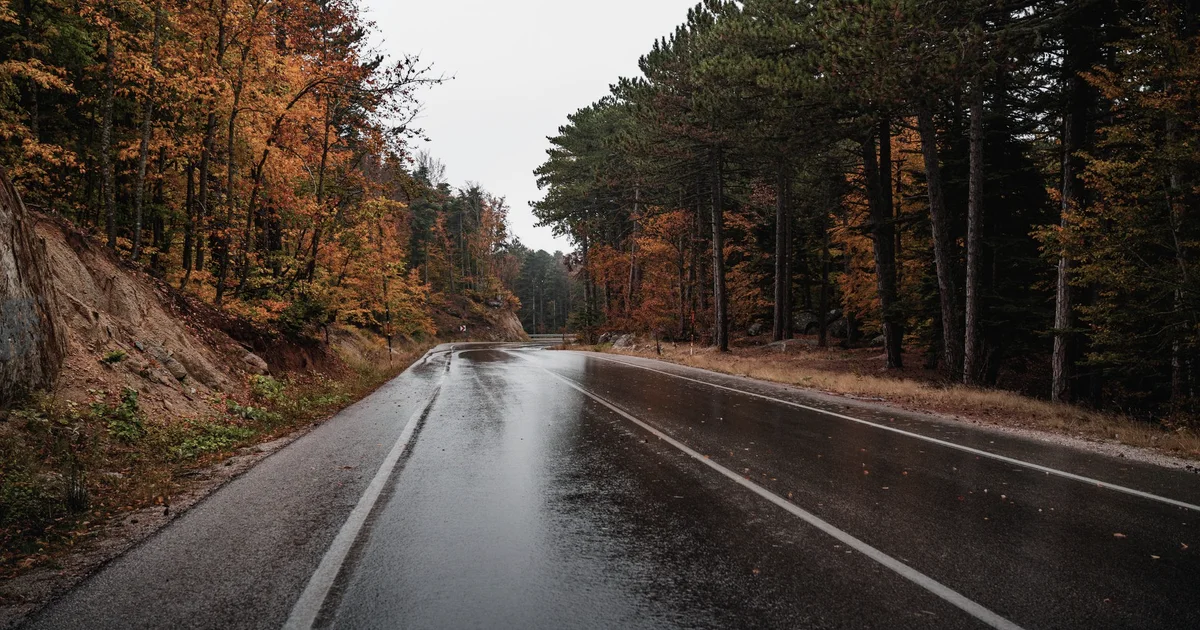
On 25 October at the Frankfurt Marathon, Rinas Akhmadeev went through halfway in 1:04:52 and then dropped out after the 35th kilometre. His explanation was short: “I got really, really cold.” Frankfurt in late October is usually 8–15 °C — exactly the temperature we are used to thinking of as ideal for a marathon. The complaint “I froze even though it was above zero” comes up after autumn races all the time, and it is a good reason to work out when cool weather turns into a trap.
Cool means fast? On average, yes
A classic study by Ely and colleagues (Medicine & Science in Sports & Exercise, 2007) compared results from seven US marathons over 6–36 years with the weather. The higher the heat stress index (WBGT), the slower everyone ran — from the podium finishers down to 300th place. The top men were 1.7% off the course record at a WBGT of 5–10 °C and 4.5% off at 20–25 °C. Slower runners lost even more.
But WBGT was designed to assess heat, and it does not directly account for precipitation. An analysis of the Boston Marathon from 1972 to 2018 (Knechtle and co-authors, PLoS ONE, 2019; 580,990 results) showed that precipitation worsened performance in every group except the winners, and strong wind did so for all finishers and for the near-elite group.
What rain and wind do: a chamber experiment
Japanese physiologists Ito and Yamashita (Journal of Sports Medicine and Physical Fitness, 2025) ran a direct experiment. 11 healthy men ran for 60 minutes on a treadmill at 70% of VO₂max in a climate chamber at +10 °C under two conditions:
- dry, with no wind;
- rain at 10 mm/h and wind at 3 m/s — by meteorological scales this is already heavy rain, though with a light wind; not unusual at autumn races.
In the rain and wind:
- rectal temperature was lower, as were mean skin temperature and thermal sensation;
- oxygen consumption was higher — at the same speed;
- perceived exertion was higher at the 50th and 60th minutes;
- the respiratory exchange ratio was higher — the body was burning more carbohydrate;
- blood lactate and noradrenaline were higher.
The authors’ conclusion: rain and wind increase heat loss, and as the body cools, energy expenditure and carbohydrate burning go up. This may impair performance.
Why people freeze at the end
The mechanism adds up to a spiral:
- Wet clothing loses its insulation, and water conducts heat away much faster than air.
- The body responds by releasing noradrenaline (its level rose in the experiment) and, with strong cooling, by shivering as well. This costs extra oxygen and glycogen.
- Glycogen runs out earlier than planned, and the pace drops.
- Slower running means less heat production. Cooling speeds up.
That is why the first 25–30 km in the rain can feel comfortable, and then you “suddenly” freeze. An extreme example is the mountain ultramarathon in Baiyin (China) on 22 May 2021: during a sudden cold snap with rain and wind, 21 participants died and another 8 were injured. An analysis in Scientific Reports (2022) names as the main causes the low temperature on a long, steep section between the second and third checkpoints, where runners were moving slowly and expending a lot of energy.
What not to believe too firmly here
11 people, men only, 60 minutes. A marathon lasts 2–5 times longer, and the experiment does not show how the spiral develops in the third hour.
This is a treadmill in a chamber. In a real race there is clothing of different thickness, sun between the clouds, warm crowds and aid stations.
Analyses of marathon weather are correlations. They cannot separate what exactly slowed people down: the cold, wet shoes, a headwind or a decision to play it safe.
We don’t know the cause of any specific DNF. Akhmadeev himself named the cold, but he also added that he was not fresh after frequent races, and we have no precise weather data from the course. His case is a prompt, not proof.
How to apply this
- Look at rain and wind, not just the thermometer. +10 °C and dry and +10 °C with rain and wind are different races. For the second, dress one level warmer.
- Protect your hands and head. Thin gloves and a hat or headband weigh a few grams, and you can always take them off along the way.
- A throwaway layer for the start. A rain poncho, an old sweatshirt or a bin bag with holes for your head and arms — until the first aid station or until you warm up.
- No cotton. Synthetics and wool lose less of their insulation when wet.
- Plan for more carbohydrate. In the rain your body burns it faster. Recalculate your fuelling plan with a margin in the carb loading calculator and don’t skip aid stations — in the cold you feel less like drinking and eating. We covered how to build up carbohydrate intake during a race in a separate article.
- Build in a pace margin. If you work out your splits in the race planner, plan a slower finish for rain and wind than for a dry day.
- Know the signs of hypothermia: uncontrollable shivering, clumsy fingers that can’t open a gel, slurred speech, muddled thinking. That is a reason to drop out and warm up, not to tough it out.
- After the finish — straight into dry clothes. Heat production drops the moment you stop, while wet clothing keeps cooling you.
The bottom line
- On average, marathons are run fastest in cool conditions: at a WBGT of 5–10 °C the top men were 1.7% off the course record, at 20–25 °C — 4.5%.
- This index does not directly account for precipitation, and in Boston in 1972–2018 it worsened performance in every group except the winners.
- A 2025 experiment: at +10 °C, rain of 10 mm/h and wind of 3 m/s lowered body temperature and raised oxygen consumption, carbohydrate burning, lactate and perceived effort.
- In practice: dress for the rain and wind, take gloves and a throwaway layer, plan for more carbohydrate and know the signs of hypothermia.
Sources: Ito R., Yamashita N. “Moderately cool environment with rain and wind increases cold strain and energy expenditure via carbohydrate oxidation during running exercise”. Journal of Sports Medicine and Physical Fitness, 2025;65(2):180-187. DOI: 10.23736/S0022-4707.24.16100-2 · Ely M.R., Cheuvront S.N., Roberts W.O., Montain S.J. “Impact of weather on marathon-running performance”. Medicine & Science in Sports & Exercise, 2007;39(3):487-493. DOI: 10.1249/mss.0b013e31802d3aba · Knechtle B., Di Gangi S., Rüst C.A. et al. “The role of weather conditions on running performance in the Boston Marathon from 1972 to 2018”. PLoS ONE, 2019;14(3):e0212797. DOI: 10.1371/journal.pone.0212797 · Sun J. “Energy supply and influencing factors of mountain marathon runners from Baiyin marathon accident in China”. Scientific Reports, 2022;12:8179. DOI: 10.1038/s41598-022-12403-1