Atrial fibrillation in endurance athletes: it's the volume, not the sport
Endurance-sport enthusiasts get atrial fibrillation 2–5× more often, but the relationship is U-shaped: moderate training protects the heart, while chronic mega-volumes may raise the risk. We break down the data and the signs that it's time to see a doctor.
Picture this: you've just finished a long Sunday run, your heart rate is calmly coming down — and suddenly something "flutters" in your chest, your heart skips out of rhythm. For most people this is a one-off episode with no consequences. But in endurance athletes with many years of training under their belt, this is sometimes exactly how atrial fibrillation (AF) — the most common rhythm disorder — first announces itself. The paradox is that sport both protects the heart and — at huge accumulated volumes — can slightly raise the risk of this particular arrhythmia. Let's work through it calmly and by the data.
What the data shows
In endurance athletes, AF occurs more often than in sedentary people — roughly 2–5× (JACC: Case Reports, 2026). In a large survey of 3,939 healthy men over 45, the overall prevalence of AF/flutter was 7.5%, and it rose noticeably with age: from 5–10% in runners and cyclists aged 55–60 to 10–18% in cyclists and skiers aged 65–70 (Eur Heart J Open, 2026).
At the same time, the key factor is not the sport but the accumulated volume. In people with the highest total training load, the adjusted odds of AF roughly double (aOR around 1.9–2.0). The dose–response relationship shows up right in the numbers: about +2% risk for every 1,000 hours of training and around +16% for every 10 years of active practice. In the most extreme cohorts — former professional rowers or elite orienteers — the risk rose 5–7×, but these are rare extremes, not the portrait of an amateur.
The mechanisms are clear: years of high-volume load gradually stretch and enlarge the atria (in the JACC case subject — moderate left-atrial enlargement without structural heart disease), promote fibrosis, and a low resting heart rate plus high vagal tone create the "electrical" soil for rhythm breakdowns. Add inflammation and a genetic predisposition, and it becomes clear why some people are fine and others aren't.
The U-shaped curve: the dose decides
The main idea from both sources: the link between training load and heart health is U-shaped. Moderate, regular activity unambiguously lowers cardiovascular risk and extends life. But at chronic mega-volumes, training can, as the JACC authors put it, "shift" from the protective zone into the arrhythmogenic one. Important: this is about accumulated years and thousands of hours, not a single race. The data don't support the "a marathon kills your heart" myth — for the overwhelming majority of amateurs, sport remains a clear plus.
Symptoms and what to do
Calmly, without panic — but these signals cannot be ignored:
- skipped beats, "fluttering," or a noticeably irregular pulse;
- unexplained shortness of breath during usual effort;
- dizziness, near-fainting;
- a sharp drop in performance for no clear reason.
A characteristic detail: in athletes, AF is often "vagal" — episodes more often appear at rest or during recovery after training, rather than at peak effort (this is exactly what happened to the 38-year-old marathoner in the JACC case, with 15 years of training).
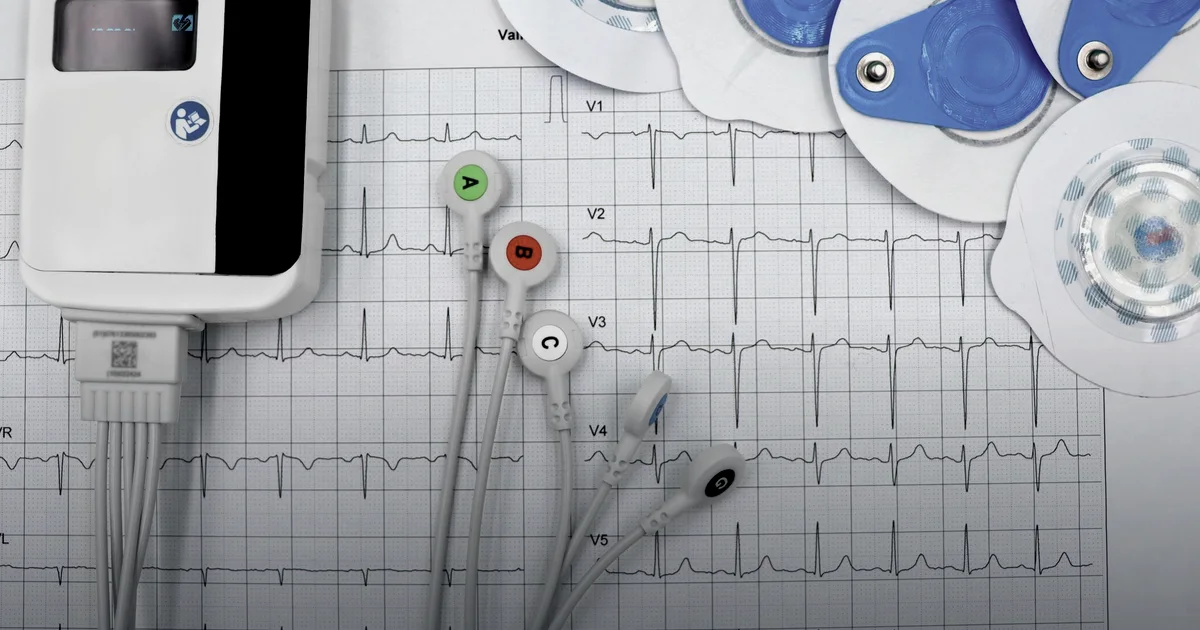
What to do? Don't quit sport "just in case," but capture the episode (a wearable with an ECG helps) and see a cardiologist. Modern management works: after a failed attempt at drug control, that patient underwent pulmonary vein isolation, and 12 months later his rhythm was stable — and he was back to training within 8 weeks.
What's worth keeping under control right now:
- alcohol — a proven AF trigger;
- chronic sleep deprivation and overtraining;
- stimulants (excess caffeine, energy drinks, some pre-workout supplements);
- sensible periodization and recovery — they reduce the total "wear and tear" on the atria.
Limitations
The data are largely observational: they show a link but don't prove that volume directly "causes" AF in everyone. Types of sport, duration, and intensity are tightly intertwined, and separating their contributions is hard. Individual risk is made up of many things — age, sex, body type, risk factors, genetics, and years of load. Those who should be especially attentive are people who are 40+, who have held very large volumes for years, or who have a family history of arrhythmias. And conversely: the myth "I'm an athlete, so I definitely won't get an arrhythmia" is also wrong.
The bottom line
- AF in endurance athletes occurs 2–5× more often; what decides it is accumulated volume, not the type of sport.
- The relationship is U-shaped: moderate training protects the heart, chronic mega-volumes may raise the risk.
- Warning signs: skipped beats, irregular pulse, unexplained shortness of breath, dizziness, a sharp drop in form.
- For most amateurs this is no reason to quit sport — it's a reason to see a cardiologist and get alcohol, sleep, and recovery in order.
- Be more attentive if: age 40+, huge volumes, family history.
This material is educational and does not replace a doctor's consultation. If you have the listed symptoms, see a cardiologist.
Sources: Alameh I. et al. "Atrial Fibrillation in Athletes: Mechanisms, Management, and Future Directions", JACC: Case Reports, 2026. https://doi.org/10.1016/j.jaccas.2026.107061. Myrstad M. et al. "Atrial fibrillation risk in athletes: it's not the sport, it's the mileage", European Heart Journal Open, 2026. https://doi.org/10.1093/ehjopen/oeag090 (PMID: 42368426).