Astaxanthin: 51 seconds over 40 km, and why that is less than it sounds
The carotenoid from Haematococcus algae is sold as the “most powerful antioxidant there is.” In a crossover trial, 12 mg a day for a week made a 40 km time trial 1.2% faster and raised fat oxidation at the finish. The sample was twelve people.
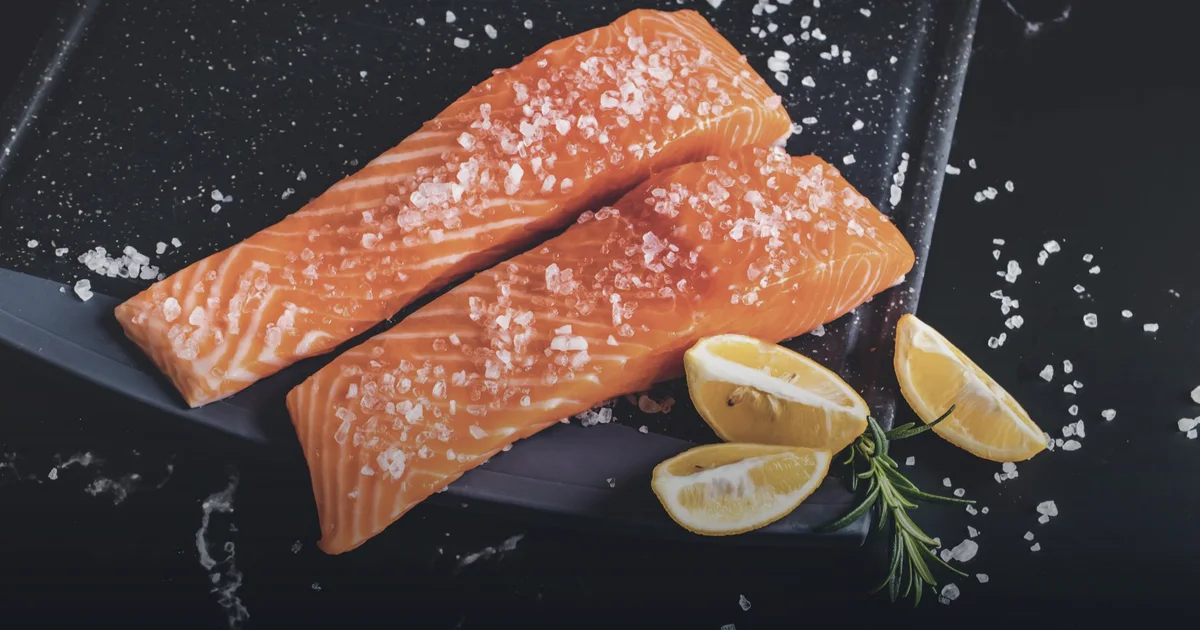
Astaxanthin is the red carotenoid that makes salmon pink and flamingos doubly so. It reaches supplements from the microalga Haematococcus pluvialis, and the label usually says something like “6,000 times stronger than vitamin C.” The marketing part is easy enough to read. The sporting part is more interesting: is there anything measurable behind it out on the road?
There are data, and they neatly illustrate what a small but genuine effect looks like.
The key study
Journal of Science and Medicine in Sport, 2021. A randomised, double-blind crossover design — every participant completed both conditions, with a 14-day washout in between.
12 trained male cyclists, 12 mg of astaxanthin per day for 7 days versus placebo, followed by a 40 km time trial.
The results:
- 40 km time: 70.76 ± 3.93 min on placebo versus 69.90 ± 3.78 min on astaxanthin. An improvement of 1.2 ± 1.7%, that is 51 ± 71 seconds (p = 0.029, g = 0.21)
- Fat oxidation over the 39–40 km segment: +0.09 ± 0.13 g/min (p = 0.044, g = 0.52)
- Respiratory exchange ratio over the same segment: −0.03 ± 0.04 (p = 0.024, g = 0.60)
What those last two lines mean: in the final kilometre of the trial, riders on astaxanthin were drawing slightly more energy from fat and slightly less from carbohydrate. That is precisely the moment when carbohydrate is running short, so the mechanism looks plausible.
Why “51 seconds” and “plus or minus 71 seconds” sit side by side
Look at the spread: 51 ± 71 s. The standard deviation is larger than the effect itself. In other words, some participants did not improve at all, and the mean was pulled up by those who gained a lot.
The effect size for time, g = 0.21, counts as small by any classification. For comparison, caffeine in the same protocols delivers roughly twice as much.
And twelve people are twelve people. A crossover design partly compensates for a small sample — each rider is his own control — but it does not turn a small sample into a large one.
What the more recent work shows
Frontiers in Nutrition, 2025. A randomised, double-blind, placebo-controlled trial in 37 young taekwondo athletes, at the same 12 mg per day for 4 weeks. Performance in sport-specific tests improved: double kicks in 20 seconds rose from 67.2 ± 1.8 to 70.1 ± 2.5, against a practically unchanged 67.9 → 66.9 on placebo (p < 0.05 from the first week onwards). Roundhouse kicks in 60 seconds followed the same pattern, becoming significant from week two.
Body composition, however, did not change on any measure: muscle mass, fat mass, intracellular and extracellular fluid — p > 0.05 across the board.
BMC Sports Science, Medicine and Rehabilitation, 2025. A higher dose — 28 mg per day for 4 days — with work to exhaustion at 75% of VO₂max, plus markers of muscle damage and oxidative stress. The sample was smaller still: ten people.
Worth keeping separate in your head: taekwondo is repeated explosive efforts, not a 40 km time trial. One result cannot be transferred straight onto the other, even though both point the same way.
How to read this honestly
The mechanism is plausible but not proven. Astaxanthin embeds itself in mitochondrial membranes and, according to the hypothesis, protects fatty acid transport from oxidative damage. The shift in respiratory exchange ratio at the finish is consistent with that. But the study measured an outcome, not a mechanism.
Every sample is tiny. Twelve, ten, thirty-seven people. This is the “there is a signal” stage, not the “the effect is established” stage.
Antioxidants cut both ways. The story with high doses of vitamins C and E is well known: quenching too much oxidative stress blunts training adaptation. No such effect has been shown for astaxanthin in the research, but nobody has specifically looked for it across long training blocks either.
Forget the “6,000 times stronger” line. That number comes from a test-tube assay of singlet oxygen quenching. It has nothing to do with what happens inside a working muscle.
How to apply this
- A realistic ceiling is around 1% in a long time trial, and not for everyone. If you expect more, you are expecting it in vain.
- The dose in the studies with a positive result is 12 mg per day. More is not better: the work at 28 mg is shorter and smaller.
- A course, not a single dose before the start. A week at minimum; in the taekwondo work the effect built up towards weeks two to four.
- Take it with fatty food — the carotenoid is fat-soluble.
- The niche is long events where you arrive at the finish with carbohydrate running out. That is exactly where the measured shift towards fat means anything at all.
- Do not expect body composition changes — in the one study that measured it, nothing changed.
- Astaxanthin is not on the WADA prohibited list, but it is still worth checking your particular tub for contaminants.
Key points
- The 2021 crossover trial, 12 cyclists, 12 mg/day for 7 days: a 40 km time trial 1.2% faster (51 ± 71 s, p = 0.029, g = 0.21 — a small effect).
- In the same trial: fat oxidation over km 39–40 +0.09 g/min, respiratory exchange ratio −0.03.
- The spread is larger than the mean — the effect is not there for everyone.
- Frontiers in Nutrition 2025, 37 taekwondo athletes, 12 mg for 4 weeks: performance improved, body composition did not change.
- BMC 2025: 28 mg for 4 days, ten people — an even smaller sample.
- All the samples are small; the mechanism (protection of mitochondrial membranes) is plausible but not directly confirmed.
- The “6,000 times stronger than vitamin C” advertising refers to a test tube, not to a muscle.
Sources: «The effect of astaxanthin supplementation on performance and fat oxidation during a 40 km cycling time trial», Journal of Science and Medicine in Sport, 2021. https://www.sciencedirect.com/science/article/abs/pii/S1440244020306794 · «Effects of 4-week astaxanthin supplementation on athletic performance and body composition in young male taekwondo athletes», Frontiers in Nutrition, 2025. https://doi.org/10.3389/fnut.2025.1731899 · «Effect of astaxanthin supplementation on cycling performance, muscle damage biomarkers and oxidative stress in young adults», BMC Sports Science, Medicine and Rehabilitation, 2025. https://doi.org/10.1186/s13102-025-01221-3