Urolithin A: 42 elite runners, “mitophagy” and a 3 km time trial that got no faster
The supplement is sold as a way to renew your mitochondria. In a double-blind trial on 42 high-level runners VO₂max rose by 5.4% versus 3.6% on placebo — but the statistics found no difference between the groups, and nobody's 3 km time improved.
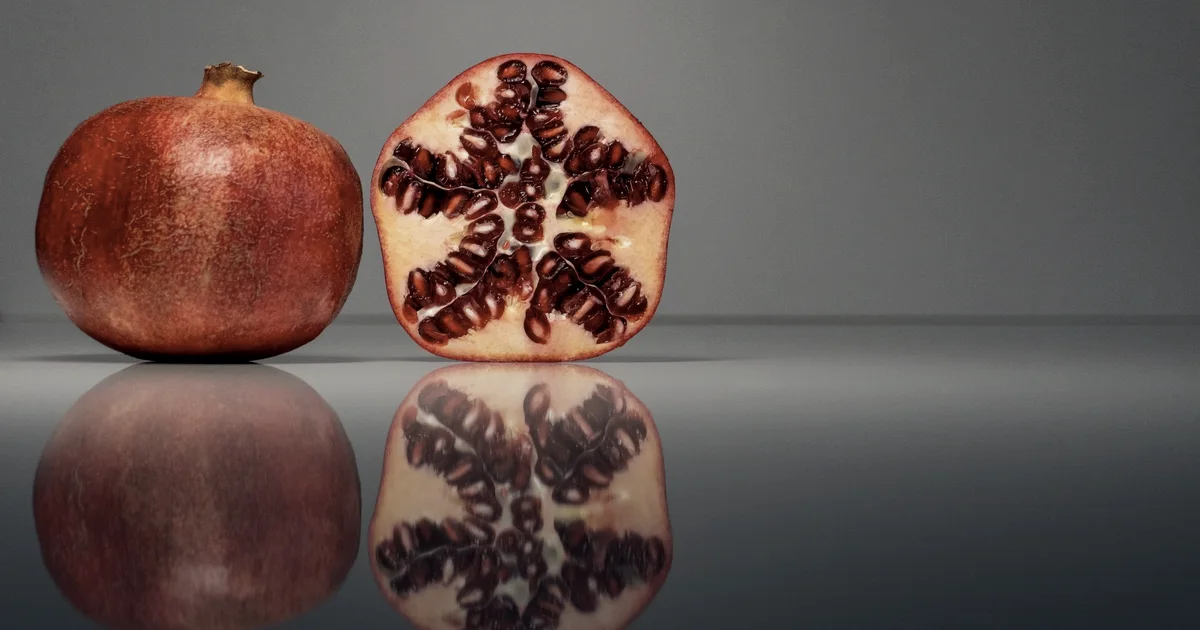
Urolithin A is a substance you will not find in food. What food contains is ellagitannins: pomegranate, walnuts, raspberries, blackberries. Urolithin A is made from them by bacteria in the large intestine — and far from everybody's bacteria can do it. By various estimates, the microflora of roughly 40–60% of people is capable of it. The rest can drink pomegranate juice by the litre with no result at all.
Hence the commercial logic: if your own microflora cannot manage, buy the finished molecule. That is how Mitopure and the wave of “mitochondrial” supplements came about.
What is promised and why it sounds appealing
The claimed mechanism is mitophagy: the selective disposal of damaged mitochondria. An ageing or overloaded cell accumulates mitochondria that respire badly but still take up space. Urolithin A, according to work on worms, mice and cell cultures, triggers their breakdown — and the cell renews the pool.
For a runner that sounds like a direct hit: endurance is the work of mitochondria. The first human studies were done on older, sedentary people, and there the gains were real. The question nobody had closed before 2025: does it work in someone whose mitochondria are already in excellent condition because they have been training for ten years.
What was done
The study was published in Sports Medicine (Whitfield et al., 2025). The design is double-blind, randomised, with parallel groups:
- 42 male runners of a high level, VO₂max above 60 ml/kg/min (22 in the supplement group, 20 on placebo);
- 1000 mg of urolithin A per day for 4 weeks, three of those weeks spent at an altitude camp at 1700–2200 m;
- measurements: VO₂max, running economy, a 3000 m test, haemoglobin mass, body composition, creatine kinase and CRP, plus a muscle biopsy with proteomics and direct measurement of mitochondrial respiration.
That last point matters: “mitochondrial” supplements are usually checked against indirect markers. Here they took a piece of muscle and looked at how the mitochondria actually respire.
What came out
The main result is negative.
VO₂max rose in both groups: from 66.4 to 70.0 ml/kg/min on the supplement (+5.4%, p = 0.009) and from 66.4 to 68.7 on placebo (+3.6%, p = 0.098). At first glance the numbers favour urolithin. But the correct comparison is the “time × treatment” interaction, and it is not significant (p = 0.138). Which means you cannot claim the gain differs from placebo: both groups spent three weeks at altitude, and a rise in VO₂max is exactly what people go to altitude for.
The 3000 m test improved in nobody. More than that, both groups were slower after the camp: 513.9 → 526.0 s on the supplement and 532.5 → 535.9 s on placebo. For athletes who have just come down from altitude that is normal, but there is no “urolithin makes you faster” here.
Mitochondrial respiration did not change. Not on a lipid substrate and not on a pyruvate one (p > 0.05). Citrate synthase rose non-significantly and, tellingly, more so on placebo (+16% versus +11%). OXPHOS protein expression did not shift. The supplement's central promise was not confirmed under direct measurement.
Haemoglobin mass rose equally in both groups (by roughly 4–5%) — again the effect of altitude, not of capsules.
What was found after all
There are two results in the supplement's favour, and they are not about speed.
Creatine kinase. The area under the CK curve after the time trial was significantly lower in the urolithin group (p = 0.0016, d = 0.81), with no change on placebo. CK is a marker of muscle damage, and this is consistent with the proteomics: those taking the supplement had reduced levels of inflammatory-response proteins, including NFκB2.
Perception of effort. RPE after the race was lower (p = 0.020). A subjective measure, but under a blinded design it means something.
The picture in sum: no for performance, possibly yes for the mark the effort leaves behind.
Honest caveats
Money. The study was funded by Amazentis SA — the company that sells Mitopure. Three of the authors are its employees. That does not make the work untrustworthy: on the contrary, a negative result on the main hypothesis, paid for by the manufacturer, deserves respect. But it should be taken with eyes open.
Altitude masks everything. Laying four weeks of a supplement over a three-week altitude camp means competing with the most powerful stimulus in the whole of training. The supplement's effect, if there is one, drowns.
Men only, elite only. There are no women in the sample. Generalising to an amateur with a VO₂max of 45 is impossible in either direction: they have more room to grow, but their mitochondria also adapt to training less well.
The biopsies were taken at rest and in a different subgroup, not in the same people whose performance was measured. Mitophagy is a process triggered by exercise; looking at it at rest is knowingly not the best moment.
Four weeks is too short for a process that in theory works over months.
What to do with this
- As an ergogenic supplement — do not buy it. In the best study available today on trained runners, neither VO₂max, nor economy, nor 3000 m time showed any advantage over placebo.
- As a “recovery aid” — keep it on the “unproven but not uninteresting” list. The signal on CK and inflammatory proteins is real, but it is one result in one study on 42 men.
- Remember what it costs. 1000 mg a day is the top of the doses studied, and it costs noticeably more than creatine, whose evidence base is an order of magnitude stronger.
- If you want to work on your mitochondria, training is cheaper. Three weeks at altitude raised VO₂max in the placebo group by 3.6%. No capsule in this study did anything of the sort.
The bottom line
- Urolithin A is formed from the ellagitannins of pomegranates and nuts, but the microflora manages it in only about 40–60% of people.
- The double-blind RCT (Sports Medicine, 2025) involved 42 runners with VO₂max > 60, at a dose of 1000 mg/day for 4 weeks during an altitude camp.
- VO₂max: +5.4% versus +3.6% on placebo, but the “time × treatment” interaction is not significant (p = 0.138).
- The 3000 m test did not improve in either group.
- Mitochondrial respiration did not change under direct measurement in the biopsy sample — the claimed mechanism was not confirmed.
- There were significant reductions in post-exercise creatine kinase (p = 0.0016) and perceived effort (p = 0.020).
- The study was funded by the supplement's manufacturer; three of the authors are its employees.
Source: Whitfield J. et al. “Evaluating the Impact of Urolithin A Supplementation on Running Performance, Recovery, and Mitochondrial Biomarkers in Highly Trained Male Distance Runners”. Sports Medicine, 2025. DOI: 10.1007/s40279-025-02292-5