Tart cherry for recovery: what anthocyanins can do and what not to expect from them
Montmorency cherry concentrate speeds the return of strength after hard efforts and dampens some inflammation markers. But it's a recovery tool, not an 'endurance pill' — and in the off-season it may even get in the way.
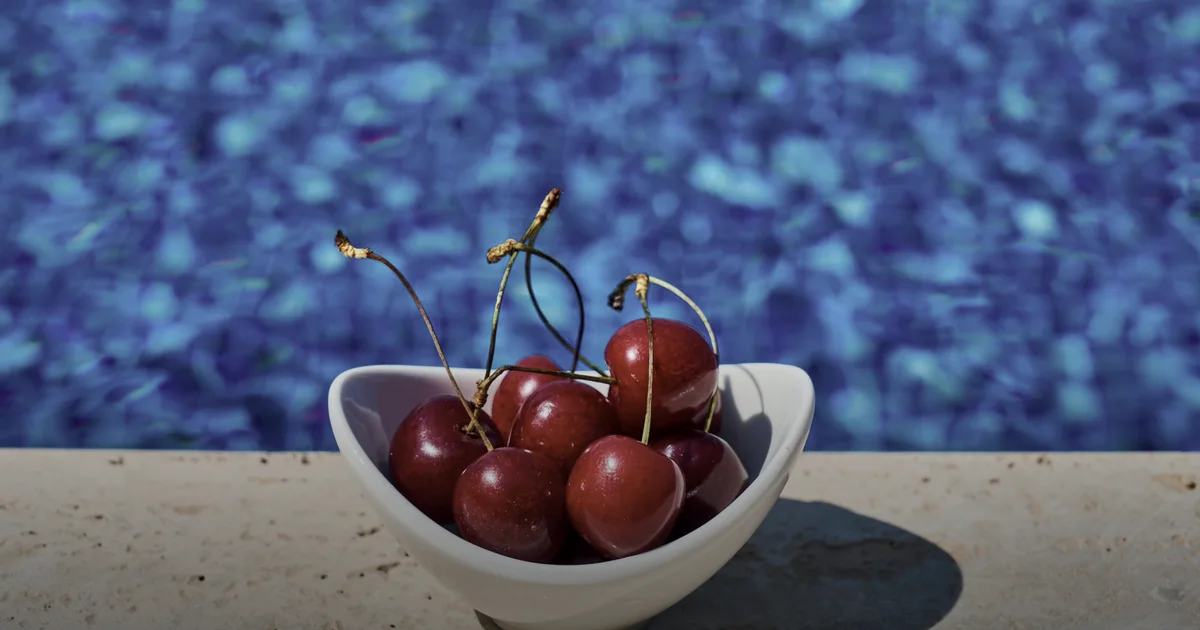
Picture this: yesterday was a marathon or a mountain multi-day, and today your legs feel like two concrete posts, and you go down the stairs sideways. It's exactly in situations like these that people traditionally break lances over Montmorency tart cherry: some call it "nature's ibuprofen," others call it marketing in a bottle. The truth, as usual, is in the middle, and over the past couple of years fresh meta-analyses have come out that outline it quite well.
What it is and how it works
Montmorency tart cherry is not a dessert sweet cherry but a sour variety used in sport as a juice concentrate or powder/capsules. Its value is not in the taste but in the chemistry: it's very rich in anthocyanins — a class of polyphenols, those very red-purple pigments.
The mechanism is twofold. First, anthocyanins have an anti-inflammatory action — they gently dampen the inflammatory cascade that's triggered after damaging exercise. Second, they work as antioxidants, helping to neutralize excess free radicals and reduce oxidative stress. After eccentric work (downhill running, plyometrics, a long race with clogged quads), it's largely these two processes that determine how long you'll feel "wooden."
The key word here is recovery, not "fuel." Cherry doesn't provide energy and doesn't directly move your threshold. It affects how quickly a muscle bounces back after a hit.
What the research shows
A fresh systematic review with meta-analysis in Sports Medicine — Open (2026) pooled 19 studies. The main result: the concentrate reliably sped up recovery of maximal voluntary contraction (strength) at all time points — the effect size grew from 0.63 immediately after exercise to 2.14 at 72 hours. In other words, the further from the moment of damage, the more clearly cherry outpaced placebo in the return of strength.
Separately interesting is the dose–response: the maximum benefit occurred at roughly 260 ml of juice per day. Less — and the effect didn't accumulate; more — and it added nothing further. That's an important signal: "chug more" doesn't work.
A second meta-analysis (Dehghani et al., Annals of Medicine and Surgery, 2025; 10 RCTs, 212 participants) confirmed improved muscle function — strength was about 9% higher than placebo. On inflammation the picture is selective: IL-6 and IL-8 decreased, but CRP and TNF-α didn't change significantly. And for subjective soreness (DOMS) and creatine kinase, no reliable effect was found.
This is worth stating honestly. A review paper (Zhu et al., Frontiers in Nutrition, 2026; 28 RCTs) shows the same heterogeneity: strength recovered faster in roughly half the studies, but DOMS decreased in only 6 of 22 studies. So the most consistent effect is the return of strength and power, while "hurts less" is a bonus that doesn't fall to everyone.
And about endurance: improved performance was seen in only 4 of 10 studies. Cherry gives no direct endurance boost — the data here are weak and contradictory.
When it makes sense (and when it doesn't)
Here's where the most practical part begins. Cherry makes sense when you need to recover fast, not adapt:
- a dense competitive block — races several days in a row;
- multi-days and tours;
- a marathon/trail after which you need to at least move around the next day.
But in the off-season and on base volumes, taking it daily is a questionable idea. Local inflammation and oxidative stress after training aren't just "pain" but also a signal to adapt: it's precisely this that triggers mitochondrial growth and muscle strengthening. By systematically quenching this signal with antioxidants, you risk blunting the training response itself. There's a direct parallel here with high doses of vitamins C and E: in studies they too dampened a number of training adaptations. The logic is the same: in the base period, inflammation is your ally, not your enemy.
Simply put: cherry is a tool for a specific event, not a "daily vitamin."
How to take it
The working protocol is simple:
- Concentrate ~30 ml twice a day (or the anthocyanin equivalent in powder/capsules).
- Start 4–5 days BEFORE the key event and continue 2–3 days AFTER.
- Dilute with water; the second serving is conveniently taken in the evening.
What not to expect: it's not a painkiller — it won't "switch off" pain here and now. And it's certainly no substitute for the basics of recovery: sleep, overall calories, and protein (on the order of 1.6–2.0 g/kg on load days). Cherry works on top of the foundation, not instead of it.
The bottom line
- The main effect is recovery of strength/power, not endurance. Cherry gives no direct performance boost.
- Anthocyanins provide anti-inflammatory and antioxidant effects; in meta-analyses IL-6 and IL-8 reliably decrease, but not CRP/TNF-α.
- The effect on soreness (DOMS) is weaker and inconsistent — you can't count on it.
- The optimal dose is about 260 ml of juice/day; more is not better.
- Protocol: ~4–5 days before and 2–3 days after a key start or block.
- The "more antioxidants, the better" myth is dangerous: in the base period daily cherry can blunt adaptation (like high doses of vitamins C/E).
- It's an addition to sleep, nutrition, and protein, not a replacement for them.
Sources: Daab W., Bouzid M.A., Nassis G.P., Arumugam A. Effects of Tart Cherry Juice Supplementation on Recovery from Exercise-Induced Muscle Damage in Athletes: A Systematic Review and Meta-Analysis. Sports Medicine — Open, 2026. https://doi.org/10.1186/s40798-026-00993-3. Dehghani E., Beba M., Danandeh K. et al. The effect of tart cherry juice (TCJ) supplementation on exercise-induced muscle damage (EIMD) in an athletic population. Annals of Medicine and Surgery, 2025;87(2):880–890. https://doi.org/10.1097/MS9.0000000000002914. Zhu Y., Smith J., Cohn A. The effect of Montmorency tart cherry consumption on athletic performance and post-exercise recovery in healthy adults: a scoping review. Frontiers in Nutrition, 2026. https://doi.org/10.3389/fnut.2026.1794292.