Baking soda as a lactate buffer: where it really speeds you up, and where it does nothing
Sodium bicarbonate is an IOC-recognized supplement, but its effect depends on the race format. We break down where soda buys you seconds, where it does almost nothing, and how to avoid a “gut rebellion.”
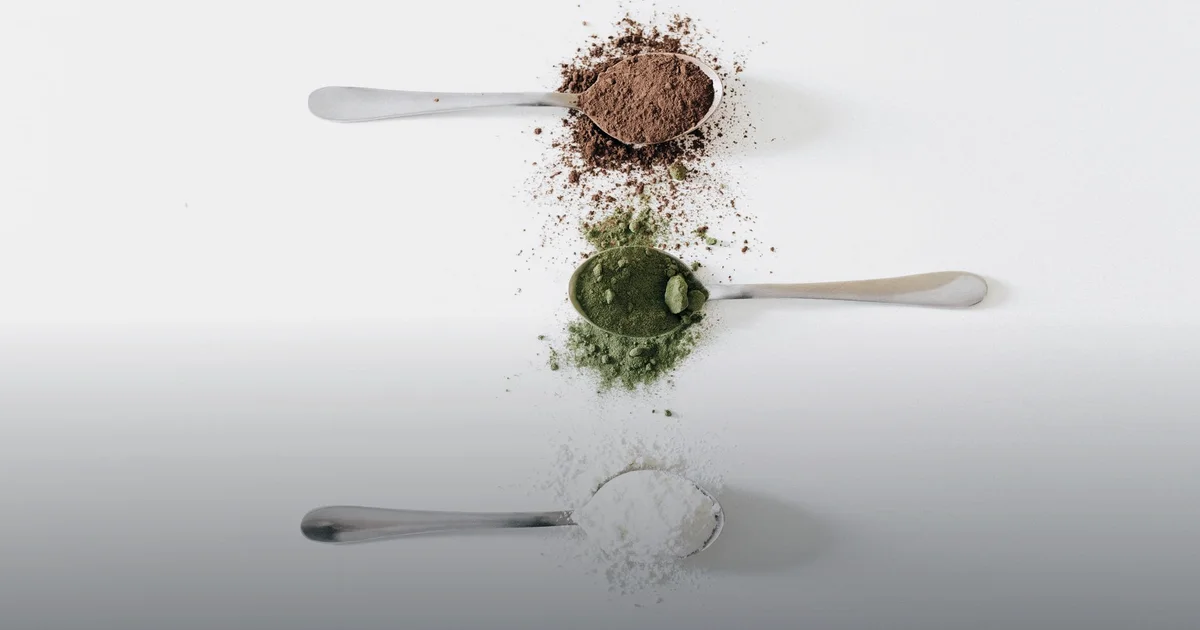
Ordinary baking soda from the kitchen cupboard is one of the few sports supplements whose effect is backed by the International Olympic Committee. Sprinters, rowers, and cyclists swallow it before short time trials. But move that same soda into a steady-paced marathon and the effect fades almost to zero. Let's figure out why the same powder sometimes buys seconds at the finish and sometimes delivers nothing.
How it works
When you work at high intensity, your muscles produce energy faster than oxygen metabolism can keep up with. The byproduct is a buildup of hydrogen ions (H+), which acidify the muscle and interfere with contraction. That “clogged” feeling and burn is exactly what you feel in the final meters of a sprint or in a hard interval.
Sodium bicarbonate (NaHCO₃) is a buffer. It raises the alkalinity of the blood and its ability to pull excess hydrogen ions out of working muscles. Put simply, soda doesn't provide energy — it pushes back the moment when acidosis forces you to ease off. So the logic is straightforward: the more “acidic” glycolytic work your discipline involves, the greater the potential benefit. Where you run aerobically and evenly, there's almost nothing to buffer, and soda has no room to prove itself.
What the research shows
Two recent studies illustrate this contrast perfectly.
Steady running — a negligible effect. A 2025 systematic review with meta-analysis (Miller et al.) pooled 11 randomized, double-blind, placebo-controlled trials with 126 participants. After adjusting for GI-related dropouts and publication bias, the effect of a single dose of soda on continuous running turned out to be negligible and statistically nonsignificant: SMD = 0,18 (95% CI: −0,01–0,36; p = 0,06). In men, individual studies showed a slightly more noticeable effect (SMD = 0,40, p < 0,001), but the honest takeaway is this: for steady-paced distance running, a single dose of soda is nearly a dud.
Cycling time trial — real seconds. By contrast, the study by Shannon et al. (2024) using the Maurten Bicarb system: 14 trained cyclists took 0,3 g/kg of NaHCO₃ as mini-tablets in a carbohydrate hydrogel. In a 40 km time trial they were on average 54 seconds faster — a 1,42% gain (p = 0,002), with 12 of 14 athletes improving. Blood bicarbonate rose by 5,6 mmol/L. An important detail: there were no GI upsets compared with placebo — the hydrogel and mini-tablets noticeably soften the classic problem.
The difference makes sense: an all-out one-hour time trial with a constant buffering load is the ideal scenario for soda, while steady running is not.
Who should take it, and how
Worth a try if your discipline is rich in high-intensity or repeated efforts:
- short intense races (time trials, criteriums, 800–3000 m running);
- middle-distance rowing and swimming;
- finishing surges and a surging, variable pace;
- interval sessions where you need to “grind out” the set.
Almost useless for a marathon or a long trail run at a steady aerobic pace — there's nothing to buffer there.
Dose and timing. The classic protocol is around 0,3 g/kg of body weight taken 90–180 minutes before the start. There are two formats: a single dose on race day, and multi-day loading (smaller doses over several days), which can deliver a more stable bicarbonate level by race time with less discomfort.
How to avoid diarrhea. Soda's main enemy is GI upset. What helps:
- split the dose into portions rather than swallowing it all at once;
- take it with a small amount of food and water;
- use modern forms — hydrogel/mini-tablets (Maurten) that bypass the stomach;
- always test the protocol in training, not for the first time on race day.
Limitations
Soda also means a sodium load. 0,3 g/kg is a substantial amount of sodium, which matters with hypertension, kidney problems, or heart conditions; in such cases you need a doctor's advice. In that same 2025 review, GI symptoms occurred in 29,5% on soda versus 2,6% on placebo, and GI-related dropouts were 8,7% versus 1,6%. In other words, even where an effect exists, some people simply can't tolerate it.
And the main myth: soda is not a “fat burner,” not an energy source, and not a universal boost. It's a narrow tool for a specific type of effort. On a distance where you don't acidify, it won't make you faster.
The bottom line
- Mechanism: soda buffers hydrogen ions, delaying acidosis — it works only where there's intense glycolytic effort.
- Steady running: a meta-analysis of 11 trials — the effect is negligible (SMD = 0,18, p = 0,06).
- 40 km cycling time trial: a 1,42% gain (~54 sec, p = 0,002) with the Maurten system.
- Dose: ~0,3 g/kg taken 90–180 min before; multi-day loading is an alternative to a single dose.
- GI: split the dose, eat a little, use a hydrogel, test it in training.
- Safety: account for the sodium load; with kidney/heart disease, see a doctor.
Sources: Miller LE, Bhattacharyya R, Katz SJ, Bhattacharyya M, Herbert WG. Journal of the International Society of Sports Nutrition, 2025. https://doi.org/10.1080/15502783.2025.2538606 · Shannon ES, Regnier A, Dobson B, Yang X, Sparks SA, McNaughton LR. European Journal of Applied Physiology, 2024. https://doi.org/10.1007/s00421-024-05567-3