Beetroot juice for endurance: who it really helps and who it doesn't
A meta-analysis of 33 studies and 519 athletes settles the question: beetroot nitrate delivers a small but real gain in sprinting, power, and VO₂max. We break down the dose, the timing, and why in elite athletes the effect often “gets eaten up.”
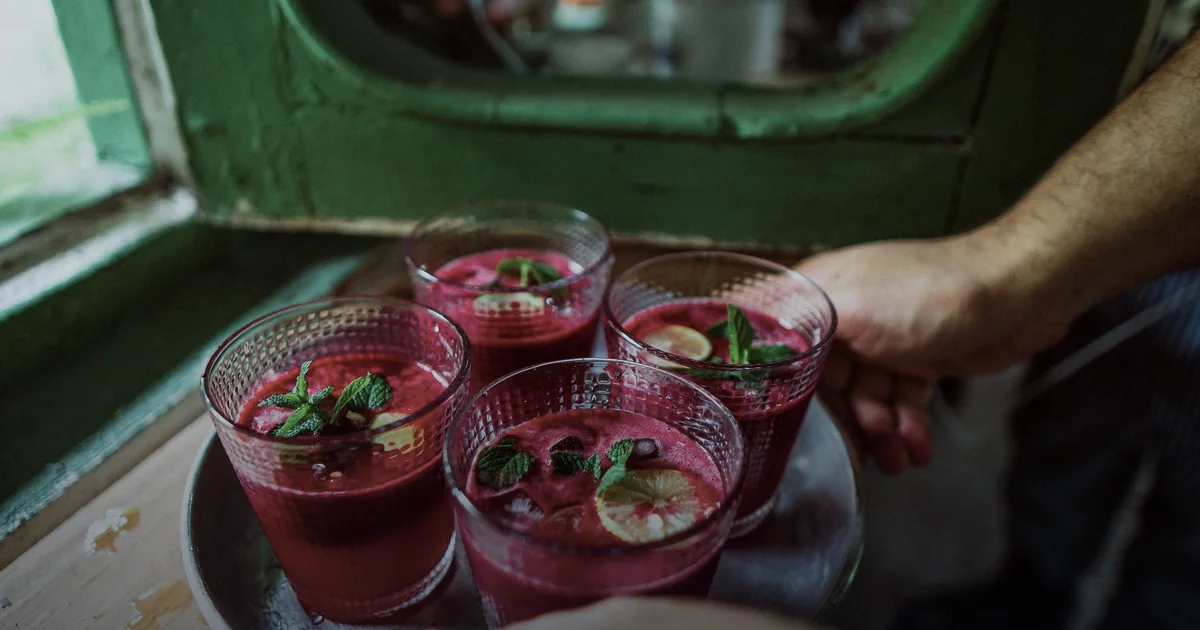
The pink shot in a cyclist's hands at the start line has become as much a fixture of professional sport as the aero helmet. Beetroot juice promises more power “for free” — no pharmacology, no doping control. But does it actually work, and does it work for everyone? A fresh meta-analysis in Frontiers in Nutrition (2026) pulled the data together on this question and gave a surprisingly sober answer: the effect is there, it's real — but it's small, and in some athletes it almost vanishes.
What was studied
A Chinese research group carried out a systematic review and meta-analysis (protocol registered in PROSPERO), pooling 33 studies and 519 athletes — both professionals and amateurs. Most of the studies were randomized crossover placebo-controlled trials, meaning the same person was tested both on beetroot juice and on placebo.
They assessed three outcomes:
- HIS — high-intensity sprint work (anaerobic performance);
- MPO — mean power output;
- VO₂max — maximal oxygen uptake.
Nitrate (NO₃⁻) doses across the studies ranged from 4,1 to 16,2 mmol per serving, and in every study the final portion was taken 2–3 hours before the start.
Results
Beetroot juice produced a statistically significant but moderate improvement across all three measures:
- Sprint (HIS): SMD = 0,38 (95% CI 0,17–0,59, p < 0,001);
- Mean power (MPO): SMD = 0,43 (95% CI 0,21–0,64, p < 0,001);
- VO₂max: SMD = 0,30 (95% CI 0,05–0,55, p < 0,001).
An SMD of roughly 0,3–0,4 is a “small-to-moderate” effect: not a revolution, but an honest boost of a couple of percent that at the finish can mean the difference between the podium and fourth place. Heterogeneity was low, no signs of publication bias were found, and the overall reliability of the evidence on the GRADE scale is moderate.
The most interesting part is in the subgroups. In the sprint, the effect was clear in amateurs (d = 0,50), but in professionals it was d = 0,17 and statistically non-significant (p > 0,05). In other words, the more trained the athlete, the less room there is to “squeeze out” more from nitrates in pure anaerobic work. That said, for mean power (d = 0,36) and for VO₂max (d = 0,41) the effect in pros did hold up. The takeaway: beetroot is not a universal key, but a tool for a specific task and level.
How to take it
A working protocol drawn from the review's data and general nitrate physiology:
- Dose. Aim for 6–13 mmol NO₃⁻ (roughly 400–800 mg of nitrate). In the studies the range was wider (4,1–16,2 mmol), but this window is the sweet spot.
- Timing. Blood nitrite peaks 2–3 hours after intake, so drink the final portion 2,5 hours before the start, not on the move.
- Beetroot vs shots. A concentrated shot (like Beet It, ~70 ml) delivers a standardized 6,4–6,5 mmol — convenient and predictable. You can hit the same dose with regular juice too, but you'll need around half a litre, and not every stomach will appreciate that before the start.
- Loading. Both a single dose and a course of anywhere from a few days to 3–8 weeks work — both options produced an effect in the review.
One separate nuance not in the paper itself but critical in practice: the conversion of nitrate into active nitrite relies on bacteria on the tongue. Antiseptic mouthwash, antibacterial gum, or even brushing your teeth with such a formula on race day can wipe out the entire effect — you simply kill off the microflora you need. On race day, no “refreshing” antiseptics.
Limitations
Don't turn beetroot into a cult. First, the effect sizes are small (0,3–0,4) — it's a supplement, not a turbocharger. Second, some subgroups consisted of just one or two studies, so the authors honestly call them “preliminary indications.” Third, dose-dependency and long-term effects were not specifically analyzed in this work, and differences by sex and age could not be assessed because of the sparse data in the primary sources. Finally, for elite athletes in the sprint no significant gain was found at all.
The bottom line
- Beetroot juice really does improve sprinting, power, and VO₂max, but the effect is small-to-moderate (SMD 0,30–0,43), with moderate reliability.
- The working dose is 6–13 mmol of nitrate, with the final intake about 2,5 hours before the start.
- Shots are more convenient and more precise on dose than regular juice; both course-based and single intake work.
- Don't use antiseptic mouthwashes on race day — they kill the effect.
- In pros, the gain in a pure sprint is non-significant — the more trained you are, the more modest the bonus.
Source: Cai C., Huang P., Cheng X., Zhou J. Effectiveness of beetroot juice on aerobic and anaerobic exercise performance: systematic review and meta-analysis. Frontiers in Nutrition, 2026. https://doi.org/10.3389/fnut.2026.1844096