Plus 55 minutes of sleep: what one extended night before a morning start gives you
In a crossover RCT participants slept 55 minutes longer — and the next morning covered almost 10 metres more in a shuttle test with half the drop-off in speed. Here is what is genuinely proven and what is being read into it.
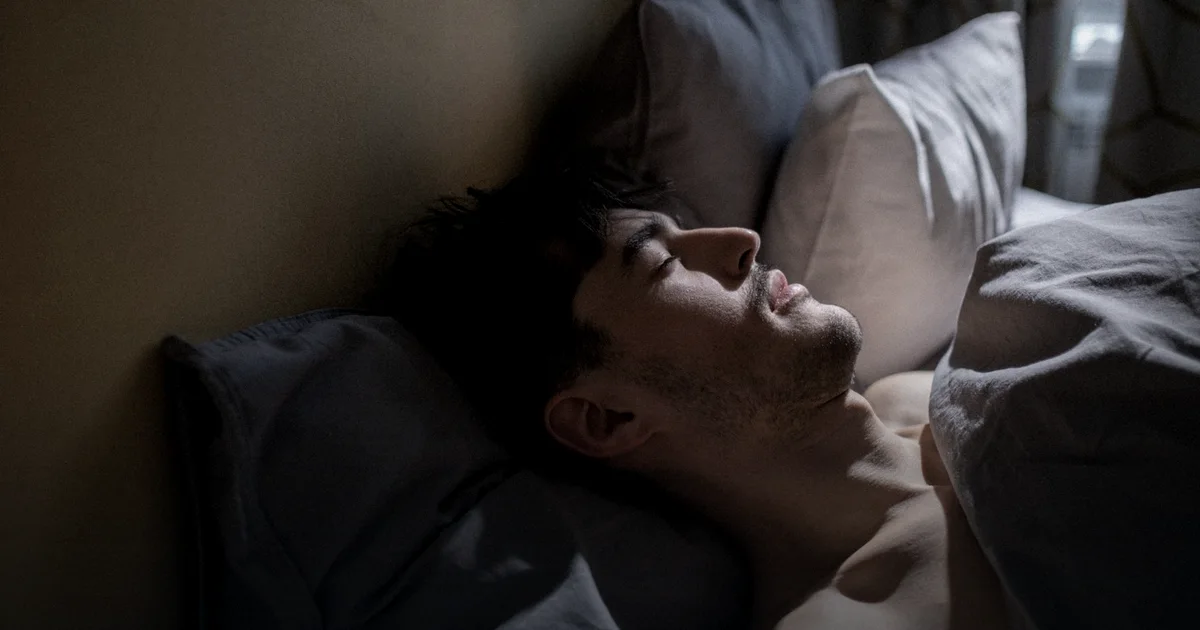
Plenty has been written about sleep deprivation in sport, and the conclusion there is predictable: too little sleep is bad. Far more interesting is the reverse question, which has only recently started being asked: what happens if you sleep more than usual? Not catching up after a sleepless night, but specifically adding sleep on top of your normal amount. A recent study gives a surprisingly concrete answer — and one that is especially intriguing for anyone who races in the morning.
How the experiment was set up
The design is tidy: a crossover study with counterbalanced condition order, meaning every participant went through both the control and the experimental condition, with the order balanced so that learning and fatigue would not skew the result.
The participants were 24 physically active university students (17 men, 7 women, age 22.7 ± 1.6 years). All had a neutral chronotype and good sleep quality on the PSQI scale. Testing was carried out three times: at 20:00, then at 8:00 the following morning, and at 16:00.
The key point is how much sleep was actually added. Time in bed was increased by roughly 50 minutes (from 514 to 564 minutes), while actual sleep rose from 476.5 ± 64.2 to 531.3 ± 56.8 minutes — that is, by about 55 minutes (p < 0.001, d = 0.91). This is an important detail: the added time in bed converted almost entirely into sleep.
What changed
The most noticeable shifts came in the morning testing at 8:00.
- 5-metre shuttle test, best result: from 93.3 ± 8.5 to 102.8 ± 11.9 metres (p < 0.001, d = 0.93). That is a large effect.
- Fatigue index in the same test: from 21.2 ± 9.5% to 13.1 ± 8.3% (p < 0.001, d = 0.90). Put simply, speed fell off by almost half as much by the end of the test.
- Squat jump: from 26.3 ± 7.2 to 28.2 ± 8.0 cm (p = 0.005, but the effect is small, d = 0.25).
- Simple reaction time: from 296.4 ± 75.2 to 252.8 ± 55.3 ms (p < 0.001, d = 0.66).
- Digit cancellation test (attention and processing speed): from 63.0 ± 10.0 to 67.6 ± 12.6 targets (p = 0.006, d = 0.40).
A separate conclusion from the authors: sleep extension partly smoothed out the daily fluctuations in performance. For most people the morning is a trough in physical and cognitive measures; an extra hour of sleep noticeably reduced that trough.
What this study does not prove
Honesty is needed here, otherwise we get yet another headline reading “an hour of sleep = a personal best”.
First, this is not an endurance test. A 5-metre shuttle run, jumps and reaction time are speed-strength and cognitive work, not a one-hour time trial. The effect cannot be transferred directly to the marathon.
Second, this is one night. The authors state outright that an acute protocol does not allow conclusions about long-term adaptation. Chronic sleep deprivation is not cancelled out by a single extended night.
Third, the participants were not athletes but physically active students, and all of them had a neutral chronotype and good sleep. How this would work for a “night owl” or someone with an accumulated sleep debt is not something the study answers.
Systematic reviews of sleep extension in general describe a broader picture, including benefits for endurance in multi-day protocols, but the data there is more mixed and weaker. So the honest formulation sounds like this: one extended night reliably improves morning performance and cognitive function, and everything else is a zone of moderate confidence.
How to apply it
- A morning start is the main scenario. If the race is at 8–9 a.m., added sleep the preceding night works exactly where your physiological pit is.
- Add time in bed, not alarm-clock time. In the study, +50 minutes in bed produced +55 minutes of sleep. In practice that means going to bed earlier, not getting up later — wake-up time is usually dictated by the start.
- Do not count on one night as compensation. If you have slept six hours a night for a week, an extended night before the start will help, but it will not close the hole.
- Do not wreck your routine for the sake of an experiment. Shifting bedtime abruptly by two hours makes falling asleep worse for many people. An extra 30–60 minutes is far easier to handle.
- Remember the flip side. We have already covered what sleep deprivation does to performance — the effects there are far more dramatic than the gain from an extra hour. The priority is always: first remove the deficit, then think about the add-on.
Key points
- Extending sleep for one night produced +55 minutes of actual sleep (531 versus 477 minutes).
- The next morning at 8:00: shuttle test 93.3 → 102.8 m (d = 0.93), fatigue index 21.2% → 13.1%, simple reaction time 296 → 253 ms.
- The effect was most pronounced in the morning and smoothed the natural morning dip in performance.
- This is not endurance: the tests were speed-strength and cognitive, and transfer to long distances is not proven.
- Limitations: one night, non-athletes, all with a neutral chronotype, a sex imbalance (17 men versus 7 women).
- In practice: add time in bed before morning starts, a gain of 30–60 minutes, without abruptly breaking your routine.
Sources: “Single-Night Sleep Extension Enhances Morning Physical and Cognitive Performance Across Time of Day in Physically Active University Students: A Randomized Crossover Study”, 2025. https://pmc.ncbi.nlm.nih.gov/articles/PMC12387293/. “Sleep extension in athletes: what we know so far — A systematic review”, Sleep Medicine. https://www.sciencedirect.com/science/article/abs/pii/S1389945720305281. “A Narrative Review of the Impact of Sleep on Athletes”. https://pmc.ncbi.nlm.nih.gov/articles/PMC11779686/