SARMs in recreational athletes: a five-year ban for three substances, and only 52% of products that contain what the label says
On 11 September 2026 USADA handed a five-year ban to a 49-year-old recreational triathlete: a sample taken at an ordinary city race contained ostarine, ligandrol and exogenous testosterone. A good moment to work out what SARMs are, why nobody has ever shown an effect of theirs on endurance, and how they end up inside people who never deliberately took anything.
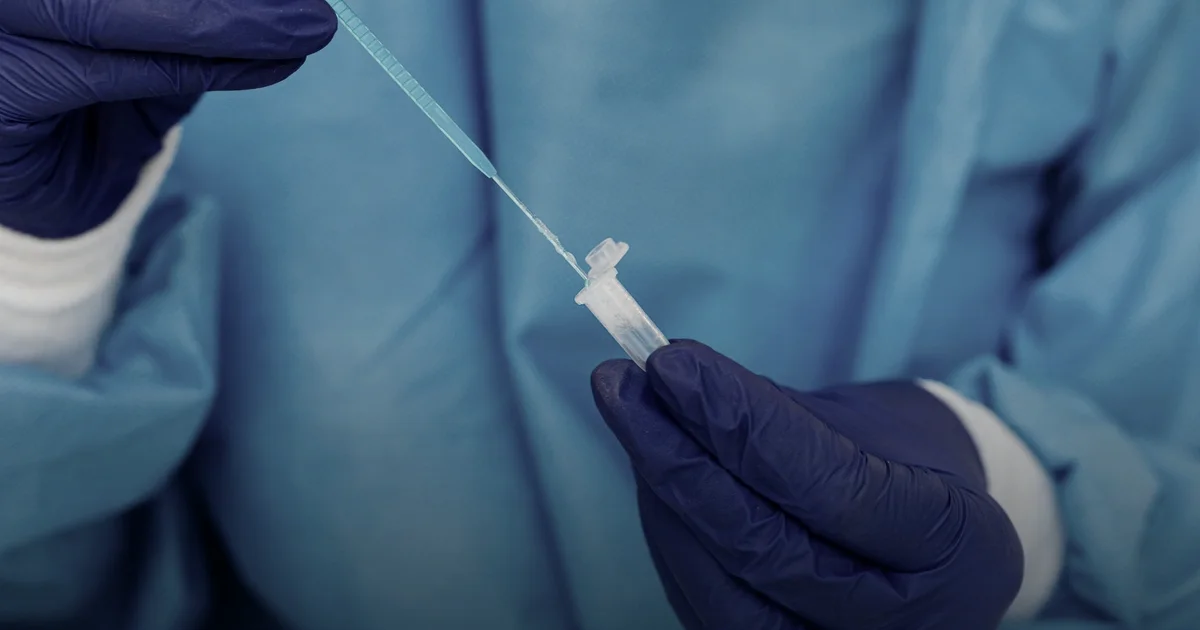
On 11 September 2026 the US Anti-Doping Agency announced a five-year ban for 49-year-old Erin Oprea — a fitness coach and recreational triathlete. The sample taken on 31 May at the Music City Triathlon in Nashville produced three findings at once: ostarine (enobosarm), a metabolite of ligandrol (LGD-4033) and exogenous testosterone, confirmed by isotope-ratio analysis. The standard sanction for non-specified substances is four years; USADA added a fifth for aggravating circumstances — multiple substances and a refusal to cooperate with the investigation. The ban runs from 16 June 2026, and all results from 31 May onwards have been annulled.
The story is telling not because of the name but because of the setting: this is not a professional at a world championship, it is an age-grouper at a city triathlon. And two of the three substances belong to a family that most runners and triathletes know only from adverts in messaging apps.
What SARMs are
SARM stands for selective androgen receptor modulator. These are non-steroidal molecules that bind to the same receptor as testosterone but act selectively: in theory they give an anabolic effect in muscle and bone without touching the prostate or the hair follicles. Hence the marketing promise — “steroids without the side effects”.
The key fact that rarely makes it onto the packaging: not a single SARM is approved as a medicine by any major regulator. All of them stopped at the clinical trial stage. The best studied, enobosarm, went through 12 weeks in 120 healthy older men and postmenopausal women in phase II (Dalton and colleagues, Journal of Cachexia, Sarcopenia and Muscle, 2011): a 3 mg dose produced a dose-dependent gain in lean body mass (p < 0.001) and an improvement in physical function — stair climbing (p = 0.013). In phase III in cancer cachexia (Lancet Oncology, 2013) lean mass rose, but the functional endpoint did not.
Notice what is missing from that list: VO₂max, lactate threshold, time trials, running economy. Trials of SARMs on endurance simply do not exist. A substance that builds muscle mass is at best neutral for a marathon runner, and extra mass over a long distance is extra work.
A separate source of confusion is cardarine (GW501516). It sits on the same price lists and is often sold under the SARM banner, although it is a PPAR-δ agonist, not an androgen receptor one. This is the one that was presented as “exercise in a pill” on the strength of mouse work. Pharmaceutical development was stopped after long-term dosing in rodents produced tumours in several organs.
How they reach people who never meant to take them
This is where it starts to concern everybody, not just those who are shopping.
A 2026 systematic review (Frontiers in Sports and Active Living) sifted through 12,031 records and included 44 studies on contamination of sports nutrition. The bottom line: roughly 9–15% of products on the market contained prohibited substances or unapproved pharmacological agents that the label said nothing about. Most often in pre-workouts, weight-loss aids and mass-gain products.
What is actually inside products sold as SARMs was measured back in 2017: Van Wagoner and colleagues (JAMA) bought 44 products online and analysed them using procedures accepted by WADA. Only 52% really contained the SARM claimed. 39% contained a different unapproved drug. In 9% there was nothing active at all, in 25% substances not stated on the label were found, and the declared dose matched the actual one in only 41% of cases.
The European network of official medicines control laboratories (GEON) spent five years collecting seized products: 324 samples, 354 results, 14 laboratories in 13 countries (Drug Testing and Analysis, 2025). 65% of the seized material was sold as a medicine, but 24% as a food supplement — meaning the buyer did not know they were taking an unapproved drug. The top 5 molecules found: ibutamoren, ligandrol, ostarine, cardarine, andarine. In most samples the doses were pharmacologically active, and some were higher than stated.
For an athlete this matters because of the principle of strict liability: whatever is found in the sample is the athlete's responsibility, not the supplement manufacturer's. Ostarine has long been the most frequent SARM in anti-doping laboratory findings, and a noticeable share of those cases are trace amounts from contaminated products.
What is known about the harm
There are no systematic safety data by definition: these drugs never reached registration. What exists is an accumulation of clinical case reports.
- Drug-induced liver injury. Cases of severe hepatitis after RAD-140 and other SARMs have been published in people taking them to gain mass (Australian Prescriber, 2024; case series in Cureus, 2022 and 2025). The mechanism is cholestatic, and recovery takes months.
- Suppression of your own testosterone. The androgen receptor does not care where the ligand came from: the hypothalamic–pituitary–gonadal axis responds by cutting production.
- Lipid profile. A fall in HDL has been described across every class of androgen modulator.
- Unknown contents. Given the figures above, for half of all buyers the question “how harmful is this” has no answer at all: they do not know what they took.
How to apply this
- For endurance these substances have no evidence base whatsoever. There are no trials in runners, cyclists or triathletes — not one. The purchase is made blind, on the basis of a mechanism rather than a result.
- Check supplements against certification databases (Informed Sport, NSF Certified for Sport) if you are entered in races with doping control. It is not a guarantee, but it is the only filter available against the 9–15% of contaminated batches.
- Pre-workouts and fat burners are the highest-risk zone. Contamination is found most often in exactly these categories, and they are exactly the ones people buy “just for a bit of a lift”.
- Amateur status is no protection. Samples are taken at city triathlons too, and the punishment is no softer: five years for a 49-year-old age-grouper is essentially the end of a competitive career.
- If you are looking for a boost to your results, compare its expected size with what ordinary work delivers: the gain in the performance index over a season of proper training is bigger than anything SARMs have ever shown, even in elderly clinical trial participants.
The bottom line
- USADA banned a 49-year-old recreational triathlete for five years over ostarine, ligandrol and exogenous testosterone in a sample from a city race — the aggravating factors were the multiple substances and the refusal to cooperate.
- SARMs are not approved as medicines anywhere; the most that has been shown is a gain in lean mass and in stair climbing in older people in a 12-week phase II trial. On endurance there is not a single study.
- Of 44 products sold as SARMs, only 52% contained the substance claimed, 39% contained a different unapproved drug, and 25% contained something not on the label.
- Roughly 9–15% of sports supplements on the market are contaminated with prohibited substances; under strict liability that is the athlete's problem, not the seller's.
Sources: US Anti-Doping Agency. “Erin Oprea Receives Doping Sanction”, 11 September 2026 · Dalton J.T., Barnette K.G., Bohl C.E. et al. “The selective androgen receptor modulator GTx-024 (enobosarm) improves lean body mass and physical function in healthy elderly men and postmenopausal women: results of a double-blind, placebo-controlled phase II trial”. Journal of Cachexia, Sarcopenia and Muscle, 2011;2(3):153-161. DOI: 10.1007/s13539-011-0034-6 · Dobs A.S., Boccia R.V., Croot C.C. et al. “Effects of enobosarm on muscle wasting and physical function in patients with cancer: a double-blind, randomised controlled phase 2 trial”. Lancet Oncology, 2013;14(4):335-345. DOI: 10.1016/S1470-2045(13)70055-X · Van Wagoner R.M., Eichner A., Bhasin S., Deuster P.A., Eichner D. “Chemical Composition and Labeling of Substances Marketed as Selective Androgen Receptor Modulators and Sold via the Internet”. JAMA, 2017;318(20):2004-2010. DOI: 10.1001/jama.2017.17069 · Barrios M., Deconinck E., Vanhee C. et al. “SARMs, Metabolic Modulators and Growth Hormone Secretagogues in Suspected Illegal Medicines, Bought as Sport Performance Enhancers: A Retro- and Prospective Study Within the GEON”. Drug Testing and Analysis, 2025. DOI: 10.1002/dta.3918 · Al-Saad N., Aljaal S., Alessa J., Santhosh M. “Systematic review of undeclared prohibited substances and pharmacological adulterants in dietary supplements: prevalence, detection, and risks in sport”. Frontiers in Sports and Active Living, 2026. DOI: 10.3389/fspor.2026.1740663 · Bedi H., Hammond C., Sanders D. et al. “Severe liver injury following use of RAD-140, a selective androgen receptor modulator, for body building”. Australian Prescriber, 2024;47(1):27-29. DOI: 10.18773/austprescr.2024.004