Omega-3 for recovery: what a meta-analysis of 41 studies showed
Fish oil is no “magic boost” to your results, but 2–4 g of EPA+DHA a day noticeably dampens inflammation, muscle damage and soreness. And it works strongest precisely in recreational athletes.
A brutal interval block, and the next morning your legs feel like wood, stairs are a trial, and the next session is a grind. Sound familiar? Omega-3s have long been talked about as something that softens this backlash. But the marketing on a jar of fish oil is one thing, and a summary of dozens of controlled trials is another. A fresh 2026 meta-analysis provides exactly that kind of summary, and its conclusions are cautious but useful in practice.
What the meta-analysis showed
A team led by Li pooled 41 randomized controlled trials (studies from 2011–2025) — about 1800 participants in total, from recreational athletes to trained ones. They looked at what happens to markers of inflammation and muscle damage after exercise while taking EPA+DHA.
The picture turned out to be consistent. Taking omega-3 moderately lowered the key markers:
- IL-6 and TNF-α — markers of the inflammatory response;
- creatine kinase (CK) — the enzyme used to gauge muscle-fiber damage;
- delayed-onset muscle soreness (DOMS) — that very post-workout ache.
The effect size is roughly −0.4 to −0.7 on a standardized scale. In plain language that means “moderate but noticeable”: not a revolution, but a real easing of the backlash after hard sessions. An important nuance — the effect turned out to be stronger in amateurs than in elites. More on that below.
A separate word on “performance.” Here the evidence is mixed. There are findings from recent years (2023–2025) that omega-3s may slightly reduce the oxygen cost of work and heart rate at submaximal intensity, and sometimes nudge VO2max up a bit. But these are individual studies, not a conclusion of this meta-analysis, and on direct performance gains the picture is still contradictory. So it is more honest to treat omega-3 as a recovery tool rather than a “few seconds off your time.”
How much and in what form
The main practical mistake is treating “fish oil in general” as the dose. What works is not the size of the capsule but pure EPA+DHA. In the meta-analysis the effect showed up consistently at not < 2 g of EPA+DHA per day for at least 6 weeks. A working target for sport is 2–4 g of EPA+DHA per day. So the first rule is to read the label: where it says “1000 mg of fish oil,” the actual EPA+DHA may be only 300 mg.
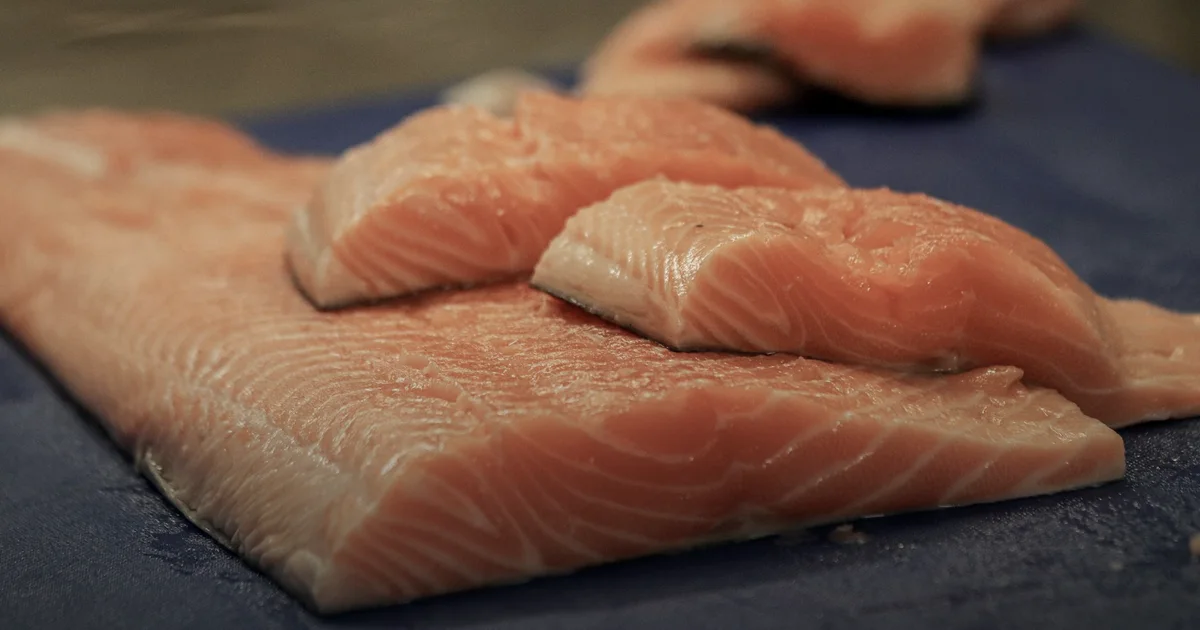
You do not have to cover it all with capsules. The base comes from oily fish 2–3 times a week — salmon, mackerel, herring. For vegans and those who do not eat fish, there is microalgae oil — the same EPA+DHA, just without the fish in the chain.
A guide to “is it enough” is the omega-3 index — the share of EPA+DHA in red-blood-cell membranes. Values around > 8% are considered favorable; it is a handy reference point, so you can tune the dose to yourself instead of guessing.
And about quality. Omega-3s oxidize easily: a rancid supplement is not just useless, it creates extra oxidative stress — exactly what we are fighting against. Choose a product with a clear EPA+DHA dose and oxidation control, not the cheapest “omega-3-6-9 blend,” where the useful fatty acids are minimal.
Who benefits most
The logic is simple: the more unruly the inflammatory response and the more modest your baseline omega-3 status, the more noticeable the supplement’s effect. Hence the meta-analysis’s conclusion — amateurs respond more strongly than elites: pros often already eat a well-structured diet with fish, and there is not much room left to add.
The practical value is greatest:
- during intense blocks and at peak volume, when sessions come thick and fast;
- when you are plagued by pronounced soreness (DOMS) after unfamiliar or eccentric loading;
- if there is little fish in your diet and your baseline omega-3 status is probably low.
But in an easy week or the off-season, there is little point in chasing grams.
Limitations
Let’s keep expectations grounded. The effects are moderate, not dramatic, and this is about recovery and inflammation, not a guaranteed performance gain. Studies differ in doses, duration and quality, and the participants are a mixed bag, so the averaged number is a guideline, not a law for everyone.
And two persistent myths. First — “omega-3 = a boost”: no, it is not a stimulant and not a substitute for sleep, food and a smart plan. Second — “more is better”: higher does not mean more effective. Large doses can thin the blood and cause gastrointestinal discomfort, and they add no benefit beyond the working range. If you take anticoagulants or are preparing for surgery, discuss it with your doctor.
The bottom line
- A meta-analysis of 41 RCTs (~1800 participants): omega-3 moderately lowers IL-6, TNF-α, creatine kinase and DOMS (effect ≈ −0.4…−0.7).
- Working dose — 2–4 g of EPA+DHA per day, with the effect appearing at not < 2 g/day and ≥ 6 weeks.
- Count EPA+DHA, not “fish oil”: read the label.
- Food base — oily fish 2–3 times a week; for vegans — microalgae oil.
- Status guide — the omega-3 index (favorable around > 8%).
- Most useful for amateurs, during intense blocks and with strong soreness.
- It is not a “boost” to performance and not a “more is better” case: high doses mean blood thinning and GI discomfort.
Source: Li et al. Effects of Omega-3 Supplementation on Inflammation and Recovery in Sports: A Meta-Analysis. The FASEB Journal, 2026. https://faseb.onlinelibrary.wiley.com/doi/10.1096/fj.202504783R