Watches That “Measure Blood Sugar”: Why It Is Physically Impossible and Why It Is Dangerous
An ordinary optical sensor on the wrist cannot measure glucose — not because the algorithms are bad, but because it never collects the signal in the first place. We unpack the physics, a fresh re-analysis of the data, the FDA position, and what actually works.
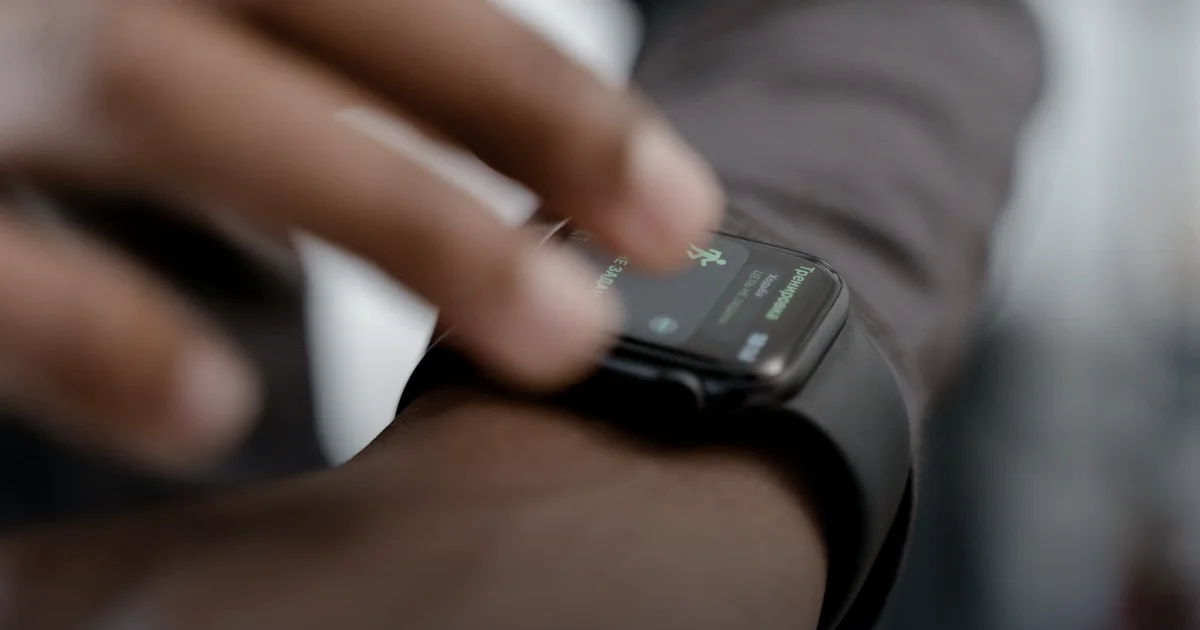
Marketplaces list dozens of watches and rings promising “blood sugar measurement without a finger prick.” Prices start around fifty dollars, and the interface is convincing: a tile with a number, a daily chart, even a “calibration” routine. The appeal is obvious, especially if you track your fuelling on long sessions. The problem is that the number on that tile has not been measured. It has been computed — from data that contains no information about glucose at all.
This material is educational and does not replace medical advice. If you have diabetes, decisions about insulin and medication doses must be based only on the readings of an approved blood glucose meter or a continuous glucose monitoring system.
Why ordinary optics cannot see glucose
Consumer watches use a photoplethysmography (PPG) sensor: LEDs and a photodiode. Green at roughly 525 nm for heart rate, red at about 660 nm and infrared at about 940 nm for oxygen saturation. These wavelengths were chosen to match haemoglobin and oxyhaemoglobin, not glucose.
At physiological concentrations, glucose is a very weak absorber of light. We are talking about a solution on the order of a tenth of a percent. In the near infrared, where silicon photodiodes operate, its absorption band is weak and completely drowned out by the far stronger bands of water, haemoglobin, lipids and proteins.
The bands that are actually informative for glucose lie elsewhere — in the mid-infrared “fingerprint” region at 8–12 µm, where C–O and C–C bonds vibrate, and in Raman shifts. Reaching them requires quantum cascade lasers or powerful lasers with specialised optics. A 50-dollar wristband does not have them and cannot have them.
That is the key difference from the heart-rate story. There the signal exists, it is simply weak and buried in noise — and a good algorithm can pull it out. Here there is no signal at all.
What the data re-analysis showed
The most convincing confirmation came not from physics, but from statistics.
Researchers took the open BIG IDEAs Lab dataset: 15 participants, each wearing a Dexcom G6 continuous glucose monitoring system and an Empatica E4 research wristband at the same time — a device far better equipped than mass-market watches, capturing heart rate, skin temperature, electrodermal response and motion.
The trick is in how you run the validation. If you pool everyone's data and split it randomly into training and test sets, the model simply memorises each person's individual baseline and produces impressive-looking accuracy. That is data leakage, and it is exactly what most eye-catching demonstrations are built on.
The authors of the re-analysis used a subject-wise split: one person's data could not appear in both the training and the test set. And they tested three different model families — gradient boosting, a fully convolutional network and a temporal convolutional network.
All three hit the same ceiling. That is the crucial point: when fundamentally different architectures produce identical results, the limitation lies not in the model but in the data.
How bad is it? Prediction from the wristband alone produced an error of about 22.6 mg/dL — statistically indistinguishable from guessing based on time of day, or from simply using the group average. Adding the pulse waveform, skin temperature, electrodermal activity and accelerometer data to the model moved the error from 13.56 to 13.60 mg/dL, which is to say it changed nothing.
The authors' wording leaves no room for interpretation: wrist signals carried zero information about glucose, and sensor fusion cannot recover what was never recorded.
What the regulators say
FDA, safety communication of 21 February 2024: the agency has not authorised, cleared or approved any smartwatch or smart ring intended to measure or estimate blood glucose levels without piercing the skin. The warning applies to every brand — surveillance identified such devices from dozens of companies under a multitude of trade names.
The risk is stated bluntly: an inaccurate reading can lead to the wrong dose of insulin or a glucose-lowering medication, and the consequences can include confusion, coma or death within hours.
Germany, Bundesnetzagentur, February 2026. In retail inspections the agency checked around 2,100 device types, and 58% of them failed to meet requirements. Over 2025 the agency blocked 7.7 million non-compliant electronic products from sale. Watches in which the blood sugar function is merely simulated were singled out: the readings are generated from unrelated sensors or estimated values, yet presented as genuine. Such models have been entered into the European Safety Gate rapid alert system.
An independent test of the cheap Kospet iHeal 6 against laboratory glucose meters showed what this looks like in practice: the device detected neither hypoglycaemia nor hyperglycaemia. At an actual 10.4 mmol/L it displayed 5.7; at 2.3 mmol/L it displayed 7.0. In other words, it reported “normal” regardless of what was happening. In March 2024 the manufacturer announced that the model had been discontinued.
What really works — and what does not exist yet
Honesty is required in both directions here. “The technology does not exist” is too strong a claim. Serious methods do exist and have clinical data behind them. What does not exist is an approved product.
DiaMonTech (Germany) has the strongest peer-reviewed result. The method: mid-infrared photothermal spectroscopy with quantum cascade lasers — precisely those 8–12 µm that consumer optics cannot reach. Kaluza et al. (Communications Medicine, 2025) reported a prospective study at the Institute for Diabetes Technology in Ulm with 36 participants, achieving accuracy comparable to early continuous glucose monitoring systems. But this is a benchtop instrument, not a wristband; no wrist-worn version exists.
Apple ran a silicon photonics programme: in 2023 there were reports of a proof of principle, but the prototype was the size of an iPhone and was worn on the upper arm. Publicly, it is “years from a product, if ever.” Samsung is investigating Raman spectroscopy together with MIT and talks about development work, but there is no product. Rockley Photonics, which promised a “clinic on the wrist,” went through bankruptcy proceedings in 2023 without ever shipping a commercial device.
Radiofrequency approaches (Know Labs, Afon, Hagar) claim decent numbers, but on samples of about five people and mostly in their own materials. Nobody has regulatory clearance.
The history here is long and instructive. GlucoWatch received FDA approval back in 2001 — and left the market because of skin irritation, a three-hour warm-up and an inability to track rapid changes. The Google/Verily contact lens was shut down in 2018: the correlation between tear glucose and blood glucose proved insufficient. The pattern is always the same: a weak signal drowns in noise, and the calibration model starts guessing instead of measuring.
What this means for athletes
- Do not buy a watch for its “blood sugar” feature. For that money you get a generator of plausible-looking numbers. If you have diabetes, it is a direct health risk.
- If you need real data, use something that pierces the skin. Continuous glucose monitoring systems work and are validated. Since 2024 some are sold over the counter: Dexcom Stelo (FDA clearance in March 2024, the first over-the-counter CGM), Abbott Lingo and Libre Rio (June 2024). The FDA accuracy requirement here is specific: at least 95% of readings within 15% of the reference.
- Distinguish risk estimation from measurement. A wearable may quite legitimately estimate metabolic risk or patterns from heart rate and variability — as long as it honestly calls this an estimate rather than a glucose value.
- Remember Supersapiens. The project was built on top of a genuine Abbott sensor and still wound down in early 2024, having failed to obtain US clearance and failed to reach scale in Europe. Athlete demand for glucose data is real, but only solutions based on minimally invasive sensors survive.
- Plan your fuelling by calculation, not by sensor. For the overwhelming majority of long-distance scenarios it is enough to calculate your carbohydrate needs and train your tolerance — the calculator below gives you a starting point.
Caveats
The BIG IDEAs Lab re-analysis is a preprint that has not undergone full peer review, using a sample of 15 healthy people with normal glycaemia. The authors themselves note that sharp glucose swings in people with diabetes could in theory be partially reflected in physiological signals. But for a mass audience the conclusion holds and is consistent with the physics.
Data from companies developing radiofrequency methods largely consist of their own claims on small samples; independent validation is scarce. The most reliable evidence here comes from peer-reviewed publications, not press releases.
And separately: press claims about “breakthroughs” at Apple, Samsung and Huawei are usually written in the conditional. Until there is regulatory clearance, these are plans, not facts.
Key points
- Glucose is a weak absorber of light, and its near-infrared band drowns in the signals of water, haemoglobin and proteins. The green, red and infrared LEDs in a watch are matched to haemoglobin, not to sugar.
- The informative bands lie in the mid-infrared (8–12 µm) and require quantum cascade lasers — a wristband does not contain them.
- A re-analysis with a subject-wise split: wrist signals carry zero information about glucose; three different architectures hit the same ceiling.
- FDA has not cleared any watch or any ring for measuring glucose; an insulin dosing error can cost a life.
- Bundesnetzagentur: 58% of the device types inspected failed to meet requirements; watches with “simulated” blood sugar measurement have been entered into Safety Gate.
- Serious methods (mid-infrared, Raman spectroscopy, radiofrequency) exist and have clinical data, but nobody has an approved wearable product.
- The real route to glucose data today is minimally invasive CGM, including over-the-counter systems.
Sources: U.S. Food and Drug Administration, “Do Not Use Smartwatches or Smart Rings to Measure Blood Glucose Levels: FDA Safety Communication”, 21 February 2024. https://www.fda.gov/medical-devices/safety-communications/do-not-use-smartwatches-or-smart-rings-measure-blood-glucose-levels-fda-safety-communication. Kaluza L. et al. “Clinical validation of noninvasive blood glucose measurements by midinfrared spectroscopy”, Communications Medicine, 2025. https://doi.org/10.1038/s43856-025-01241-7. Re-analysis of the BIG IDEAs Lab Glycemic Variability and Wearable Device Data dataset (Dexcom G6 + Empatica E4), preprint, 2026; source dataset: https://physionet.org/content/big-ideas-glycemic-wearable/1.1.1/. Bundesnetzagentur, press release on market surveillance results, February 2026.