Lactate 2.0 today, 3.0 tomorrow: what a handheld lactate meter actually shows
A 2026 systematic review: handheld lactate meters correlate with the laboratory reference at r = 0.95–0.99. And yet the spread of a single measurement at 3 mmol/L is ±0.4 mmol/L. Here is why that is not a contradiction.
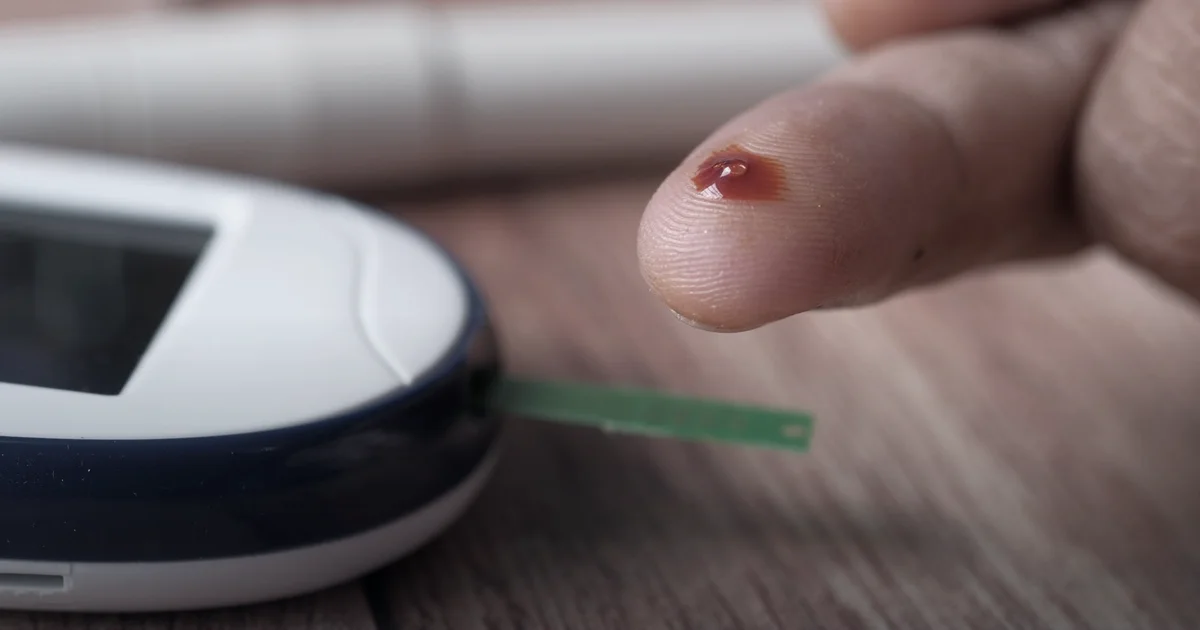
The argument that flares up regularly in amateur chats goes roughly like this. One side: “heart rate lies — heat, poor sleep, one extra cup of coffee, and your zones are off; you should train by lactate”. The other: “with lactate it is exactly the same story”.
It is a good argument, because both sides are partly right. Let us look at what the measurements say.
What the 2026 systematic review showed
In March 2026, Sports Medicine — Open published a systematic review of the validity and reliability of handheld lactate meters, with a formal quality assessment using the COSMIN and GRADE frameworks. The review included 25 studies covering the Lactate Pro, Lactate Scout, Accutrend and Lactate Plus devices.
The headline result sounds reassuring: correlation with laboratory references of r = 0.95–0.99, with high reliability. But it is followed by the caveat that makes the review worth reading: systematic bias at high lactate concentrations is common, and the authors call for standardised protocols and calibration.
Why r = 0.99 and “±0.4 mmol/L” are not a contradiction
This is the key idea, and it deserves its own paragraph.
A high correlation means the device gets the direction right. When blood lactate rises, the readings rise; when it falls, they fall. For building a curve across a wide range from 1 to 10 mmol/L that is quite enough, and the points will line up nicely.
But a correlation says nothing about what one specific number means. And in threshold training you work with exactly that — one number, and differences of two or three tenths.
How large that uncertainty is was shown by a 2024 study in the European Journal of Applied Physiology. The design is unusual: a single well-trained 35-year-old cyclist, four intensities, 480 measurements, a lactate range of 0.88–4.89 mmol/L. Four handheld devices were compared against a benchtop Biosen C-Line.
Bias relative to the reference:
- Lactate Plus — −7%
- Lactate Pro — +7%
- Lactate Scout — −10%
- TaiDoc TD-4289 — +42%
And the key figure — the width of the 95% prediction interval at 3 mmol/L: ±0.36 mmol/L for the Plus, ±0.40 for the Pro, ±0.44 for the Scout. For the benchtop YSI, by comparison, it is ±0.12.
What follows is simple arithmetic. If you are looking for the point where lactate rose from 2.0 to 2.5 mmol/L, your entire useful signal is 0.5 mmol/L. And the noise of a single measurement is around 0.4. Within a single brand, the limits of agreement between two devices exceeded 1 mmol/L for the Plus and the Scout.
The authors' conclusion is literal: use lactate as part of a toolkit, not as the only metric.
What else shifts the number, besides the device itself
This is where the chat argument is finally settled: lactate is not a quantity independent of your condition. It just depends on your condition differently than heart rate does.
The sampling site. The earlobe and the fingertip give statistically different values. This is not a trifle — it is a ready-made tenth or two of difference between two tests.
Glycogen stores. On a low-carbohydrate diet, or after a hard session the day before, lactate at the same power output will be lower. Less substrate means less production. The device is not lying; the interpretation is.
Dehydration and heat. Plasma volume and skin blood flow both change — that is, both the concentration and what you squeeze out of your finger.
The moment of sampling. Lactate does not move from muscle into blood instantly. The peak after an interval falls in the first minutes of recovery, and a 30-second difference in sampling gives different numbers.
A clean finger. Sweat on the skin contains lactate. The first drop has to be wiped away — that is not a ritual, it is the elimination of a real error.
How to use it
The device is useful. You just have to treat it as an instrument with a known margin of error, rather than as the ultimate truth.
Standardise everything you can. One device, one box of strips, one sampling site, one person doing the pricking, the same time of day, the same food the day before. Changing any one of these wipes out comparability with your past tests.
Compare trends, not absolute values. The meaningful question is “has the curve shifted to the right over eight weeks”, not “I am at 2.1 and my training partner is at 1.8”.
Treat changes smaller than 0.5 mmol/L as noise. If lactate at the same power output changed by 0.3 between two sessions, you most likely measured nothing at all.
Forget the fixed 4.0 mmol/L threshold. The universal cut-off was a compromise even before the scale of instrument error became clear. Individualised threshold methods are more robust, and anchoring to how you feel, to pace and to power is the most robust of all.
Do not throw out heart rate and power. Three data sources, each with its own distortions, together give a more honest picture than any of them on its own.
Being honest about the limitations
The 2024 study was done on one person. That is a brilliant design for assessing repeatability — you remove between-individual variability and see pure instrument noise. But it says nothing about whether the devices behave the same way across different people, at different haematocrit levels and different finger temperatures.
The 2026 systematic review included 25 studies, but those studies themselves are heterogeneous in their protocols — which is exactly what the authors call the field's main problem.
Key points
- The 2026 review (Sports Medicine — Open, 25 studies, COSMIN + GRADE): correlation of handheld lactate meters with the reference at r = 0.95–0.99, but systematic bias at high concentrations is common.
- The 2024 study, 480 measurements: bias of −7% (Plus), +7% (Pro), −10% (Scout), +42% (TaiDoc).
- The spread of a single measurement at 3 mmol/L: ±0.36…±0.44 mmol/L versus ±0.12 for the benchtop analyser.
- Within a single brand, the limits of agreement between two devices exceeded 1 mmol/L.
- A high correlation says the device catches the trend, not that any one number is correct.
- Lactate too depends on glycogen, dehydration, heat, sampling site and sampling moment — just differently than heart rate does.
- In practice: one device and one protocol, assess trends, changes smaller than 0.5 mmol/L are noise, and the fixed 4.0 mmol/L threshold is unreliable.
Sources: Bruno J., Thapa R.K., Santos Â., Montoro-Bombú R., Sarmento H., “Validity and Reliability of Portable Blood Lactate Analyzers: A Systematic Review with COSMIN and GRADE Assessment”, Sports Medicine — Open, 2026;12(1). https://doi.org/10.1186/s40798-026-00979-1. Mentzoni F., Skaugen M., Eythorsdottir I. et al., “Precision and accuracy of four handheld blood lactate analyzers across low to high exercise intensities”, European Journal of Applied Physiology, 2024;124(12). https://doi.org/10.1007/s00421-024-05572-6