Acute-to-chronic workload ratio: why the “0.8–1.3 zone” will not save you from injury
ACWR has become a standard metric in sports watches, but the meta-analysis is built on football, the confidence interval for the safe zone is enormous, and planning a season around ACWR did not reduce injuries at all.
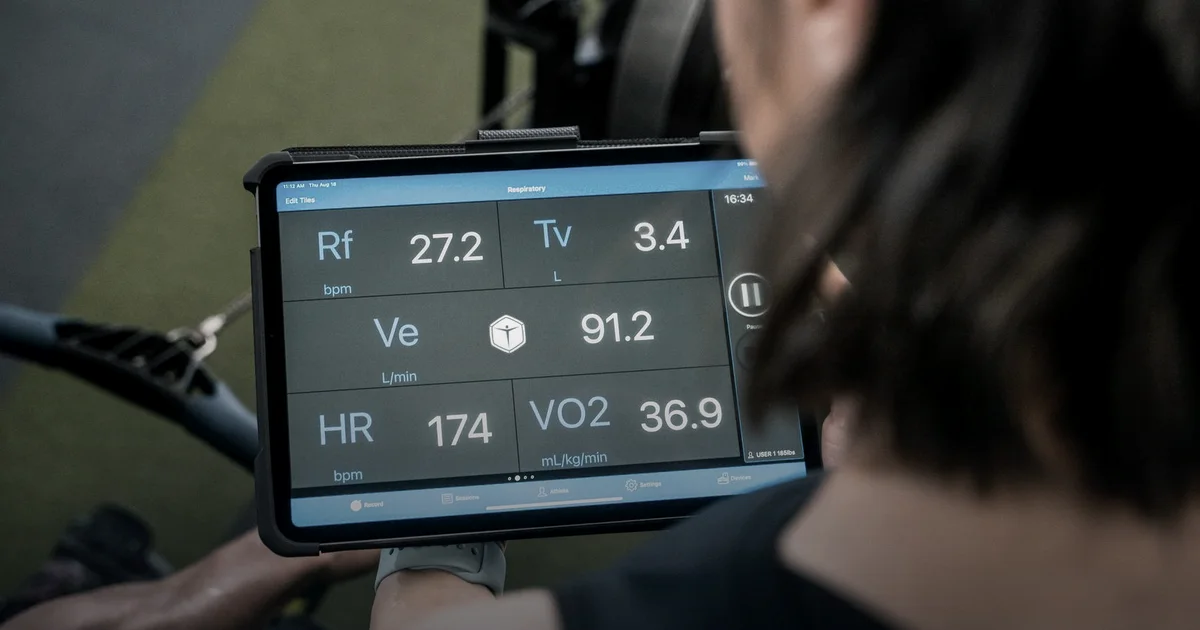
If your watch or platform shows an “optimal load” and complains when you suddenly add volume, chances are ACWR — the acute-to-chronic workload ratio — is working under the hood. The idea is elegant: compare the last week with the average over the last month. A sharp spike means injury risk. The metric spread across the industry almost instantly. The problem is that the evidence behind it is far weaker than the interface's confidence.
What this number is
ACWR is easy to calculate: the load over a short window (usually 7 days) is divided by the average load over a long window (usually 28 days). A value of one means you are doing exactly as much as you are used to. One and a half means you have suddenly added a lot. Zero point five means you have barely done anything.
Load itself can be counted in different ways: “external” (kilometres, elevation gain, metres at speed) or “internal” (heart rate units, RPE × time). The divergence in methodology starts right here, and it will turn out to matter.
The practical recommendation that spread the widest: stay in the 0.8–1.3 range, where injury risk is supposedly minimal and fitness grows. Let us look at where those boundaries came from.
What the meta-analysis showed
A systematic review with meta-analysis gathered 22 cohort studies, 921 participants and 657 injuries. The association really is there: a higher ACWR correlated positively with injuries, with an overall effect size of 0.72 (95% CI 0.60–0.82).
Next comes the distribution of injury frequency across the ranges:
- 0.8–1.3 — 56% (95% CI 0.14–0.94);
- below 0.8 — 74% (95% CI 0.68–0.80);
- above 1.3 — 77% (95% CI 0.58–0.92).
Note the confidence interval for the “safe” zone: from 0.14 to 0.94. That is not a typo. The authors themselves write that with such a spread it cannot be claimed that this interval is necessarily safe. Heterogeneity between studies was I² = 92.9% — meaning the studies contradict one another about as much as is possible.
There is a second observation that matters for runners: the result depended heavily on how load was measured. When only internal load was counted, injury frequency in the sample reached 95%, external load alone gave 64%, and the combination 69%. The same metric applied to the same people gives different answers depending on the calculation method.
The main problem: this is not about us
81% of the studies in the review are football. The rest are tennis, rugby and hockey. The authors explicitly point to a shortage of data on endurance sports and individual sports, as well as a male skew in the samples.
This matters fundamentally. A football injury is most often an acute event: a sprint, a change of direction, contact. A running injury is usually different: the gradual accumulation of load on a bone, tendon or fascia. The mechanisms differ, which means a “safe” ratio of weekly to monthly volume does not automatically transfer.
And one more argument that is hard to get around. An association in observational data is not the same as a tool that works. In a cluster randomised trial, coaches of roughly 480 young elite footballers planned load according to ACWR principles for a whole season, while the control group trained as usual. Ten months later there was no difference whatsoever in injury rates between the groups. In other words, the metric predicts something statistically, but managing by it brought no benefit.
What to do instead
Do not throw ACWR out — just demote it: from “injury prevention system” to “one indicator among several”.
- A sharp spike in volume is still a bad idea. This is backed by both common sense and the data; it is just that the exact boundary is unknown and unlikely to be universal.
- A low ACWR is not always good. Values below 0.8 were associated with a high injury frequency in the review: insufficiently prepared tissue tolerates load worse. Long gaps in training are just as risky as sudden jumps.
- Count it one way. Since the result depends on the method, do not compare your numbers from different apps and do not switch between internal and external load mid-cycle.
- Symptoms matter more than the number. Localised pain that appears earlier in the run from week to week is a more reliable signal than any figure on a dashboard.
- Look at the sum of factors. Sleep, nutrition, stress and a runner's experience influence load tolerance at least as much as the arithmetic of weeks.
Key points
- ACWR is the ratio of load over 7 days to the average over 28 days; a popular but weakly supported metric.
- In the meta-analysis (22 studies, 921 participants) an association exists: overall effect 0.72. But injury frequency in the “safe” 0.8–1.3 zone has a CI of 0.14–0.94, and the authors decline to call it safe.
- Heterogeneity I² = 92.9% — the studies are extremely contradictory; the result depends even on how load is counted.
- 81% of the data is football. Data on endurance sports is lacking, and the mechanism of running injuries is different.
- In a cluster RCT, planning a season by ACWR did not reduce injuries. Association ≠ a tool that works.
- In practice: avoid both sharp spikes and long gaps, count load one way, and base decisions on symptoms rather than on a number.
Sources: “Acute to chronic workload ratio (ACWR) for predicting sports injury risk: a systematic review and meta-analysis”, 2025. https://pmc.ncbi.nlm.nih.gov/articles/PMC12487117/. Cluster randomised trial of ACWR-based load planning in elite young footballers (2021). Overview of ACWR use: https://www.scienceforsport.com/acutechronic-workload-ratio/