Pronation: the “marketing myth” that actually worked in the one blinded RCT
372 runners, six months of follow-up, shoes that looked identical: the motion-control pair cut injury risk by 45%, and by 66% in runners with pronated feet. Why that still isn't a reason to trust the video analysis at the shop.
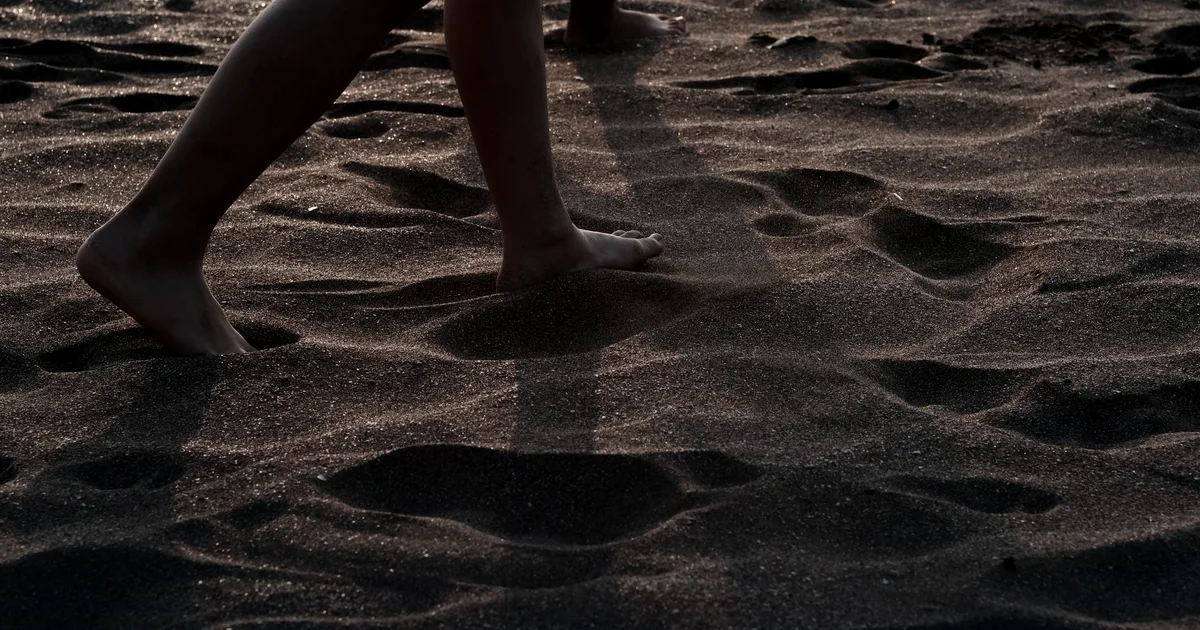
Pronation is the word that frightens a beginner more than anything else in a running store. Thirty seconds on the treadmill, a camera behind you, the salesperson freezes the frame: “see how the foot rolls inward — you need motion-control shoes.” A week later that same beginner reads online that pronation is something marketers invented, that it has nothing to do with injuries, and that “stability” shoes exist only so footwear can be sold at a higher price.
Both versions sound confident. The trouble is that there is essentially only one serious randomized trial on the subject.
What pronation actually is
Pronation is a normal part of the stride. On landing, the foot rolls inward and the arch flattens slightly — it works as a shock absorber. It is not a defect and not a malfunction. The question is always one of degree: in some people the roll is larger and lasts longer through the stance phase.
Then comes the awkward part: measuring it. The wet footprint on paper, arch height in standing, outsole wear, treadmill video and the clinical Foot Posture Index (FPI-6) — a validated six-item scale scored by a trained clinician — give different answers about the same person. When you read that “pronation is linked to injuries” or that it isn't, the first thing to ask is which of these methods was used to measure it.
The study everything rests on
Malisoux et al., British Journal of Sports Medicine, 2016. 372 recreational runners, Luxembourg, 6 months of follow-up.
The design is the reason to read the paper: everyone was given the same shoe model in two versions — a standard one and one with a stability insert (a dual-density midsole on the medial side). The pairs looked identical, so both the participants and the people assessing the injuries were blinded. Foot type was classified using the FPI. Participants logged their training in a diary.
The results:
- Overall injury risk was lower in the motion-control shoes: HR = 0.55 (95% CI 0.36–0.85) — roughly 45% lower.
- Pronated feet (n = 94): HR = 0.34 (0.13–0.84). The strongest effect of all.
- Neutral feet (n = 218): HR = 0.78 (0.44–1.37) — no difference.
- Supinated feet (n = 60): HR = 0.59 (0.20–1.73) — no difference.
- And the mirror-image finding: runners with pronated feet in the standard shoes got injured more often than runners with neutral feet — HR = 1.80 (1.01–3.22).
Five years later a secondary analysis of the same data appeared (Willems et al., JOSPT, 2021). Injuries were split into “pronation-related” ones — Achilles tendinopathy, plantar fasciitis, anterior knee pain, shin pain (25 cases) — and everything else (68 cases). The motion-control shoes reduced the risk of the first group only: HR = 0.41 (0.17–0.98) versus HR = 0.68 (0.41–1.10) for the rest.
Why this is no reason to rush to the store
There are more limitations here than it looks at first glance.
It is one study and one pair of models. “Motion control” is not a standard: different brands mean different constructions by it, from a firm insert to a rigid heel counter and last geometry. Extending the conclusion to any shelf labelled “stability” has nothing behind it.
The subgroups are small and the confidence intervals bump right into 1. Upper bounds of 0.84 and 0.98 are a result that holds — but with no margin to spare.
Foot type was scored by a clinician using the FPI, not by a camera for half a minute. In-store video analysis is a completely different method, and its agreement with clinical assessment is not high.
Splitting injuries into “pronation-related” ones was a decision made by the authors of the secondary analysis. A sensible hypothesis, but not a pre-registered one.
And finally, shoe effects are conditional in general. In another large RCT from the same group (848 runners), cushioning affected injury risk mainly in the heavier participants. Shoes don't work “in general” — they work for a specific runner profile.
How to apply this
- Don't transfer this result onto thirty seconds on a treadmill. If you want to lean on the data, you need a clinician's assessment of the foot, not a freeze-frame.
- A motion-control model is a reasonable experiment if two conditions coincide: marked pronation plus recurring Achilles trouble, plantar fasciitis, shin pain or anterior knee pain.
- Neutral feet — take whatever feels comfortable. There is no evidence of any benefit from “stability” for you in any subgroup.
- Don't change everything at once. Footwear is a second-tier factor. A sharp jump in volume and pace costs you far more than any midsole.
- When you switch shoe type, give yourself 2–3 weeks to gradually increase the share of runs in the new pair.
Key points
- Pronation is a normal movement of the foot, not a fault; the question is always degree, and how it was measured.
- The only large blinded RCT (372 runners, 6 months) found that motion-control shoes lowered overall injury risk, HR = 0.55 (0.36–0.85).
- The main contribution came from the pronated-foot subgroup: HR = 0.34 (0.13–0.84); no effect in neutral or supinated feet.
- In standard shoes, runners with pronated feet were injured 1.8 times more often than those with neutral feet.
- The secondary analysis: the effect is limited to “pronation-related” injuries — Achilles, plantar fasciitis, shin, anterior knee.
- Foot type was measured clinically with the FPI-6, not by in-store video analysis — that is the key caveat.
- One study, one pair of models, small subgroups: the conclusion that “everyone who pronates needs motion-control shoes” does not follow from it.
Sources: “Injury risk in runners using standard or motion control shoes: a randomised controlled trial with participant and assessor blinding”, British Journal of Sports Medicine, 2016. https://doi.org/10.1136/bjsports-2015-095031 · “Motion-Control Shoes Reduce the Risk of Pronation-Related Pathologies in Recreational Runners: A Secondary Analysis of a Randomized Controlled Trial”, Journal of Orthopaedic & Sports Physical Therapy, 2021. https://doi.org/10.2519/jospt.2021.9710