Lactate gels: the biggest hype of the Tour de France — and what is actually known
Pogačar is racing on a gel with exogenous lactate and his rivals are testing their own. Yet there are no published trials of the gels themselves, and the existing work on lactate supplements contradicts itself. A look without the excitement.
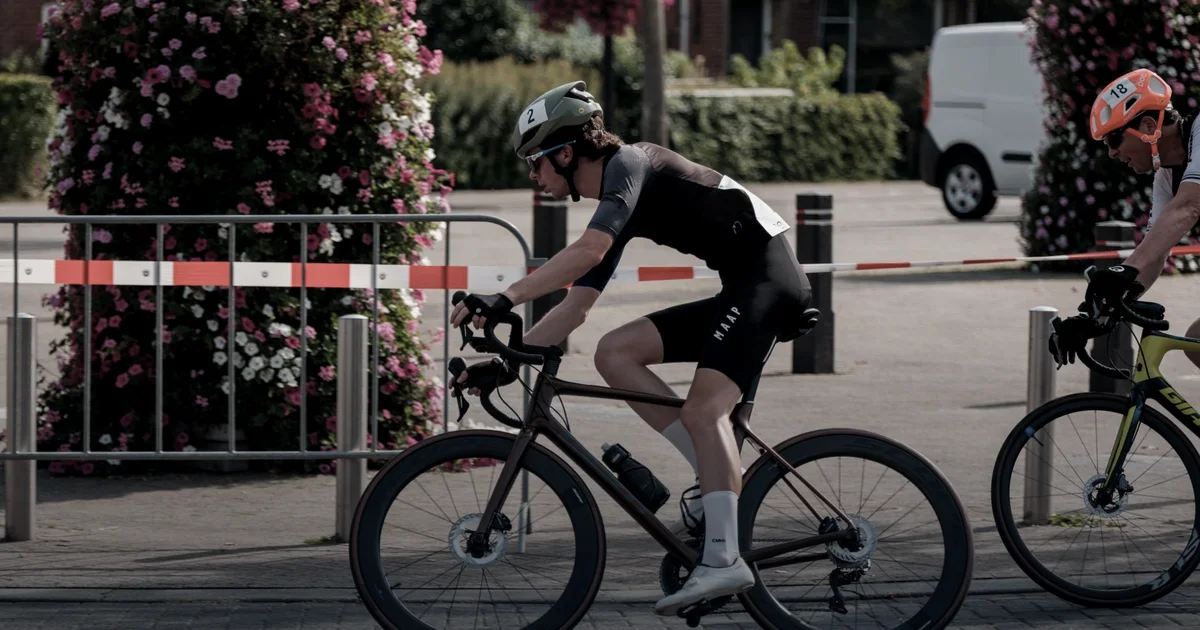
In the summer of 2026 the peloton saw something people had been waiting years for: lactate officially moved from the category of “the thing that kills us” to the category of “the thing we eat”. Pogačar's team is using a new Enervit gel with exogenous lactate, another team is testing ExoLactate — a product developed by Aitor Viribay in which roughly 5 g of lactate is spread across the gels and delivered alongside carbohydrate. The headlines promise a breakthrough in sports nutrition. Let us look at what is actually behind it.
Why lactate became fuel in the first place
The historical background here is not decoration — it explains the whole plot. For decades lactate was blamed for the burn in the legs and the drop in power, a by-product of “faulty” metabolism. That picture is out of date: work by George Brooks and his lactate shuttle concept showed that lactate is a fully-fledged energy substrate. Muscle fibres, the heart and the brain can oxidise it, and it circulates between fibres and organs as a transport form of energy.
Hence the product idea: if muscles already use lactate as fuel, why not supply it externally — together with carbohydrate? The theoretical upsides look sensible: an additional substrate that does not compete with glucose for intestinal transporters, plus a possible buffering action on acid–base balance.
The theory is elegant. The problem is turning it into a product.
What the actual trials showed
There are no published human trials of these gels. As of mid-2026, not one of the protocols used in the peloton has been through peer review. All we have is work on lactate supplements in general.
The most careful of the recent studies is a randomised, double-blind, crossover pilot trial (Ewell et al., Nutrients, 2024). It involved 15 people (9 men, 6 women), and these were amateurs training at least 150 minutes a week, not professionals. The supplement contained calcium and magnesium lactate plus vitamin D₃, at a dose of 19 ± 1 mg/kg of body mass.
The results were remarkably split:
- VO₂peak: 44.3 versus 44.3 ml/kg/min (p = 0.87) — zero.
- Ventilatory threshold: 1.63 versus 1.65 l/min (p = 0.82) — zero.
- Power at lactate threshold: 179 versus 179 W (p = 0.41) — zero.
- 20-minute time trial: 197 versus 204 W — a gain of about 4% (p = 0.02).
So time trial performance improved while not a single one of the physiological markers that might explain it moved at all. If lactate really did expand aerobic capacity, we would expect movement at least in a threshold or in VO₂peak. There is none.
Another 2024 study, as described in reviews of the topic, used a substantially larger dose of calcium lactate — around 120 mg/kg — over repeated 1 km and 4 km efforts, and found no performance gain whatsoever. Blood bicarbonate in the participants did rise significantly, and perceived exertion fell. The internal chemistry changed, the sensations changed, the seconds did not.
Note the inconsistency: the smaller dose produced an effect, the larger one did not. For a genuine pharmacological action that is odd, and it points more towards noise in small samples than towards a reliable mechanism.
How to interpret this
The most cautious and, it seems, most honest interpretation is that exogenous lactate behaves like a mild acid–base buffer. It can slightly ease the subjective sense of effort, but it is not a dependable performance booster.
If that is so, the closest relative of lactate gels is not carbohydrate but baking soda. The mechanism is similar, the effect is modest and context-dependent, and soda has dozens of studies behind it — unlike the gels, which so far have zero.
The reports from the peloton deserve a separate word. Riders who have tested ExoLactate speak of lower perceived exertion at the same watts, faster recovery and better fatigue resistance. That is interesting, but it is not data. The athletes are not blinded, they know they are getting something new, and they are in an environment with colossal expectation of an effect. Placebo works powerfully in sport, and in Grand Tour teams dozens of variables change at once.
What an amateur should do
- Do not rush. The product is expensive, there is no evidence base for these specific gels at all, and the available data on lactate supplements does not add up to a convincing picture.
- Cover the basics first. 60–120 g of carbohydrate per hour on long efforts, a gut trained to handle it and a clear pacing plan will give you an order of magnitude more than an exotic supplement. The calculator below will help you work out your carbohydrate needs.
- Remember the gut. Lactate salts in large doses are a potential source of gastrointestinal trouble, exactly like soda. Testing that for the first time on race day is not an option.
- Keep an eye on the field. If proper randomised trials of the gel protocols themselves appear in a year or two, the conversation will become substantive. For now it is a hypothesis with very good marketing.
Key points
- Lactate really is fuel, not waste; the lactate shuttle concept is confirmed. But it is a long way from “this is a substrate” to “eat it and ride faster”.
- There are no published trials of the gels themselves. Neither Enervit C21 Pro nor ExoLactate has been through peer-reviewed testing in humans.
- A 2024 pilot RCT in amateurs: +4% in a 20-minute time trial with no shift whatsoever in VO₂peak or the lactate and ventilatory thresholds.
- Another study using a dose six times higher produced no gain — even though bicarbonate rose and the effort felt easier.
- The most cautious reading: this is a mild buffer, closer to baking soda than to carbohydrate.
- Tour riders' feedback is not evidence: no blinding, huge expectations, dozens of variables changing at once.
Sources: Ewell T.R., Bomar M.C., Brown D.M. et al. “The Influence of Acute Oral Lactate Supplementation on Responses to Cycle Ergometer Exercise: A Randomized, Crossover Pilot Clinical Trial”, Nutrients, 2024. https://pmc.ncbi.nlm.nih.gov/articles/PMC11357576/. Reviews of current data on exogenous lactate and the gels used at the 2026 Tour de France: https://styrkr.com/en-us/blogs/training-and-nutrition-hub/lactate-gels-at-the-tour-de-france-what-the-research-actually-supports; https://velo.outsideonline.com/road/road-racing/tour-de-france/lactate-gels-drinks-tour-de-france-explainer/; https://www.bikeradar.com/news/enervit-c21-pro-lactate-gel-mix