BPC-157: 36 studies, and only one of them in humans
The peptide ultrarunners inject to avoid surgery. A 2025 systematic review found 35 animal studies and a single retrospective case series of 12 patients. Here is what is actually known and what it puts at risk.
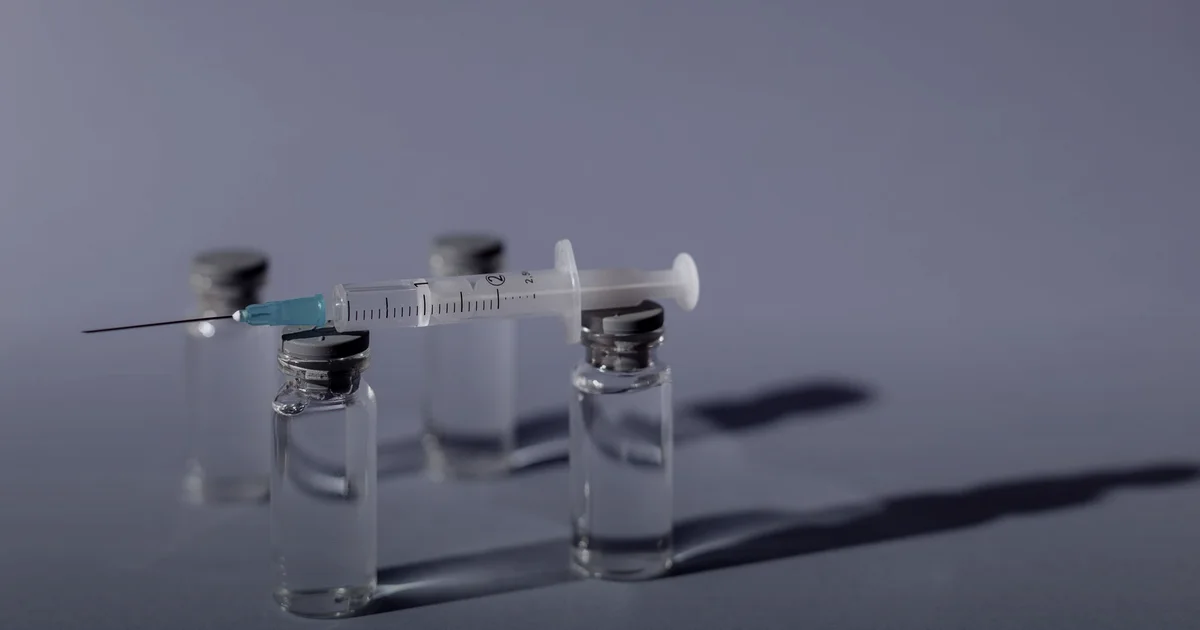
The story currently making the rounds in running chats goes like this. An ultrarunner from Utah slipped during the Cocodona 250 and herniated a disc. Several months of physical therapy did not help, the pain persisted, the nerve compression got worse, and surgery was scheduled. Friends recommended the peptide BPC-157, a nurse gave him the injections at home — and within a week the pain had receded enough that the surgery was called off.
Stories like this spread instantly, because they have everything: desperation, a simple fix, and a happy ending. Let us look at what is actually behind it.
What BPC-157 is
It is a synthetic pentadecapeptide — a chain of fifteen amino acids. It was isolated as a fragment of a protein found in gastric juice; the abbreviation stands for body protection compound. The bulk of the research on it has been done by a single Croatian research group, starting in the 1990s.
The mechanism described in the reviews sounds plausible: the peptide activates the VEGFR2 receptor and the Akt–eNOS pathway, stimulates angiogenesis — the growth of new blood vessels — and fibroblast activity, engages the ERK1/2 signalling pathway and lowers inflammatory cytokines. This sounds particularly interesting for tissues with poor blood supply: tendons and the points where they attach to muscle. That is exactly where healing is slowest.
So far, so logical. The problem starts when you look at who it was tested on.
What the systematic review showed
In 2025, HSS Journal published a systematic literature review of BPC-157 from the perspective of orthopaedic sports medicine. The authors searched PubMed, Cochrane and Embase from database inception through June 2024.
They found 544 articles published between 1993 and 2024. After screening, 36 studies remained. Of those:
- 35 were preclinical, that is, in cells and animals;
- 1 was clinical.
That single clinical study is worth describing in detail, because the entire human evidence base rests on it. It is a retrospective case review of intra-articular BPC-157 injections for chronic knee pain of unspecified origin. Of 12 patients, seven reported relief lasting longer than six months.
No control group, no blinding, no randomisation, not even a single shared diagnosis. The authors rated the level of evidence across the whole body of work as IV and V — the lowest tiers used in clinical medicine.
A separate line in the review: no clinical safety data were found at all. Not “safety confirmed”, but rather no data. What is known is that the peptide is metabolised in the liver, its half-life is less than 30 minutes, and it is cleared by the kidneys.
A second review from the same year, in Current Reviews in Musculoskeletal Medicine, puts it plainly in its title: “Regeneration or Risk?”. Its conclusion: three pilot studies have been conducted in humans — on knee pain, interstitial cystitis, and intravenous safety with pharmacokinetics. No adverse effects were described, but there are no large, rigorous trials. The authors' recommendation: treat BPC-157 as experimental and handle it with caution.
Why the herniated-disc story proves nothing
It is important not to be condescending here: the man genuinely did get better, and he is not making it up. But you cannot draw a causal conclusion from it, and here is why.
Disc herniations very often regress on their own. This is the natural course of the condition, not a rare miracle. The disc fragment shrinks over time, the inflammation around the nerve root subsides, and the pain goes away. This takes exactly months — precisely the stretch of time the man spent in physical therapy before the peptide.
Regression to the mean is at work. People seek help at the peak of their pain. After a peak, things get better on average — whatever you happen to take at that moment.
The sample is one person, who is also grading his own outcome. He spent months and money, was waiting for an effect, and cancelled his surgery. These are maximally favourable conditions for an expectation effect.
Two practical risks
The first is anti-doping. BPC-157 is on the WADA Prohibited List in category S0 — non-approved substances, banned at all times, both in and out of competition. It is also banned in individual professional leagues. USADA puts it bluntly: the substance is not approved for clinical use by any regulator in the world, and there is no legal basis for selling it as a medicine, a food product or a supplement.
National regulation differs from country to country and is under discussion — but for anyone subject to anti-doping rules, that does not change the status.
The second is the quality of the vial. This is an injectable product from the grey market. The systematic review states outright that adverse effects are possible because of unregulated manufacturing, product contamination, or simply unknown clinical safety. A buyer cannot verify the concentration, the purity or the sterility, and there is usually no way to check the certificate that comes with the vial either.
What to do instead
The boring answer, which works: for tendons and soft tissue, the proven strategy is progressive loading and time. Not rest, but specifically managed loading; that is a big topic in its own right, and we covered it using the Achilles tendon as an example.
If you are being offered surgery and you want to avoid it, that is a conversation with your doctor about the natural course of your specific problem and about timelines — not a reason to go looking for a compound that, over thirty years, has accumulated one retrospective study in twelve patients.
Key points
- BPC-157 is a synthetic peptide of 15 amino acids, with a plausible mechanism: angiogenesis, fibroblast activity, reduced inflammation.
- The 2025 systematic review: of 544 articles found, 36 were included, of which 35 preclinical and 1 clinical.
- The only clinical one is a retrospective series of 12 patients with knee pain of unspecified origin; relief lasting more than six months in 7 of 12. Level of evidence IV–V.
- There are no clinical safety data — that is a direct quote from the review, not an absence of problems.
- The second 2025 review: only three pilot studies in humans; status — experimental.
- Banned by WADA, category S0, at all times. Not approved by any regulator in the world.
- A separate risk is the grey-market injection: purity and sterility cannot be verified.
- A single recovery story is not evidence: herniations often regress on their own, and regression to the mean and the expectation effect are both at work.
Sources: Vasireddi N. et al., “Emerging Use of BPC-157 in Orthopaedic Sports Medicine: A Systematic Review”, HSS Journal, 2025. https://doi.org/10.1177/15563316251355551. McGuire M. et al., “Regeneration or Risk? A Narrative Review of BPC-157 for Musculoskeletal Healing”, Current Reviews in Musculoskeletal Medicine, 2025. https://doi.org/10.1007/s12178-025-09990-7. USADA, “BPC-157: Experimental Peptide Creates Risk for Athletes”. https://www.usada.org/spirit-of-sport/bpc-157-peptide-prohibited/