Ice Bath: Friend of Recovery, Foe of Muscle Growth
Cold-water immersion speeds your return to form between races but blunts strength and hypertrophy adaptations. Let’s figure out when ice works for you and when against.
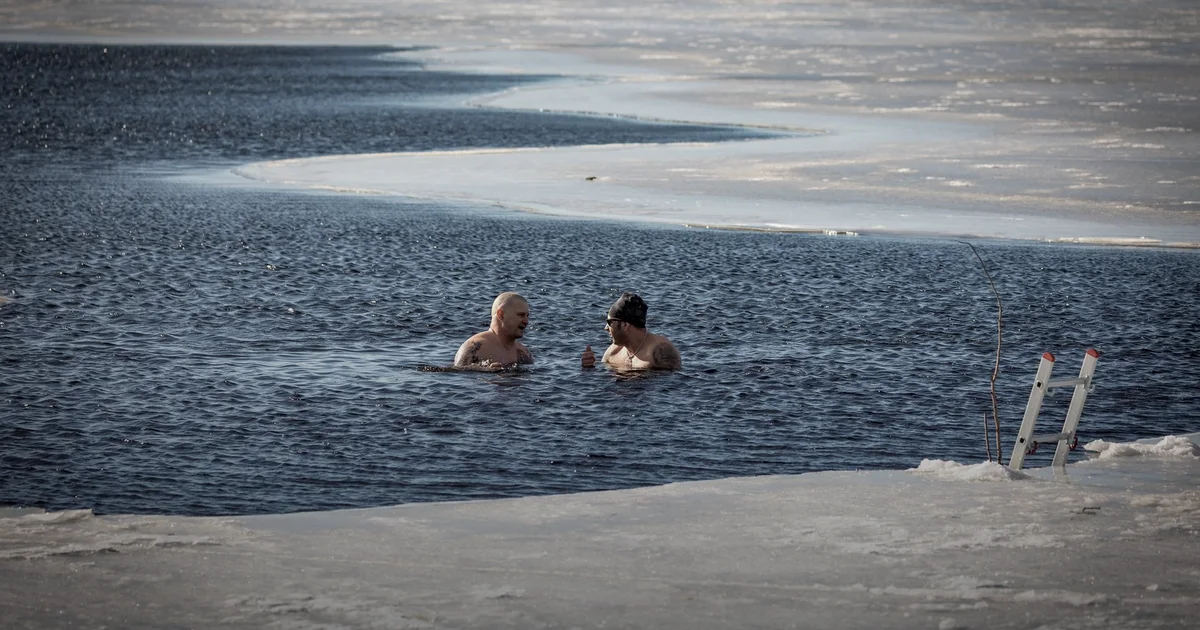
A familiar picture: after a brutal workout or a hard race, you climb into an ice bath, grit your teeth, count down the minutes — and step out with a sense of duty fulfilled. The ice bath has long been a ritual of endurance athletes, a symbol of discipline and “proper” recovery. But what if this ritual sometimes works against you? Recent science paints a far more nuanced picture: cold is not a universal good but a tool with specific indications and contraindications.
What the research shows
A 2026 systematic review in the journal Quality in Sport (Bajek et al., 12 included studies from 2021–2026) posed a blunt question: does chronic post-exercise cold-water immersion (CWI) blunt long-term adaptations? The conclusions are sobering. Regular cold exposure noticeably changed neither VO₂max, nor body composition, nor intramuscular adaptation signals. For the recovery of maximal strength, jump height, and sprint, cold did not consistently outperform either passive rest or placebo. What is more, the authors largely attribute the reduction in muscle soreness (DOMS) after immersion to the expectation effect — that is, to placebo rather than to the physiology of tissue recovery. One of the included studies showed outright: CWI weakens the anabolic signal and long-term adaptations to strength training.
At the same time, a larger meta-analysis in the Journal of Sports Sciences (2022, 68 studies) adds a positive note for endurance athletes. Cold helps acute endurance recovery — especially in heat — and improves the delayed recovery of strength and jump (at the 24- and 96-hour marks), which coincides with lower creatine kinase (a marker of muscle damage) and less soreness. The caveat: right after immersion, in the first 1–6 hours, sprint and jump may even temporarily dip.
Friend for recovery, foe for adaptation
It all comes down to a single mechanism. Cold constricts blood vessels, quells inflammation and swelling — hence less pain and a faster return to form. But post-exercise inflammation is not only “damage.” It is also a signal to remodel: it launches the repair and growth of the muscle fiber and activates anabolic pathways. By muffling inflammation right after strength work, you also muffle the very signal to grow.
Hence the paradox: the same anti-inflammatory effect that makes you fresh tomorrow may cost you strength and hypertrophy months down the line. For endurance this is less critical — aerobic adaptations (that very VO₂max) are, by the data, barely touched by cold. But strength and “muscle gain” suffer the most.
When ice is appropriate and when it isn’t
Ice is fitting when the priority is readiness, not adaptation:
- A packed race calendar and multi-day events. Between the stages of a tour, in a competitive block, at a tournament, it matters more to line up fresh for the next start than to “grow” the muscle.
- Heat. In warm conditions, cooling genuinely helps — this is the most reliable scenario of benefit.
- Urgent recovery. You need to compete again in a few hours or the next day — cold will speed the return.
Ice is best avoided when the goal is adaptation:
- Right after strength work or in a strength / muscle-mass building phase. Here cold mutes exactly what you trained for.
- In the base period / off-season, when the point of the load is precisely the remodeling of the body, not freshness for tomorrow.
Dose and protocol
The working range is modest: roughly 10–15 °C, about 10–15 minutes, whole body or legs. Colder than <10 °C or longer than >15 minutes is not “better” — just more uncomfortable, with no proven benefit. If both strength work and ice fall on the same day, space them out in time — or better still, skip the ice on strength days.
Alternatives
For recovery that does not interfere with adaptation, there are gentler tools:
- Active recovery — an easy cool-down, calm spinning, or a jog.
- Sleep — the most powerful and underrated way to recover.
- Nutrition — protein and carbs after the load, adequate hydration.
Limitations
Do not overrate even these conclusions. The 2026 review included only 12 heterogeneous studies, and the authors honestly admit: a significant part of the perceived benefit of cold may be placebo — belief in the method itself influences recovery. Protocols across studies vary, and so does the individual response. And most importantly: the bulk of the data on the “blunting” of adaptations comes from strength training — for pure endurance the effect is less pronounced.
The bottom line
- Cold is good for endurance recovery — less pain, a faster return to form, especially in heat and between races.
- Cold blunts strength and hypertrophy adaptations — the anti-inflammatory effect mutes the signal for muscle growth.
- Appropriate in a packed competitive block, on multi-day events, in heat, for urgent recovery.
- Not appropriate right after strength work and in the base period, when the goal is adaptation.
- Dose: ~10–15 °C, ~10–15 minutes; colder and longer yields no benefit.
- The myth “ice is always good” does not hold up: it is a tool for a task, not a universal good. Sleep, nutrition, and active recovery work without side effects.
Sources: Bajek et al., “Cold Comfort: Does Chronic Post-Exercise Cold-Water Immersion Blunt Long-Term Training Adaptations?”, Quality in Sport, 2026. https://doi.org/10.12775/QS.2026.63.73301; Systematic review with meta-analysis (68 studies), Journal of Sports Sciences, 2022. https://doi.org/10.1080/02640414.2023.2178872